
Choosing a compression mold factory involves more than checking whether a supplier can machine a mold. For composite components, buyers also need to understand the factory's experience with different material systems, tooling structures, part geometries and production requirements.
SUASE Mould is the tooling division of SANSE Group, an integrated composite manufacturing group connecting material development, mold engineering and molded component production. This relationship allows SUASE to coordinate tooling development with material and component manufacturing requirements, according to the scope of each project.
This article introduces the manufacturing scope and capabilities of a composite compression mold factory, with a focus on SMC, BMC, GMT, LFT and automotive applications.

1. What Does a Compression Mold Factory Manufacture?
A compression mold factory designs and manufactures tooling used to form composite or plastic materials under controlled heat and pressure. Unlike a general machining workshop, a specialized mold factory must understand how the material behaves during forming and how the mold structure affects the finished component.
Typical products manufactured with compression tooling include:
- Automotive exterior and structural composite components.
- Commercial vehicle body panels and functional parts.
- Electrical enclosures and insulation components.
- Railway and transportation interior or exterior parts.
- Industrial composite covers, housings and structural components.
The mold design depends on the material, component geometry, dimensional requirements, surface quality, production volume and molding process. A factory experienced in composite tooling should therefore be able to work with different material systems rather than relying on one standard mold configuration.
2. Composite Mold Manufacturing: Thermoset and Thermoplastic Materials
Composite compression molds are commonly developed for both thermosetting and thermoplastic materials. These material categories have different processing characteristics, so their tooling requirements should be evaluated separately.
2.1 Thermoset Compression Molds
Thermoset compression molding is widely used for components requiring dimensional stability, mechanical performance, electrical insulation or corrosion resistance.
SUASE Mould's thermoset tooling scope includes molds for:
- SMC (Sheet Molding Compound): Used for automotive panels, industrial housings and large composite components.
- BMC (Bulk Molding Compound): Commonly used for electrical components, enclosures and smaller precision-molded parts.
- CF-SMC: Carbon-fiber-reinforced sheet molding compound for applications requiring specific lightweight and mechanical performance.
- PCM and Baypreg: Material systems used in selected lightweight automotive and industrial applications.
- Carbon fiber and other thermoset composite systems: Tooling requirements depend on the material format and the specified molding process.
Depending on the material and component design, tooling considerations may include cavity geometry, material flow, venting, heating arrangements, pressure distribution, demolding and surface requirements.
2.2 Thermoplastic Compression Molds
Thermoplastic composite materials require different processing conditions from thermoset compounds. Their heating, forming and cooling behavior influences mold construction and process development.
SUASE's thermoplastic compression tooling scope includes:
- GMT (Glass Mat Thermoplastic): Used in selected automotive and transportation components.
- D-LFT (Direct Long Fiber Thermoplastic): Applied to components requiring long-fiber reinforcement and structural design flexibility.
- LWRT (Lightweight Reinforced Thermoplastic): Used in selected lightweight interior and transportation applications.
For these materials, the mold and process concept should account for material temperature, charge placement, forming behavior, cooling conditions and the required dimensional stability of the finished part.
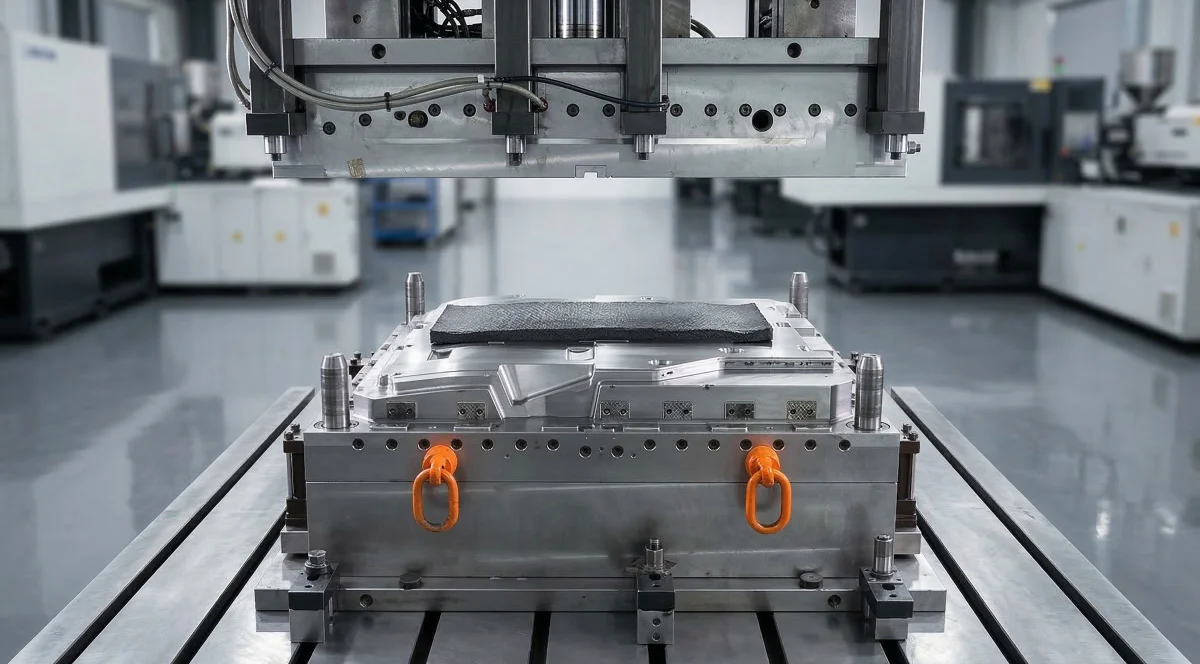
3. What Manufacturing Capabilities Should a Composite Mold Factory Have?
A composite mold factory needs a combination of engineering, machining, assembly and inspection resources. The importance of each capability depends on the mold size, component complexity and production requirements.
3.1 Tooling Engineering and Mold Structure
Mold engineering translates component data and process requirements into a workable tooling structure. This includes the cavity and core arrangement, parting line, guiding system, ejection concept, heating arrangement and other functional details.
For large automotive and industrial components, engineering decisions must also consider mold rigidity, accessibility for maintenance, installation conditions and compatibility with the customer's molding equipment.
3.2 Precision CNC Machining
Precision machining is a core part of composite compression mold manufacturing. The available machining resources influence how accurately cavity surfaces, core components, parting surfaces and functional features can be produced.
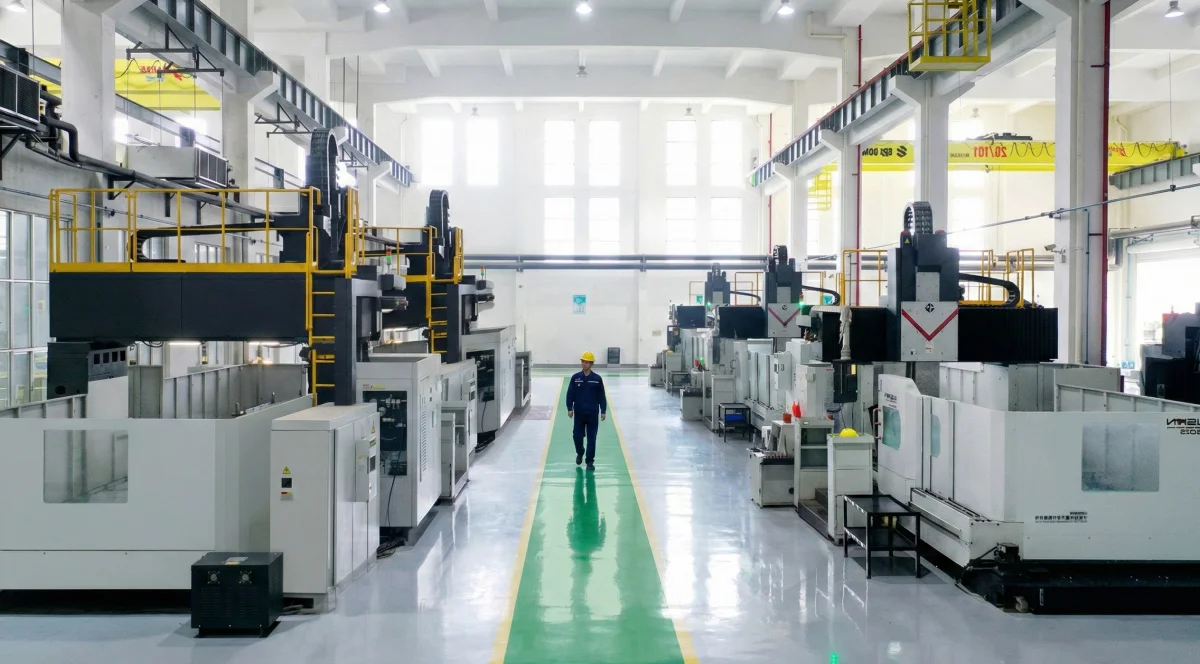
At SUASE Mould, CNC machining is integrated into the tooling manufacturing workflow. Five-axis CNC machining supports the production of complex mold surfaces and geometries that require multi-directional machining access.
For large automotive and industrial molds, machining capability should be evaluated against the actual mold dimensions, component geometry, steel specification and required tolerances.
3.3 Mold Assembly and Functional Inspection
After machining, mold components must be assembled and checked as a complete tooling system. Dimensional relationships between the cavity, core, guiding components and other functional features can affect mold operation and the quality of the molded part.
Coordinate measuring machine (CMM) inspection can support dimensional verification of critical mold components and features. The inspection method and acceptance criteria should be defined according to the project specifications.
3.4 Mold Trials and Validation
A mold trial provides an opportunity to evaluate tooling performance under actual or agreed trial conditions. It can help identify issues related to material distribution, filling, demolding, surface appearance and dimensional consistency.
SUASE Mould has 4000T press trial capability for large compression tooling projects. The required trial conditions, material, press parameters and validation scope should be agreed with the customer before the trial.
For more information about tooling production and inspection considerations, see: Compression Mold Manufacturing and Compression Mold Acceptance.
4. Automotive Compression Mold Manufacturers: Typical Project Applications
Automotive compression tooling often involves large components, complex surface geometry and demanding dimensional or appearance requirements. The mold concept must be matched to the selected composite material and the vehicle component's functional role.
Automotive Exterior Components
SMC compression molds are used for selected exterior panels and body components. Tooling considerations may include Class-A or specified surface requirements, dimensional stability, local reinforcement features and consistent part release.
Commercial Vehicle Components
Truck and commercial vehicle applications may include front panels, body panels, covers and other large composite parts. These projects can require substantial mold structures and careful consideration of component size, rigidity and production conditions.
Electric Vehicle Components
Composite materials can be considered for selected EV covers, housings and structural-related components. The appropriate mold design depends on the part's mechanical, thermal, electrical and dimensional requirements, as well as the material selected by the engineering team.
Railway and Industrial Applications
Compression-molded composites are also used in selected railway and industrial applications where weight, corrosion resistance, electrical properties or component integration are important.
A capable automotive compression mold manufacturer should evaluate each project according to its actual component function, material specification and production process rather than applying the same tooling concept to every application.
5. Compression Mold Factory vs. Injection Mold Factory
Compression molding and injection molding are different manufacturing processes. Although both require precision tooling, their mold structures and process considerations are not interchangeable.
| Comparison | Compression Mold Factory | Injection Mold Factory |
|---|---|---|
| Typical materials | SMC, BMC, GMT, LFT and other molding compounds | Thermoplastic and selected thermosetting injection materials |
| Material loading | Material charge is placed in or onto the mold before pressing | Material is injected into the closed mold cavity |
| Key tooling considerations | Charge placement, material flow, pressure, heating, venting and demolding | Runner and gate systems, injection pressure, cooling and ejection |
| Common applications | Composite panels, housings and structural components | Plastic housings, precision plastic parts and molded components |
Some manufacturers offer both tooling technologies, but buyers should confirm whether the supplier has direct experience with the specific molding process and material required for the project.
6. The Advantage of an Integrated Composite Manufacturing Group
A compression mold does not operate independently of the material and production process. Material behavior, component geometry and molding conditions all influence tooling performance.
SUASE Mould is part of SANSE Group, whose broader composite manufacturing activities connect material development, mold engineering and molded component production. This structure can support communication between tooling and component manufacturing teams when a project requires coordination across these areas.
For customers developing new composite components, this cooperation can help address questions such as:
- Whether the selected material is compatible with the intended molding process.
- How material characteristics influence mold structure and forming conditions.
- Whether the tooling concept is suitable for the target component geometry.
- How mold trials can support product validation and production preparation.
The actual scope of material support, component manufacturing and production validation depends on the requirements and responsibilities agreed for each project.
7. How to Evaluate a Compression Mold Manufacturer for Your Project
When evaluating a compression mold manufacturer, buyers should look beyond general claims about equipment or factory size. The more useful question is whether the supplier's experience and resources match the technical requirements of the intended component.
Before selecting a factory, consider the following points:
- Material experience: Has the factory manufactured molds for the specific material, such as SMC, BMC, GMT or LFT?
- Component experience: Has it worked with similar part dimensions, geometry and application requirements?
- Machining resources: Can its CNC equipment handle the required mold dimensions and complex surfaces?
- Trial capability: Can the factory support the required press conditions and mold validation activities?
- Inspection: Are dimensional inspection methods and acceptance criteria clearly defined?
- Project coordination: Can the supplier communicate effectively with the customer's product, material and production teams?
These factors help buyers distinguish a general machining supplier from a specialized composite mold manufacturer.

8. SUASE Mould: Composite Compression Tooling for Automotive and Industrial Projects
SUASE Mould focuses on compression tooling for thermoset and thermoplastic composite applications. Its tooling scope includes SMC, BMC, CF-SMC, PCM, Baypreg, GMT, D-LFT, LWRT and other specified composite processes.
Supported by CNC machining resources, five-axis machining, dimensional inspection and 4000T press trial capability, SUASE works with customers on tooling projects for automotive, commercial vehicle, railway and industrial components.
As the tooling division of SANSE Group, SUASE can also coordinate with the group's wider composite manufacturing resources when material or component-level cooperation is required.
If you are looking for a compression mold factory for a new composite component, you can share your product drawings and technical requirements with the SUASE team for an initial project discussion.
Useful project information includes:
- 2D drawings or 3D CAD data.
- Composite material type and material specification.
- Component dimensions and estimated weight.
- Expected annual production volume.
- Required press specifications and molding conditions, if available.
- Dimensional, appearance and tooling acceptance requirements.
Visit the SUASE Mould website or contact the team at info@suase.net to discuss your compression tooling requirements.
Frequently Asked Questions
1. What does a compression mold factory manufacture?
A compression mold factory designs and manufactures tooling used to form materials under heat and pressure. Its products may include molds for SMC, BMC, GMT, LFT and other composite materials used in automotive, transportation and industrial components.
2. What is the difference between a compression mold factory and an injection mold factory?
A compression mold factory specializes in tooling for processes where material is placed into or onto a mold and formed under pressure. An injection mold factory generally produces tooling for processes where material is injected into a closed cavity. Their mold structures and process requirements are different.
3. What materials can SUASE Mould make compression molds for?
SUASE's tooling scope includes SMC, BMC, CF-SMC, PCM, Baypreg, GMT, D-LFT and LWRT, along with other specified composite molding processes.
4. Does SUASE Mould support large compression mold trials?
SUASE Mould has 4000T press trial capability. The specific press conditions, material and validation requirements should be confirmed according to each project.
5. Can a composite compression mold factory manufacture automotive molds?
Yes. Specialized composite mold factories can manufacture tooling for selected automotive exterior panels, commercial vehicle components, EV-related composite parts and other transportation applications. The tooling design depends on the component, material and production requirements.
6. What information should buyers provide when contacting a compression mold manufacturer?
Buyers should ideally provide 2D drawings or 3D CAD data, material specifications, component dimensions, expected production volume, available press information and quality acceptance requirements.