Thermoplastic Compression
Lightweight. Recyclable. Tough.
The Future of Sustainable Automotive Composites.
Redefining Composite Manufacturing
As the automotive industry shifts towards circular economy and carbon neutrality, Thermoplastic Compression Moulding has emerged as a critical technology. Unlike thermosets, thermoplastic composites (such as PP+GF) can be remelted and recycled, offering a sustainable lifecycle without compromising performance.
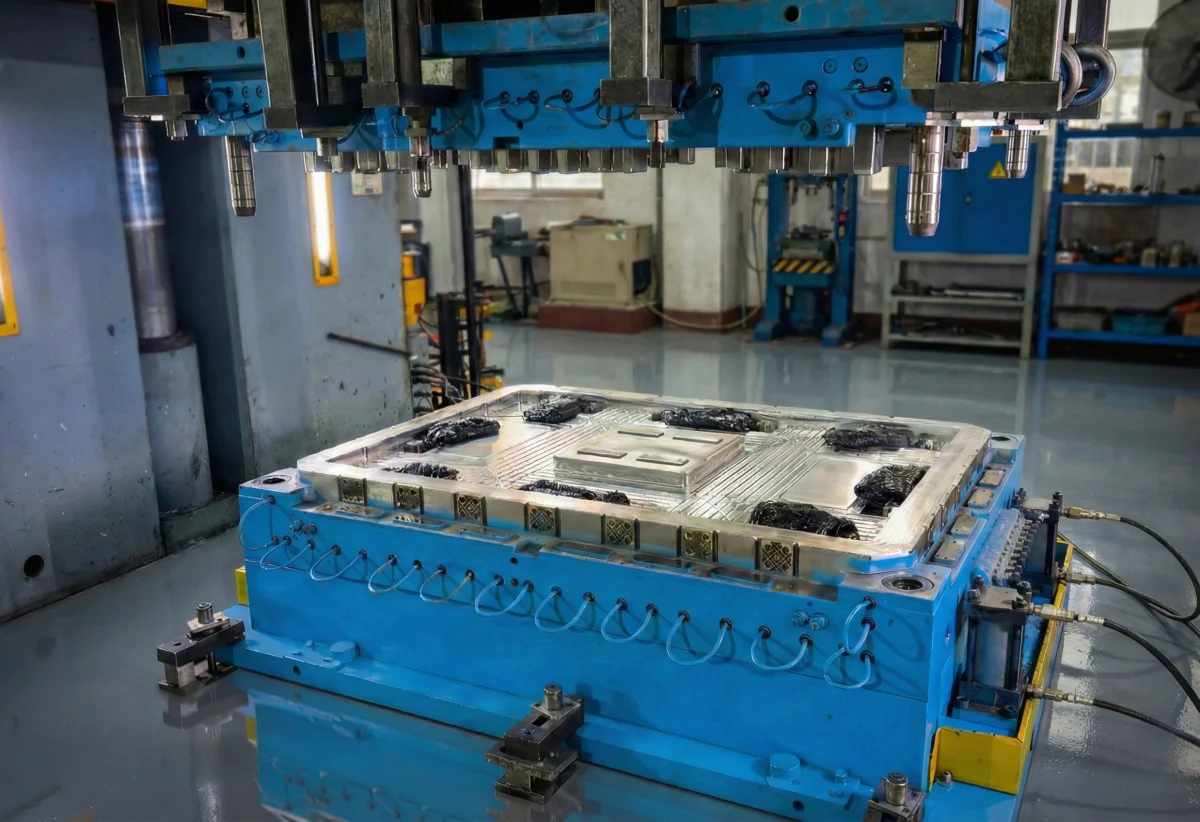
SUASE MOULD leverages over years of tooling expertise to deliver high-precision molds for GMT, D-LFT, and LWRT processes. Our tooling solutions feature advanced cooling channel designs (conformal cooling) to ensure rapid cycle times and dimensionally stable parts.
Core Technology Solutions
Select a specific molding process to explore our tooling capabilities.
Why Switch to Thermoplastics?
Key benefits over traditional metal and thermoset materials.
Circular Economy Ready
Unlike thermosets, thermoplastic parts can be shredded, remelted, and repurposed at the end of their life cycle, helping OEMs meet strict EU recyclability targets (ELV Directive).
High-Speed Production
The process involves physical cooling rather than chemical curing. This allows for cycle times as short as 30-60 seconds, ideal for high-volume automotive production series.
Superior Impact Resistance
The thermoplastic matrix (usually Polypropylene) provides high ductility and toughness, making parts like bumper beams and underbody shields highly resistant to stone chipping and crashes.
Design Freedom & Integration
Allows for complex ribbing patterns, integrated mounting points, and variable wall thicknesses in a single shot, significantly reducing assembly steps and part weight.
Typical Applications
Where lightweight meets durability.
Aerodynamic Shields
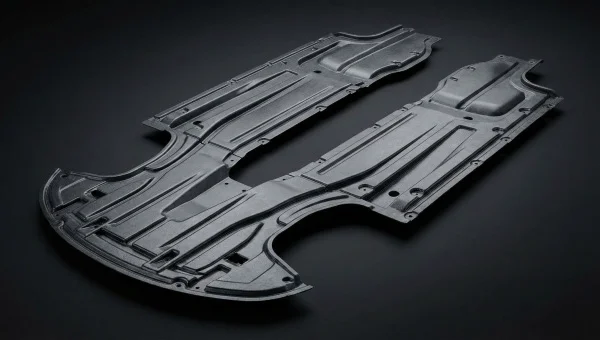
Full-length underbody panels (LWRT/GMT) that reduce drag coefficient and road noise.
Structural Interiors
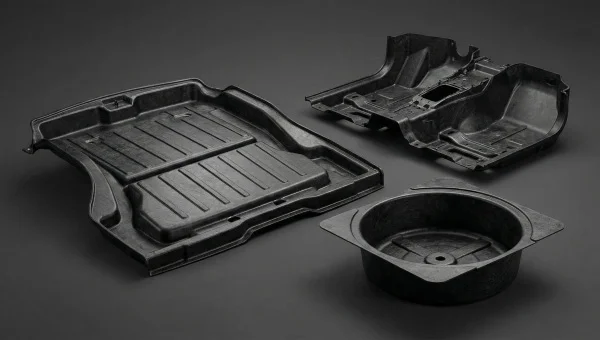
Seat pans, load floors, and spare wheel wells made from D-LFT for maximum weight savings.
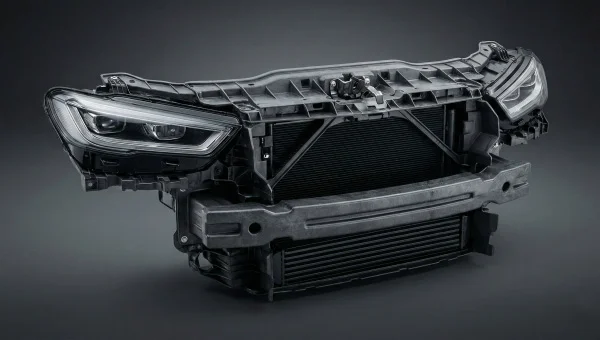
Front End Modules
Complex structural carriers integrating headlights, radiators, and latches in one piece.
Technical Insights
What is the difference between GMT and D-LFT molds?
GMT (Glass Mat Thermoplastic) uses pre-manufactured sheets which are reheated, offering extremely high impact resistance suitable for bumper beams. D-LFT (Direct Long Fiber Thermoplastic) compounds the plastic and fiber inline before molding, offering lower raw material costs and greater flexibility in fiber content, ideal for complex structural parts. SUASE designs specific heating and cooling systems for each process.
How do you control flash in thermoplastic molding?
Flash control is critical to reduce post-processing costs. SUASE utilizes precision shear edge designs (telescoping edges) with hardened steel inserts (HRC 50-54) to ensure clean cuts and seal the mold effectively, even under high pressure.
Do you make molds for LWRT underbody shields?
Yes. We specialize in large-format molds for LWRT (Lightweight Reinforced Thermoplastic). These molds often require variable gap thickness control to achieve the desired acoustic properties and stiffness for aerodynamic underbody panels.