Prepreg, UD tape and fabric prepreg are closely related terms in composite manufacturing, but they do not describe exactly the same thing.
In technical drawings, material specifications and composite part quotations, engineers may encounter terms such as carbon fiber prepreg, unidirectional prepreg tape, UD tape or woven fabric prepreg. These terms describe different levels of material classification and fiber architecture.
The simplest relationship is:
Prepreg is the broad material category, while UD tape and fabric prepreg are specific reinforcement forms used within that category.
However, the engineering difference is more important than the terminology itself. Fiber orientation, fabric architecture, drapability, load direction, stacking sequence and manufacturing process can all affect the final composite component.
What Is Prepreg?
Prepreg is short for pre-impregnated composite reinforcement. It generally refers to a reinforcement material that has already been impregnated with a controlled amount of resin before molding or curing.
The reinforcement may be carbon fiber, glass fiber, aramid fiber or another suitable fiber system. The resin system may be thermoset or, depending on the application, thermoplastic.
Instead of adding dry fiber and resin separately during final part manufacturing, prepreg provides a pre-engineered combination of reinforcement and matrix.
Typical Characteristics of Prepreg
- Controlled fiber-to-resin ratio
- Defined fiber orientation or fabric architecture
- Consistent resin distribution
- Suitable for controlled layup and consolidation
- Available in different reinforcement forms
- Widely used for high-performance composite components
Therefore, the word prepreg describes the material condition and manufacturing concept rather than one specific shape of reinforcement.
Is UD Tape the Same as Prepreg?
Not exactly.
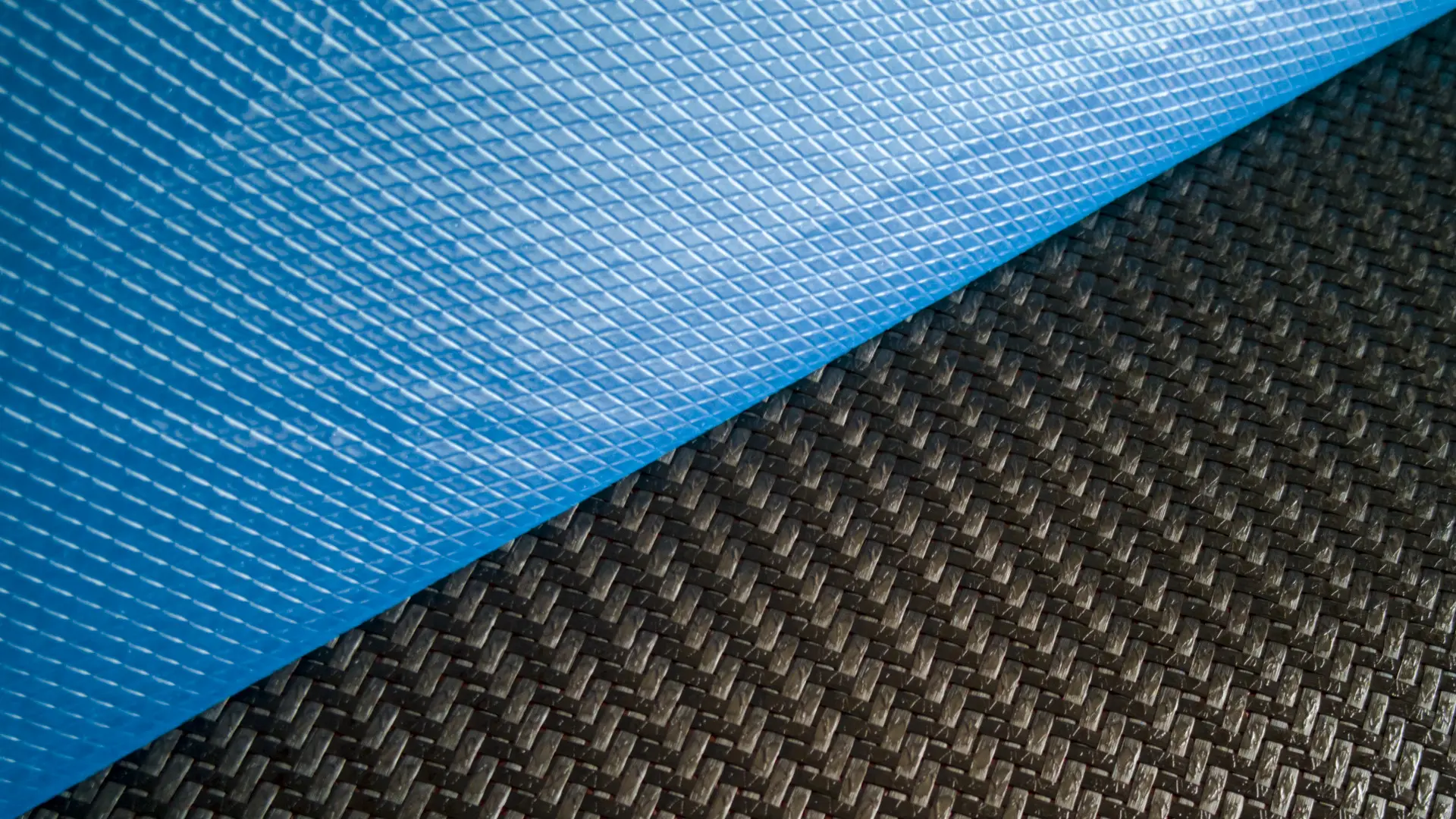
UD tape can be a type of prepreg. The term UD means unidirectional, referring to the dominant orientation of the reinforcing fibers. When these aligned fibers are pre-impregnated with resin and supplied as a tape, the material is commonly called UD prepreg tape or unidirectional prepreg tape.
The important distinction is that prepreg describes the pre-impregnated material system, while UD describes the fiber architecture.
This distinction matters when reading a material specification. A specification that only says "prepreg" does not necessarily tell you whether the reinforcement is UD, woven, nonwoven or another architecture.
What Is UD Tape?
UD tape, or unidirectional tape, is a reinforcement format in which the majority of continuous fibers are aligned in one principal direction.
In a typical carbon fiber UD prepreg, the fibers are arranged predominantly along the 0-degree direction. The resin holds the fiber architecture together and allows the material to be handled, cut and laid into the required laminate structure.
Typical UD Tape Characteristics
- Predominantly one-directional fiber alignment
- Very high directional fiber efficiency
- Excellent stiffness and strength along the fiber direction
- Lower reinforcement efficiency transverse to the main fiber direction
- Suitable for designed stacking sequences
- Efficient for structures dominated by known load paths
UD tape is therefore particularly useful when the engineering team knows where the primary loads will travel through the component.
Why Is Fiber Direction So Important in UD Prepreg?
Composite materials are generally anisotropic. Their mechanical properties can vary substantially with fiber orientation.
A UD laminate can therefore be designed so that a large proportion of the fibers run parallel to the principal load direction.
A simplified example is:
| Fiber Orientation | Typical Structural Role |
|---|---|
| 0° | Main longitudinal load carrying |
| 90° | Transverse stiffness and load distribution |
| +45° | Shear and torsional load contribution |
| -45° | Complementary shear and torsional response |
In real engineering, the laminate is normally designed using a combination of orientations rather than relying on 0° fibers alone.
This is one of the main advantages of prepreg technology: the reinforcement architecture can be deliberately engineered around the expected load case.
What Is Fabric Prepreg?
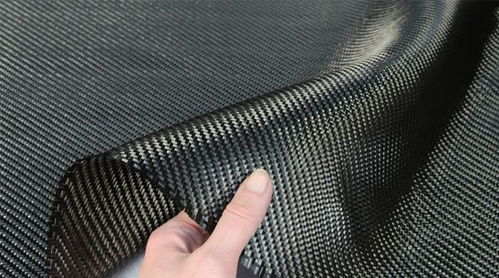
Fabric prepreg is prepreg made using a textile reinforcement architecture, typically a woven fabric.
Common woven structures include:
- Plain weave
- Twill weave
- Satin weave
- Other engineered textile architectures
Unlike UD tape, the fibers in woven fabric are arranged in an interconnected textile structure, commonly including warp and weft directions.
The result is a material that can provide reinforcement in more than one principal direction within the same fabric layer.
What Are the Main Characteristics of Fabric Prepreg?
Woven prepreg provides a different balance between mechanical performance, handling and formability compared with UD tape.
- Reinforcement in multiple principal directions
- Good handling during manual or automated layup
- Useful drapability for many curved geometries
- Visible textile patterns when used with suitable carbon fabrics
- More balanced in-plane behavior than a single UD layer
- Suitable for complex surfaces and appearance-oriented components
However, woven architecture also introduces fiber undulation or crimp. Because the fibers are not perfectly straight throughout the textile structure, the mechanical efficiency in a given direction can differ from an equivalent idealized straight-fiber UD layer.
The actual performance depends on fiber type, weave architecture, areal weight, resin system, laminate design and processing conditions. A fixed percentage reduction should therefore not be assumed for every woven prepreg.
Prepreg vs UD Tape vs Fabric Prepreg: The Basic Difference
| Comparison | Prepreg | UD Prepreg Tape | Fabric Prepreg |
|---|---|---|---|
| Definition | Broad category of pre-impregnated reinforcement | Prepreg with predominantly unidirectional fibers | Prepreg based on woven textile reinforcement |
| Fiber Architecture | Depends on material | Predominantly one direction | Warp and weft directions in woven fabric |
| Visual Appearance | Depends on reinforcement | Generally parallel fiber appearance | Visible woven pattern |
| Primary Advantage | Controlled reinforcement and resin system | High directional fiber efficiency | Multi-directional reinforcement and good handling |
| Typical Layup Strategy | Depends on architecture | 0°, ±45°, 90° and other designed orientations | Each fabric layer provides multiple principal directions |
| Typical Applications | Aerospace, automotive, industrial and sporting composites | Beams, spars, frames and load-dominant structures | Panels, shells, exterior surfaces and multi-directional structures |
UD Tape vs Fabric Prepreg: Which One Should Be Used?
There is no universal answer. Material selection should follow the structural load case, geometry, production process, surface requirements and cost target.
When UD Tape Is More Suitable
UD prepreg is often considered when the component has clearly defined principal load paths and the engineering team wants to maximize fiber efficiency in those directions.
- Structural beams
- Drone arms
- Composite spars
- Load-bearing frames
- Reinforcement zones
- Components with directional bending loads
When Fabric Prepreg Is More Suitable
Woven prepreg can be attractive when the component experiences loads in multiple directions and when handling or surface appearance is important.
- Curved composite shells
- Automotive interior panels
- Exterior composite surfaces
- Sporting goods
- Consumer products
- Complex cosmetic carbon fiber components
Can UD Tape and Fabric Prepreg Be Used Together?
Yes. In many engineered laminates, the two reinforcement architectures can be combined.
Instead of asking whether UD tape or fabric prepreg is universally better, engineers can assign different functions to different laminate layers.
| Laminate Location | Possible Material | Typical Purpose |
|---|---|---|
| Main structural layers | UD prepreg | Directional stiffness and strength |
| ±45° structural layers | UD or woven prepreg | Shear and torsional response |
| 90° layers | UD prepreg | Transverse reinforcement |
| Outer cosmetic layer | Woven fabric prepreg | Surface appearance and multi-directional reinforcement |
| Local reinforcement | UD prepreg patches | Additional strength around high-load regions |
The final laminate should always be designed according to the required structural performance rather than following a fixed material recipe.
How Does Prepreg Selection Affect Composite Part Design?
Prepreg selection influences more than mechanical properties. It can also affect how the material is cut, stacked, draped, compacted and consolidated inside the mold.
Engineers should consider:
- Fiber orientation
- Laminate thickness
- Number of plies
- Individual ply thickness
- Fiber areal weight
- Resin content
- Part curvature
- Minimum bending radius
- Local thickness transitions
- Required surface quality
- Cutting and nesting strategy
- Preforming requirements
A material that performs well in a flat coupon test may not automatically be the easiest material to manufacture into a complex three-dimensional component.
How Does Prepreg Formability Differ Between UD Tape and Woven Fabric?
Drapability is an important consideration when prepreg is formed over curved tooling.
Woven fabrics can accommodate certain double-curvature surfaces through deformation of the textile architecture. UD tape has a different forming behavior because its continuous fibers are strongly oriented in one direction.
This does not mean that UD tape cannot be used for curved components. Instead, complex geometry may require careful ply pattern development, slitting, darting, local overlaps, tailored blanks or preforming methods.
Consequently, material architecture and part geometry should be reviewed together before the tooling design is finalized.
What Is the Difference Between Prepreg Tape and UD Tape?
The terms are sometimes used interchangeably, but they can describe slightly different concepts depending on the supplier's product range.
Prepreg tape describes the material in tape form, while UD tape specifically emphasizes the unidirectional fiber architecture.
Therefore:
UD prepreg tape = tape-format prepreg with predominantly unidirectional reinforcement.
But not every material sold as "prepreg tape" should automatically be assumed to have the same fiber architecture. The technical data sheet should be checked for fiber orientation, construction, width, areal weight, resin content and other material parameters.
How Does Prepreg Differ From Dry Fiber?
The fundamental difference is the resin condition.
| Material | Fiber Condition | Resin Condition | Typical Manufacturing Approach |
|---|---|---|---|
| Dry Fiber | Dry reinforcement | Added separately during processing | Infusion, RTM and other liquid-resin processes |
| Prepreg | Pre-arranged reinforcement | Pre-impregnated with controlled resin | Autoclave, press molding, PCM and related processes |
Prepreg systems can provide tighter control of resin distribution and laminate architecture, but they also introduce requirements related to storage, handling, cutting and processing conditions.
Prepreg Storage and Handling Matter Too
Prepreg is not simply dry carbon fiber with resin added in advance. Many commercial prepreg systems have specific storage and out-time requirements because the resin remains chemically active before final curing.
Depending on the resin system, important controls may include:
- Storage temperature
- Freezer or refrigerated storage
- Maximum out-time
- Material shelf life
- Moisture control
- Handling temperature
- Debagging and conditioning procedures where applicable
These parameters should always be taken from the specific prepreg supplier's technical documentation rather than assumed to be identical across all materials.
How Prepreg Choice Influences Compression Molding
Prepreg becomes particularly relevant to SUASE because prepreg can be processed through Prepreg Compression Molding (PCM).
In PCM, prepared prepreg charges or stacked plies are placed into a tooling system and consolidated and cured under controlled temperature and pressure.
The tooling therefore needs to accommodate not only the final product geometry but also the behavior of the prepreg charge during forming and consolidation.
Important tooling considerations can include:
- Part geometry and draw direction
- Charge shape and ply stacking
- Material flow or consolidation behavior
- Pressure distribution
- Heating rate
- Temperature uniformity
- Resin cure behavior
- Venting and trapped-air control
- Demolding requirements
- Surface finish
- Dimensional compensation
SUASE's PCM tooling page describes prepreg compression molding as a process using pre-impregnated carbon or glass fiber sheets placed in heated tooling and cured under pressure. The process is also positioned for net-shape or near-net-shape composite production.
For customers developing carbon fiber compression-molded components, SUASE also provides carbon fiber compression tooling designed around prepreg and other composite charge forms.
Why UD Tape and Fabric Prepreg Can Require Different Tooling Strategies
The difference between UD and woven prepreg does not stop at the material roll. Fiber architecture can influence how the charge behaves during forming and consolidation.
UD Prepreg Tooling Considerations
- Controlled ply orientation
- Accurate charge positioning
- Local reinforcement placement
- Thickness transitions
- Fiber movement during forming
- Potential wrinkling in complex regions
Fabric Prepreg Tooling Considerations
- Fabric drapability
- Double-curvature forming
- Wrinkle prevention
- Surface appearance
- Weave orientation
- Local fabric distortion
These considerations can influence the cavity geometry, radii, transitions, charge design, forming method and final mold surface requirements.
Common Mistakes When Specifying Prepreg Materials
1. Specifying Only "Carbon Fiber Prepreg"
Carbon fiber prepreg is too broad a description for many engineering projects. The specification should normally identify the reinforcement architecture and relevant material properties.
2. Assuming All UD Tapes Are Equivalent
Two UD prepregs can use the same nominal carbon fiber grade but behave differently because of resin system, fiber areal weight, resin content, curing temperature and processing window.
3. Choosing Woven Prepreg Only for Appearance
A visible twill or plain weave can provide a desirable surface appearance, but the textile architecture also influences mechanical behavior and forming characteristics.
4. Ignoring the Laminate Stacking Sequence
A high-performance fiber material does not automatically produce a high-performance laminate. The orientation and sequence of plies determine how loads are distributed.
5. Selecting the Material Before Reviewing the Manufacturing Process
Material architecture, part geometry and manufacturing process should be evaluated together. A theoretically attractive material can become difficult or expensive to manufacture if its forming and consolidation behavior is incompatible with the production method.
Prepreg Selection Checklist for Engineers and Buyers
When specifying a prepreg system for a new composite component, the following information should be confirmed:
| Specification | Why It Matters |
|---|---|
| Fiber Type | Determines the reinforcement system and baseline mechanical characteristics |
| Fiber Architecture | Defines whether the material is UD, woven or another construction |
| Fiber Areal Weight | Influences ply thickness, laminate build-up and handling |
| Resin System | Determines curing and processing requirements |
| Resin Content | Influences consolidation and final laminate composition |
| Cure Temperature | Important for tooling heating and process control |
| Out-Time | Defines practical handling and production limits |
| Storage Requirements | Important for material quality before molding |
| Surface Requirements | Influences fabric selection and tooling finish |
| Part Geometry | Determines forming and layup difficulty |
Where Are Prepreg, UD Tape and Fabric Prepreg Used?
Prepreg systems are used across industries where controlled fiber architecture, lightweight construction and high structural performance are important.
- Aerospace: structural panels, fairings and lightweight components
- Automotive: carbon fiber structures, panels and performance components
- UAV and Drones: arms, frames, shells and structural reinforcements
- Robotics: lightweight arms, links and structural components
- Sports Equipment: bicycle components, rackets and other performance structures
- Industrial Equipment: lightweight structural and reinforcement components
- Consumer Electronics: cosmetic and structural carbon fiber components
- Energy: lightweight composite structures and selected reinforcement applications
The appropriate prepreg architecture depends on the specific component rather than simply on the industry name.
Prepreg vs UD Tape vs Fabric Prepreg: A Quick Decision Guide
| If Your Main Requirement Is... | Material Architecture to Consider |
|---|---|
| High stiffness along a known load path | UD prepreg tape |
| Designed multi-directional laminate | Combination of UD orientations |
| Good handling over curved surfaces | Woven fabric prepreg may be considered |
| Visible woven carbon fiber appearance | Woven carbon fabric prepreg |
| Local structural reinforcement | UD prepreg patches or tailored plies |
| Complex structural laminate | Hybrid combination of UD and fabric prepreg |
How SUASE Connects Prepreg Selection With Compression Tooling
For prepreg-based compression molding, material selection and tooling development should not be treated as completely separate engineering activities.
The selected prepreg architecture can influence charge preparation, ply stacking, forming behavior, thickness distribution, heating requirements and final surface quality. These factors can then affect the compression mold design.
SUASE develops tooling for composite compression processes including PCM, carbon fiber compression molding, SMC, BMC, CF-SMC and other composite applications.
Its current PCM technology specifically addresses prepreg compression molding, while its broader carbon fiber tooling capability covers compression tooling for prepreg-based carbon fiber components.
For a new project, the engineering discussion can therefore start with both the material architecture and the final component:
Material architecture → laminate design → charge / layup strategy → part geometry → tooling concept → heating and consolidation → mold trial
This integrated approach is particularly useful when the component has complex curvature, tight dimensional requirements, visible carbon surfaces or production-volume targets.
Prepreg, UD Tape and Fabric Prepreg: The Key Takeaways
The relationship can be summarized in three levels:
- Prepreg is the broad category of reinforcement that has been pre-impregnated with resin.
- UD prepreg tape is a specific prepreg architecture dominated by fibers aligned in one principal direction.
- Fabric prepreg uses a textile reinforcement, commonly woven, providing reinforcement in multiple principal directions within the fabric structure.
The simple visual rule is useful for a first identification:
- Parallel fibers → likely UD tape
- Visible woven pattern → likely fabric prepreg
- Pre-impregnated reinforcement in either architecture → prepreg
But for engineering decisions, visual appearance is not enough. Fiber type, architecture, areal weight, resin system, resin content, curing conditions and laminate stacking sequence should all be confirmed from the technical data sheet.
Frequently Asked Questions About Prepreg, UD Tape and Fabric Prepreg
Is prepreg the same as UD tape?
No. Prepreg is a broad category of pre-impregnated reinforcement. UD tape is one possible prepreg architecture in which the fibers are predominantly aligned in one direction.
Is UD tape always a prepreg?
No. "UD tape" can describe a reinforcement format generally. When the tape has already been impregnated with resin, it is commonly referred to as UD prepreg tape.
What is fabric prepreg?
Fabric prepreg is a textile reinforcement, commonly woven fabric, that has been pre-impregnated with resin. Carbon fiber fabric prepreg is widely used where multi-directional reinforcement, drapability or visible woven appearance is required.
Is woven prepreg stronger than UD prepreg?
Neither should be considered universally stronger. UD reinforcement can provide very high fiber efficiency in its principal direction, while woven reinforcement provides a different balance of directional properties, handling and formability. The laminate design and load case determine which architecture is appropriate.
Why is UD tape used for structural reinforcement?
UD tape allows engineers to place a large proportion of continuous fibers along known load directions. This can make it efficient for beams, spars, frames and other directionally loaded structures.
Why is woven prepreg used for carbon fiber cosmetic parts?
Woven carbon fabric can provide a recognizable surface pattern and can offer useful handling characteristics for curved components. However, appearance should not be the only selection criterion; structural requirements and manufacturing behavior also need to be considered.
Can UD tape and woven prepreg be combined?
Yes. A laminate can combine UD plies and woven fabric plies when the engineering design requires different reinforcement functions in different regions or through the thickness.
What is PCM in composite manufacturing?
PCM stands for Prepreg Compression Molding. It uses pre-impregnated reinforcement in a heated compression tooling system to consolidate and cure composite parts. It is particularly relevant to high-performance carbon fiber and other prepreg-based components.
Does prepreg require special compression molds?
Prepreg compression molding can require tooling designed around the material's curing temperature, consolidation behavior, surface requirements, charge geometry and dimensional tolerances. The exact mold configuration depends on the resin system and component.
About SUASE
SUASE is a professional composite mold manufacturer specializing in compression tooling for SMC, BMC, CF-SMC, PCM, carbon fiber and other composite molding applications.
For prepreg compression molding projects, SUASE combines tooling engineering, precision machining, assembly and mold trial capabilities to develop production-oriented composite tooling.
Learn more about:
- Prepreg Compression Molding (PCM) Tooling
- Carbon Fiber Compression Mold
- Composite Mold Design
- Precision Mold Machining
- Mold Assembly and Fitting
For a new composite tooling project, material architecture, laminate requirements and manufacturing process should be reviewed together before the mold design is finalized.