
In modern composite manufacturing, precision tooling plays a critical role in ensuring consistent product quality and high structural performance. Among the various composite molding technologies available today, PCM molds (Prepreg Compression Molding molds) have become an essential solution for producing high-performance composite components.
PCM molding technology combines pre-impregnated fiber materials, precision compression molds, and controlled curing processes to produce lightweight composite parts with exceptional mechanical strength and dimensional accuracy.
Industries such as automotive manufacturing, aerospace engineering, electrical equipment production, and advanced industrial applications increasingly rely on PCM molding to manufacture structural composite components that require both high strength and low weight.
What Is a PCM Mold?
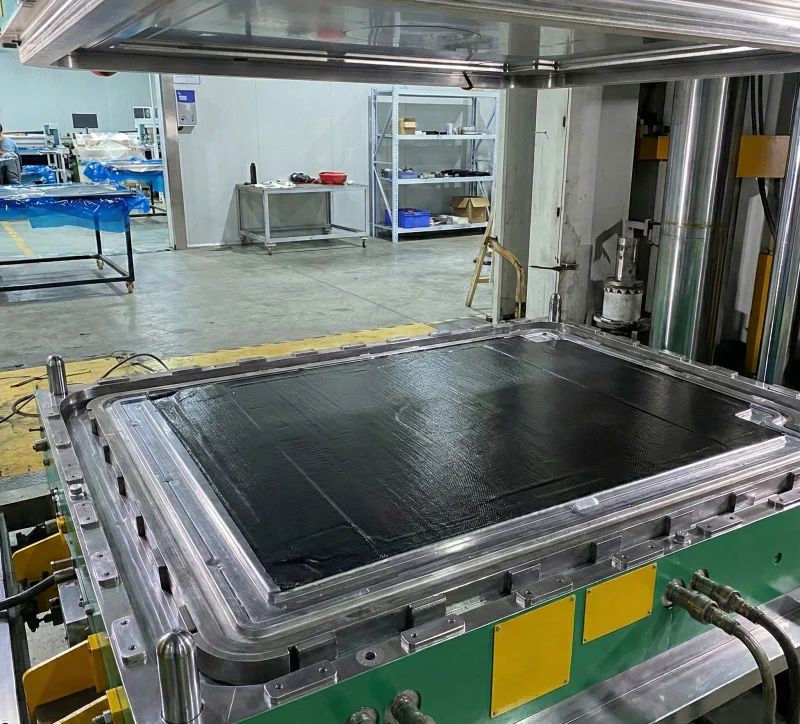
A PCM mold is a specialized compression mold used in the Prepreg Compression Molding (PCM) process. In this manufacturing method, pre-impregnated composite materials (prepregs) containing fiber reinforcement and resin are placed into a heated mold cavity and compressed under controlled temperature and pressure.
The PCM process enables manufacturers to produce composite components with precise geometries and high mechanical strength while maintaining efficient production cycles.
Basic PCM Molding Process
- Preparation and cutting of prepreg composite materials
- Placement of prepreg layers inside the PCM mold cavity
- Closing the mold within a hydraulic compression press
- Applying controlled temperature and pressure to cure the material
- Cooling and demolding the finished composite component
Because the resin is already impregnated within the fiber material, PCM molding ensures excellent fiber distribution and consistent structural quality.
Key Features of High-Quality PCM Molds
High Precision Mold Manufacturing
PCM molds must be manufactured with extremely high dimensional accuracy to ensure consistent product geometry during the compression molding process. High-quality PCM tooling typically utilizes advanced CNC machining technologies capable of achieving micron-level precision.
Accurate mold cavities help ensure uniform pressure distribution and consistent part dimensions during high-pressure molding cycles.
Optimized Thermal Control
Uniform temperature distribution across the mold surface is essential for proper curing of composite materials. PCM molds are often designed with integrated heating systems or heating channels that allow precise temperature control throughout the molding process.
Stable thermal control helps prevent defects such as incomplete curing, fiber distortion, or resin-rich areas.
High Strength Mold Materials
During compression molding operations, molds must withstand significant pressure and repeated thermal cycling. As a result, PCM molds are typically manufactured from high-strength materials such as hardened tool steel or alloy mold steel.
These materials provide excellent wear resistance, structural stability, and long mold service life.
Superior Surface Finish
Surface quality is extremely important in composite manufacturing. Precision-polished mold cavities allow PCM molds to produce composite components with excellent surface finish, reducing the need for secondary finishing processes.
PCM Mold Design and Manufacturing Process
The production of high-performance PCM molds involves multiple engineering and manufacturing stages.
Mold Design and Engineering
The first stage in PCM tooling development is detailed engineering design. Engineers analyze component geometry, composite material characteristics, and curing conditions to optimize mold structure.
Modern mold design typically incorporates advanced CAD systems and simulation tools to ensure proper pressure distribution and thermal balance within the mold.
Precision CNC Machining
Once the mold design is finalized, high-precision CNC machining equipment is used to manufacture the mold components. CNC machining enables manufacturers to achieve complex mold geometries and tight dimensional tolerances.
Heat Treatment and Surface Finishing
To improve durability and thermal stability, PCM mold components undergo specialized heat treatment processes. Surface finishing techniques such as polishing and grinding further enhance mold performance and surface quality.
Mold Assembly and Testing
After machining and finishing, the mold components are assembled and tested to ensure proper alignment, heating performance, and molding functionality before entering production.
Applications of PCM Molds
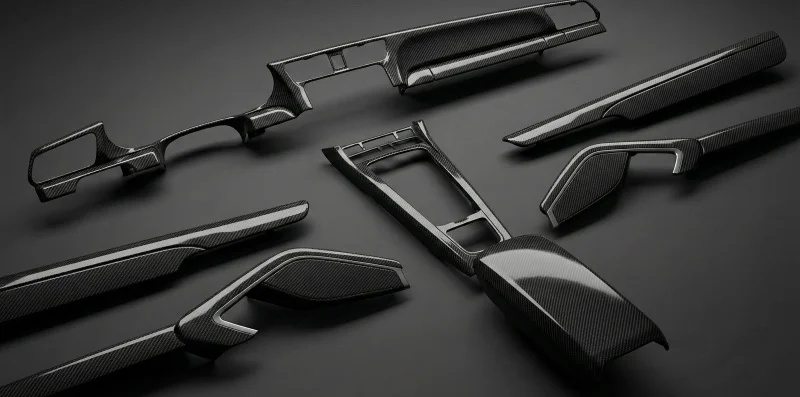
PCM molds are widely used across several industries where high-performance composite components are required.
Automotive Composite Components
- Carbon fiber body panels
- Electric vehicle battery enclosure components
- Automotive structural composite panels
- Lightweight interior parts
Aerospace Composite Structures
- Aircraft structural panels
- Lightweight aerospace components
- Composite interior parts
Electrical and Industrial Components
- Electrical insulation panels
- Composite equipment housings
- Industrial structural components
Advantages of PCM Molding Technology
Compared with traditional manufacturing processes, PCM molding provides several important advantages for composite component production.
- Excellent fiber distribution and mechanical strength
- High dimensional accuracy
- Efficient production cycles
- Consistent product quality
- Reduced material waste
These advantages make PCM molding one of the most effective technologies for producing high-performance composite structures.
Frequently Asked Questions About PCM Molds
What does PCM stand for in composite manufacturing?
PCM stands for Prepreg Compression Molding. It is a composite manufacturing process that uses prepreg materials and compression molds to produce high-strength composite parts.
What industries use PCM molds?
PCM molds are widely used in automotive manufacturing, aerospace engineering, electrical insulation production, and industrial composite component manufacturing.
Why are PCM molds important in composite manufacturing?
PCM molds provide the precise cavity geometry, thermal control, and pressure distribution required to produce high-performance composite components with consistent quality.
Conclusion
PCM molds are a key technology in advanced composite manufacturing. By combining precision compression molding tooling with prepreg composite materials, manufacturers can produce lightweight structural components with exceptional mechanical properties and consistent quality.
As industries increasingly adopt composite materials for lightweight engineering and high-performance applications, PCM mold technology will continue to play a vital role in modern manufacturing processes.