
Heating channel design is one of the most important engineering considerations in SMC mold manufacturing. While mold geometry determines the shape of a composite component, the heating system determines how consistently the material cures inside the mold cavity.
For Sheet Molding Compound (SMC), temperature directly influences resin flow, fiber distribution, curing reaction, surface appearance, dimensional stability, and production cycle time. An optimized heating channel layout enables manufacturers to produce high-quality composite parts with excellent repeatability while reducing energy consumption and maintenance costs.
Why Heating Channel Design Is Critical for SMC Molding
Unlike thermoplastic molding, SMC compression molding relies on a thermosetting resin system that cures under controlled heat and pressure. The mold must maintain a stable temperature across the entire cavity throughout the molding cycle.
If certain regions of the mold become significantly hotter or colder than others, several quality issues may occur:
- Incomplete resin curing
- Fiber-rich or resin-rich areas
- Surface waviness or sink marks
- Internal residual stress
- Dimensional variation
- Longer molding cycles
Therefore, the objective of heating channel design is not simply to increase mold temperature, but to achieve excellent temperature uniformity across complex mold surfaces.
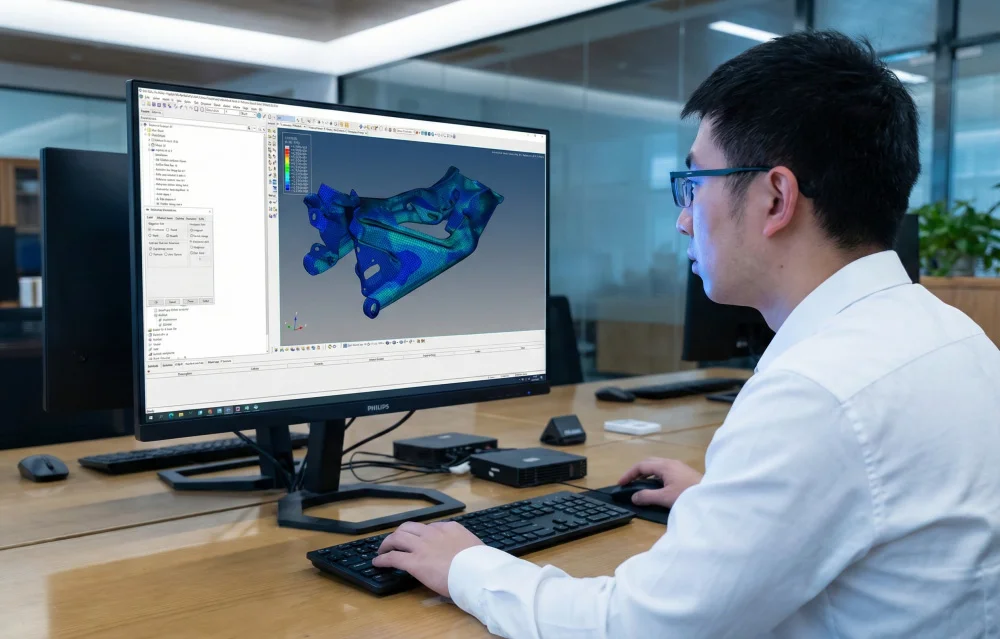
Understand Heat Transfer Before Designing Heating Channels
Heat generated by electric heaters or thermal oil channels must travel through the mold steel before reaching the cavity surface. The distance between the heating channel and the cavity, together with the thermal conductivity of the mold material, determines how evenly heat is distributed.
Engineers should avoid concentrating multiple heating channels in one area while leaving other regions without sufficient thermal support. Balanced heat flow reduces thermal gradients and improves overall molding consistency.
Key Principles for Heating Channel Layout
1. Maintain Uniform Channel Spacing
Heating channels should be distributed as evenly as possible around the mold cavity. Consistent spacing minimizes localized hot spots and helps maintain similar temperatures across the entire molding surface.
Complex areas with ribs, bosses, or deep cavities often require additional thermal analysis to compensate for uneven heat absorption.
2. Keep Proper Distance from the Mold Surface
Channels positioned too close to the cavity may create localized overheating and shorten mold life, while channels located too far away reduce heating efficiency and increase energy consumption.
The optimal distance depends on mold thickness, steel grade, heating method, and product geometry.
3. Consider Product Wall Thickness
Thick composite sections require more thermal energy than thin areas. Heating channels should be adjusted accordingly to ensure all regions reach curing temperature at approximately the same time.
Balanced heating minimizes differential curing and reduces internal stresses after demolding.
Heating Methods Used in SMC Molds
Electric Cartridge Heating
Electric cartridge heaters are widely used for medium-sized SMC molds because they provide fast response, easy installation, and precise temperature control through independent heating zones.
Thermal Oil Heating
Large compression molds often utilize thermal oil circulation systems. Heated oil flows through internal channels to provide highly stable temperatures across large mold surfaces.
Oil heating systems are particularly suitable for large automotive panels, sanitary ware molds, and structural composite components requiring excellent temperature consistency.
Hybrid Heating Systems
Some advanced composite molds combine electric heating with oil circulation to achieve rapid heating during startup while maintaining stable temperatures during continuous production.

Using Thermal Simulation During Mold Design
Modern SMC mold manufacturers increasingly use CAE thermal simulation before machining heating channels.
Simulation allows engineers to evaluate:
- Temperature distribution
- Heat loss locations
- Potential hot spots
- Heating efficiency
- Cycle time optimization
By validating heating performance digitally, mold designers can reduce design revisions, shorten development time, and improve first-trial success rates.
Heating Channel Design for Complex Composite Parts
Large SMC components often contain ribs, deep pockets, reinforcement areas, and varying wall thicknesses. These features absorb heat differently and require customized heating strategies.
Instead of using identical channel layouts throughout the mold, engineers may divide the mold into multiple independently controlled heating zones. Each zone can maintain a slightly different temperature to compensate for local heat demand and ensure uniform resin curing.
Common Heating Channel Design Mistakes
- Uneven heating channel spacing
- Heating channels located too close to cavity surfaces
- Ignoring thick-section heat requirements
- Poor thermal balance between upper and lower mold halves
- Insufficient temperature monitoring locations
- No thermal simulation before machining
Avoiding these design issues significantly improves molding stability while extending mold service life.
How Heating Channel Design Improves Production Efficiency
Well-designed heating channels contribute to much more than temperature control. They directly improve manufacturing efficiency by reducing molding cycle times, minimizing scrap rates, lowering energy consumption, and increasing process repeatability.
Stable mold temperatures also reduce operator adjustments during production, making automated composite manufacturing more reliable and predictable.
SUASE Mould's Engineering Approach
At SUASE Mould, heating channel design is integrated into the overall engineering process rather than treated as an isolated feature.
Our engineering team considers product geometry, composite material characteristics, mold steel selection, heating method, thermal simulation, machining precision, and production requirements before finalizing each heating system.
By combining advanced CNC machining, precision mold manufacturing, and optimized thermal management, we help customers achieve consistent SMC molding quality, shorter production cycles, and longer mold service life.
Conclusion
Heating channels are the thermal foundation of every high-performance SMC mold. Proper heating channel design ensures uniform curing, stable composite properties, superior surface quality, and efficient production.
As composite applications continue expanding into automotive, construction, sanitary ware, and lightweight industrial products, optimized temperature management will remain one of the defining characteristics of advanced SMC mold engineering.