
As industries such as new energy vehicles, rail transit, energy storage systems, construction machinery, and aerospace continue to pursue lightweight design, high performance, and greater manufacturing efficiency, large integrated composite components are becoming a major trend in modern manufacturing. Compared with traditional metal structures, composite materials not only reduce weight but also provide excellent strength, corrosion resistance, electrical insulation, and greater design flexibility.
During this industrial transformation, compression molds, compression molding tools, and high-performance SMC compression molds are becoming increasingly important. As core equipment for large-scale composite manufacturing, advanced hot compression molds are driving large integrated composite parts from product development to high-volume production, creating new growth opportunities for the global manufacturing industry.
Large Integrated Manufacturing Becomes a New Trend in the Composites Industry
In the past, large industrial products were typically assembled through metal stamping, welding, and mechanical fastening. However, as product structures become more complex, traditional multi-component assembly methods increasingly face challenges such as increased weight, complicated production processes, lower assembly efficiency, and higher manufacturing costs.
Today, more manufacturers are adopting large integrated composite designs and utilizing advanced compression molding processes to consolidate multiple components into a single structure, improving both product performance and manufacturing efficiency.
This trend is rapidly expanding across various industries:
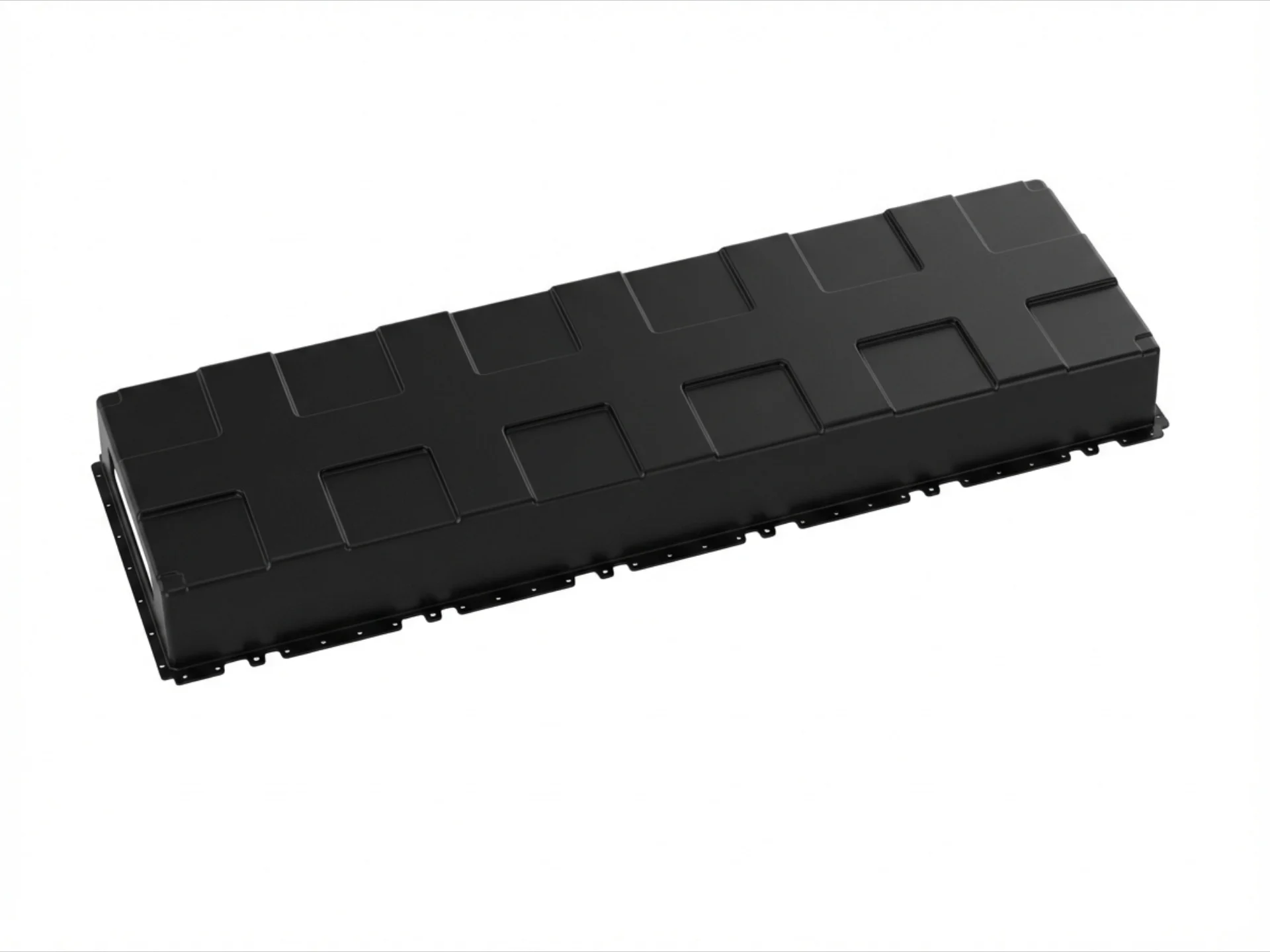
- EV battery pack covers
- Battery trays and battery housings
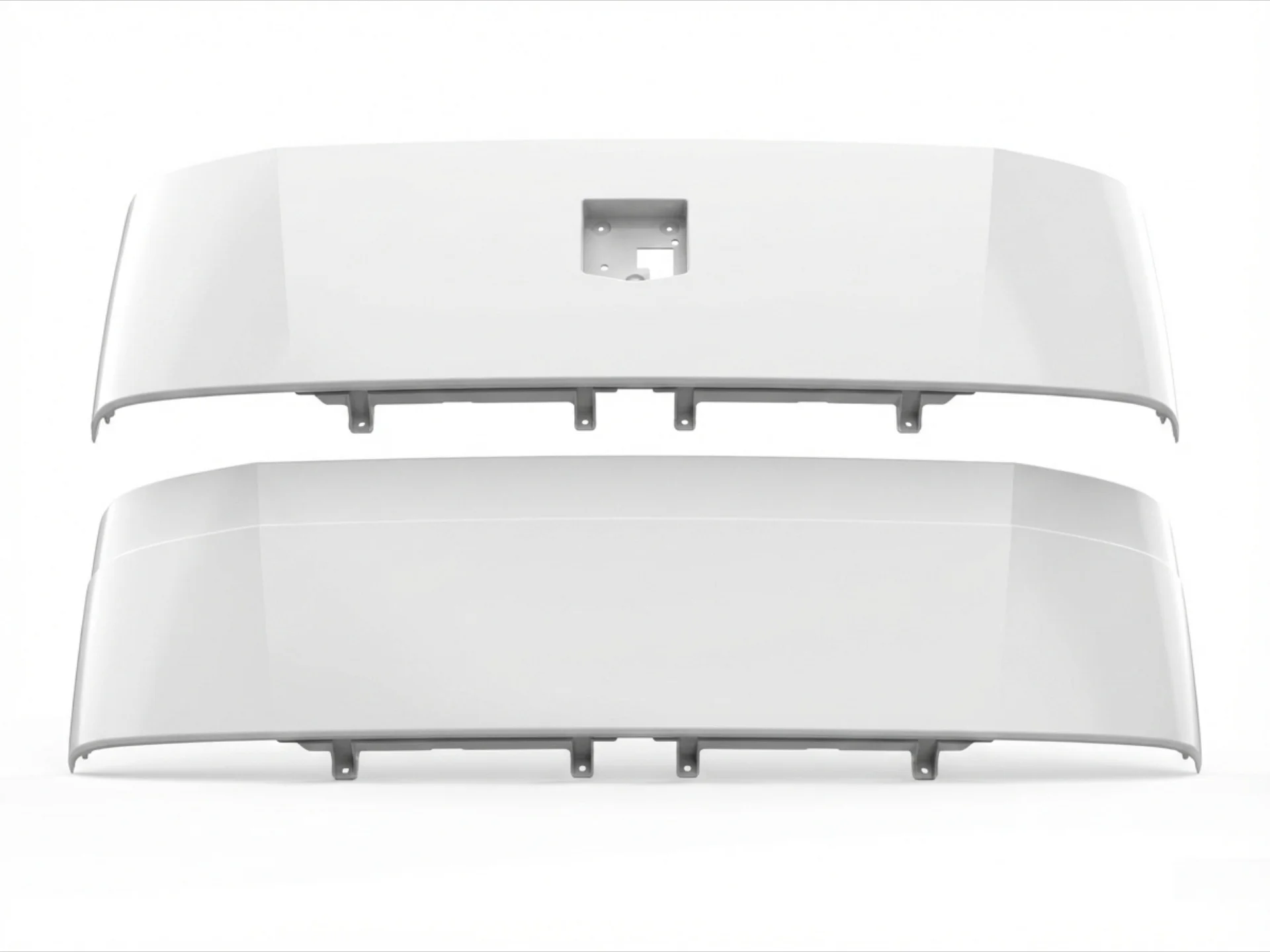
- Front-end modules
- Roof systems and tailgate structures
- Energy storage system enclosures
- Rail transit interior and exterior components
- Construction machinery covers
- Aerospace composite structural parts
The production of these large composite components places higher demands on compression molds regarding dimensional accuracy, structural rigidity, temperature uniformity, and manufacturing efficiency.
Why Are Large Composite Components Becoming More Popular?
Achieving Lightweight Design
Lightweight engineering has become a key objective for new energy vehicles, renewable energy equipment, and advanced manufacturing industries. Compared with conventional steel structures, composite materials can significantly reduce weight while maintaining excellent mechanical strength.
Through optimized design and advanced compression molding processes, certain structural components can achieve weight reductions of 20% to 50%, improving overall energy efficiency.
Reducing Part Count
Large integrated designs combine multiple individual components into a single structure, reducing welding, fastening, and assembly operations while improving product consistency and reliability.
Improving Production Efficiency
With advanced hot compression molds, manufacturers can achieve automated, standardized, and high-volume production, significantly shortening manufacturing cycles.
Optimizing Lifecycle Costs
Although composite components may require higher initial development investments, lower assembly costs, reduced maintenance requirements, and longer service life can significantly improve overall economic performance.
Compression Molds Become the Core Equipment for Composite Mass Production
In composite manufacturing, molds determine not only product geometry but also product quality, production efficiency, and manufacturing costs.
For large composite structural parts, high-performance compression molds have become essential for achieving stable mass production.
Precise Dimensional Control
Large structural components often feature complex surfaces and strict dimensional tolerances. High-precision compression molds ensure consistent product dimensions while reducing secondary machining requirements.
Ensuring Uniform Temperature Distribution
The curing process of composite materials is highly sensitive to temperature. Advanced compression molding tools typically incorporate optimized heating systems and temperature control solutions to ensure uniform heat distribution throughout the mold cavity.
Improving Production Stability
Mature hot compression mold designs effectively control resin flow, fiber distribution, and curing behavior, resulting in higher product quality and yield rates.
Meeting Automation Requirements
As industrial automation continues to advance, modern compression molds increasingly integrate automatic mold opening, quick mold change systems, vacuum assistance, and intelligent monitoring technologies.
SMC Compression Molds Create New Growth Opportunities
Among various composite manufacturing technologies, SMC (Sheet Molding Compound) compression molding has become a key solution for automotive, energy storage, electrical, and infrastructure applications.
Compared with traditional manufacturing methods, SMC compression molding offers advantages such as high production efficiency, excellent dimensional stability, superior surface quality, and suitability for mass production.
As a result, more companies are investing in high-performance SMC compression molds for manufacturing large structural and functional components.
Typical applications include:
- EV battery pack covers
- Battery protection covers
- Front trunk assemblies
- Automotive body panels
- Energy storage system enclosures
- Electrical equipment housings
- Rail transit interior components
What Technical Challenges Do Large Hot Compression Molds Face?
Ultra-Large Precision Machining
As product sizes continue to increase, mold manufacturing requires higher CNC machining accuracy, assembly precision, and deformation control capabilities.
Temperature Uniformity Design
Large molds require more sophisticated heating channel designs to maintain consistent temperatures across all mold regions and prevent uneven curing.
Mold Structural Strength Optimization
Under high-tonnage press operations, molds must withstand substantial mechanical loads, making structural design and material selection critical factors.
Faster Production Cycle Requirements
Rapid growth in the new energy vehicle and energy storage sectors is driving demand for shorter molding cycles and higher manufacturing efficiency.
Smart Manufacturing Drives Compression Mold Technology Upgrades
Digitalization and smart manufacturing are transforming the traditional mold industry.
Future advanced compression molds will increasingly integrate:
- Digital simulation and engineering analysis
- Intelligent temperature control systems
- Real-time pressure monitoring
- Automated loading and unloading systems
- Industrial IoT monitoring platforms
- Predictive maintenance technologies
These innovations will help manufacturers improve compression molding efficiency, reduce production costs, and enhance product consistency.
Bright Market Prospects Ahead
As industries such as new energy vehicles, energy storage systems, rail transportation, aerospace, and renewable energy continue to expand, demand for large integrated composite components is expected to grow significantly.
This trend will further accelerate the advancement of compression molds, compression molding tools, SMC compression molds, and hot compression mold technologies, creating new opportunities for mold manufacturers worldwide.
For composite manufacturers, investing in advanced mold technologies not only improves competitiveness but also supports future high-volume production requirements. Under the global trend toward lightweight manufacturing, advanced compression molding technology and high-quality compression molds will continue to play a vital role in driving the composites industry forward.
FAQ: Frequently Asked Questions About Compression Molds and Compression Molding
What is a compression mold?
A compression mold is a specialized tool that uses heat and pressure to form and cure composite materials. It is widely used in the production of SMC, BMC, GMT, and carbon fiber composite components.
What products are suitable for SMC compression molds?
SMC compression molds are commonly used for manufacturing new energy vehicle components, energy storage system enclosures, electrical housings, rail transit parts, and construction composite products.
What are the core technologies behind large hot compression molds?
Key technologies include high-precision machining, temperature uniformity control, optimized mold structural design, and integration with automated production systems.
Why is compression molding becoming increasingly popular in manufacturing?
Compression molding enables integrated production of complex structures while offering high efficiency, excellent consistency, lightweight solutions, and suitability for large-scale manufacturing, making it ideal for modern composite applications.