Thermoforming is not a single process—it is a family of forming technologies. Understanding the types of thermoforming is essential for selecting the right manufacturing strategy, especially when balancing cost, precision, and production efficiency.
In real-world projects, engineers rarely ask “What is thermoforming?” Instead, they ask:
“Which thermoforming process gives the best performance for this product?”
The answer depends heavily on process selection and thermoforming mould design.
1. Vacuum Forming - The Most Widely Used Thermoforming Method
Vacuum forming is the most common and cost-effective type of thermoforming.
How It Works
A heated plastic sheet is placed over a thermoforming mould, and air is removed using vacuum pressure. The sheet is pulled tightly against the mould surface.
Key Advantages
- Low tooling cost
- Fast production setup
- Ideal for large parts
Typical Applications
- Automotive interior panels
- Plastic enclosures
- Packaging trays
For manufacturers, vacuum forming is often the entry point into plastic thermoforming processes.
2. Pressure Forming - High Detail and Premium Surface Finish
Pressure forming enhances vacuum forming by adding compressed air to improve detail replication.
Why It Matters
When product appearance is critical, pressure forming delivers:
- Sharper edges
- Better texture reproduction
- Injection-molding-like finish
This makes it a preferred solution for high-end applications requiring both aesthetics and structural performance.
3. Twin Sheet Thermoforming - Creating Hollow Structures
Twin sheet thermoforming is used to produce hollow, double-wall components.
Process Insight
- Two heated sheets are formed simultaneously
- The sheets are fused together under pressure
Engineering Benefits
- High stiffness-to-weight ratio
- Integrated internal cavities
- Reduced assembly steps
This type of thermoforming is widely used in structural applications where strength and weight reduction are critical.
4. Plug Assist Forming - Solving Material Distribution Challenges
In deep-draw applications, uneven thickness is a common issue. Plug assist forming solves this by pre-stretching the material before vacuum or pressure is applied.
Key Benefits
- Improved wall thickness control
- Reduced material thinning
- Better dimensional consistency
For packaging and medical trays, this method significantly improves product quality.
5. Mechanical (Matched Mold) Thermoforming
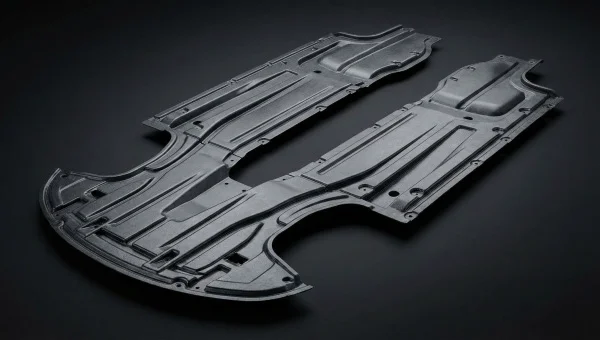
Mechanical thermoforming, also known as matched mold forming, uses both male and female moulds.
Characteristics
- High precision
- Controlled thickness distribution
- Suitable for complex geometries
This process relies heavily on high-precision thermoforming mould manufacturing.
6. Drape Forming - Simple and Efficient for Large Curves
Drape forming is one of the simplest thermoforming methods, where a heated sheet is draped over a mould.
Best Use Cases
- Large-radius components
- Transparent panels
- Aerospace applications
While it offers limited detail, it is highly efficient for large, smooth shapes.
7. Thin Gauge vs Thick Gauge Thermoforming
Another important classification of types of thermoforming is based on material thickness.
Thin Gauge Thermoforming
- High-volume production
- Mainly used in packaging
Thick Gauge Thermoforming
- Structural applications
- Automotive and industrial parts
Thick gauge processes require more robust thermoforming mould systems and precise temperature control.
8. Thermoforming vs Injection Molding: Strategic Selection
| Factor | Thermoforming | Injection Molding |
|---|---|---|
| Tooling Cost | Low | High |
| Part Size | Large | Limited |
| Production Volume | Medium | High |
| Design Flexibility | High | Moderate |
For large components and faster project turnaround, thermoforming is often the preferred solution.
9. Why Thermoforming Mould Design Determines Success
Regardless of the process type, the performance of any thermoforming solution depends on the thermoforming mould.
Critical factors include:
- Heat transfer efficiency
- Vent hole design
- Surface finish quality
- Mould material selection (aluminum, steel)
A well-designed mould ensures:
- Consistent product quality
- Reduced cycle time
- Lower production cost
Conclusion: Choosing the Right Thermoforming Process
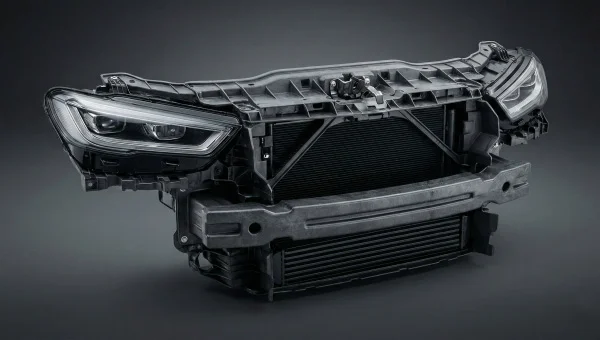
There is no single “best” thermoforming method. Each option—from vacuum forming to twin sheet thermoforming—serves a specific purpose.
The real advantage comes from selecting:
- The right type of thermoforming
- The appropriate material
- A precision-engineered thermoforming mould
As industries demand lighter, faster, and more cost-efficient production, thermoforming continues to be a key technology shaping modern manufacturing.