
Summary
Thermoplastic compression molding is an advanced manufacturing process where heated thermoplastic materials are shaped in a thermoplastic compression mould under controlled pressure. It enables the production of lightweight, high-strength, and recyclable components with short cycle times, making it ideal for automotive, aerospace, and industrial applications.
Introduction to Thermoplastic Compression Molding
As industries move toward lightweight engineering, sustainability, and high-efficiency production, thermoplastic compression molding has emerged as a key technology in modern manufacturing.
Unlike thermoset processes, thermoplastic systems offer recyclability, rapid processing, and excellent impact resistance. Combined with advanced thermoplastic compression mould design, this process enables the efficient production of high-performance components with complex geometries.
Thermoplastic Compression Molding Process
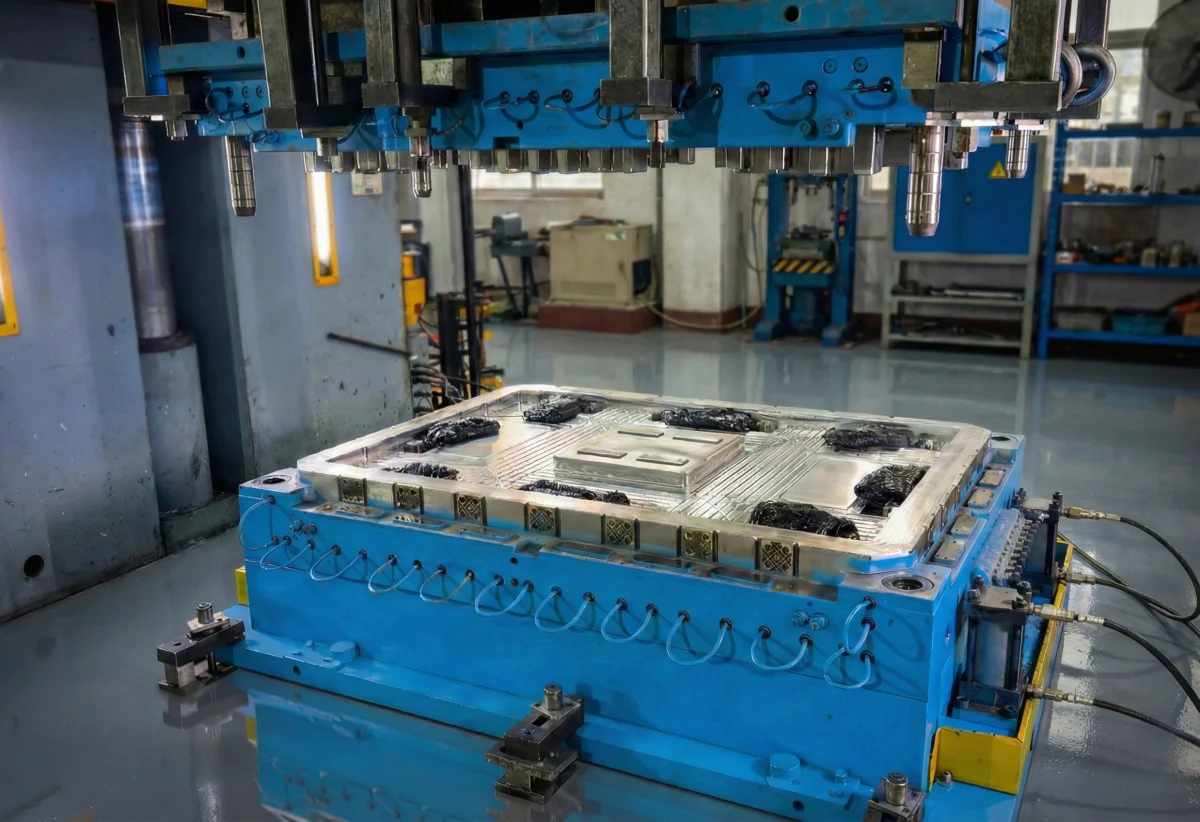
The thermoplastic compression molding process involves placing preheated thermoplastic sheets or charge materials into a compression mold, followed by forming under heat and pressure.
Key Process Steps:
- Material preparation (thermoplastic sheets, pellets, or preforms)
- Heating to forming temperature
- Placement into the compression mould
- Press forming under controlled pressure
- Cooling and demolding
This process ensures high repeatability, excellent surface quality, and reduced cycle times.
Materials Used in Thermoplastic Compression Molding
A wide range of thermoplastic materials can be used, including:
- Polypropylene (PP)
- Polyamide (PA / Nylon)
- Polycarbonate (PC)
- Glass fiber reinforced thermoplastics (GMT, LFT)
- Carbon fiber reinforced thermoplastics (CFRTP)
These materials provide a balance of strength, impact resistance, and recyclability.
Thermoplastic Compression Mould Design and Engineering
The performance of the final product depends heavily on the quality of the thermoplastic compression mould.
Key Design Considerations:
- Temperature control and uniform heating
- Pressure distribution and mold sealing
- Ventilation and gas release systems
- Surface finish and texture control
- Durability and wear resistance
Advanced compression mold and composite mold technologies ensure precision and long service life.
Advantages of Thermoplastic Compression Molding
1. Lightweight and High Strength
Ideal for applications requiring structural performance with reduced weight.
2. Recyclability
Thermoplastic materials can be reheated and reused, supporting sustainable manufacturing.
3. Short Cycle Time
Faster production compared to traditional thermoset processes.
4. Design Flexibility
Enables complex shapes and integrated structures in a single molding step.
5. Cost Efficiency
Reduced labor and material waste lead to lower overall production costs.
Applications Across Industries
Automotive Industry
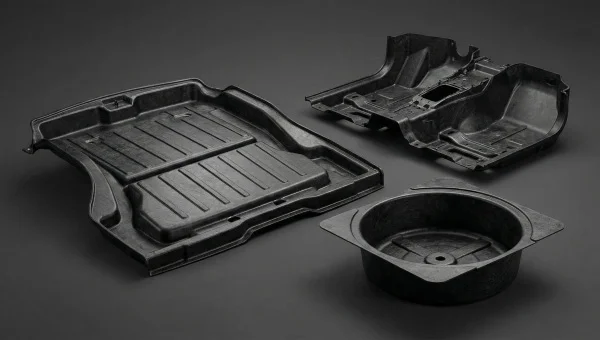
- Interior panels and trim components
- Underbody shields
- Battery enclosures for EVs
Aerospace Industry
- Lightweight structural components
- Interior cabin panels
Industrial Applications
- Electrical enclosures
- Equipment housings
- Structural composite panels
Thermoplastic vs Thermoset Compression Molding
While both processes use compression molding, key differences include:
- Thermoplastics: Recyclable, fast processing, high impact resistance
- Thermosets: Higher heat resistance, permanent cross-linked structure
The choice depends on application requirements and performance targets.
Frequently Asked Questions (FAQ)
What is thermoplastic compression molding?
It is a process where heated thermoplastic materials are formed in a compression mould under pressure to create high-performance parts.
What materials are used in thermoplastic compression molding?
Common materials include polypropylene, polyamide, polycarbonate, and fiber-reinforced thermoplastics such as GMT and LFT.
What is a thermoplastic compression mould?
It is a specialized mold designed to shape heated thermoplastic materials under pressure, ensuring precision and consistency.
Conclusion: Future of Thermoplastic Compression Technology
Thermoplastic compression molding, supported by advanced thermoplastic compression mould systems, is becoming a key solution for lightweight, sustainable, and high-performance manufacturing.
As industries continue to demand efficiency and environmental responsibility, this technology will play an increasingly important role in shaping the future of composite and thermoplastic component production.