
When the visible face of an exterior automotive panel changes, the SMC mold review should identify what the revision must achieve. A new contour changes the required forming-surface geometry. A tighter finish, dimensional or structural requirement changes the acceptance criteria—and may also require reconsidering the specified compound and its forming conditions. The drawing edit alone does not resolve all three.
SMC, or sheet moulding compound, typically combines thermoset resin, chopped reinforcement and filler in sheet form. It is shaped and chemically cured during molding. The selected grade’s reinforcement and formulation determine its applicable properties, so material selection and cure conditions remain part of the tooling discussion even when the visible change appears small.
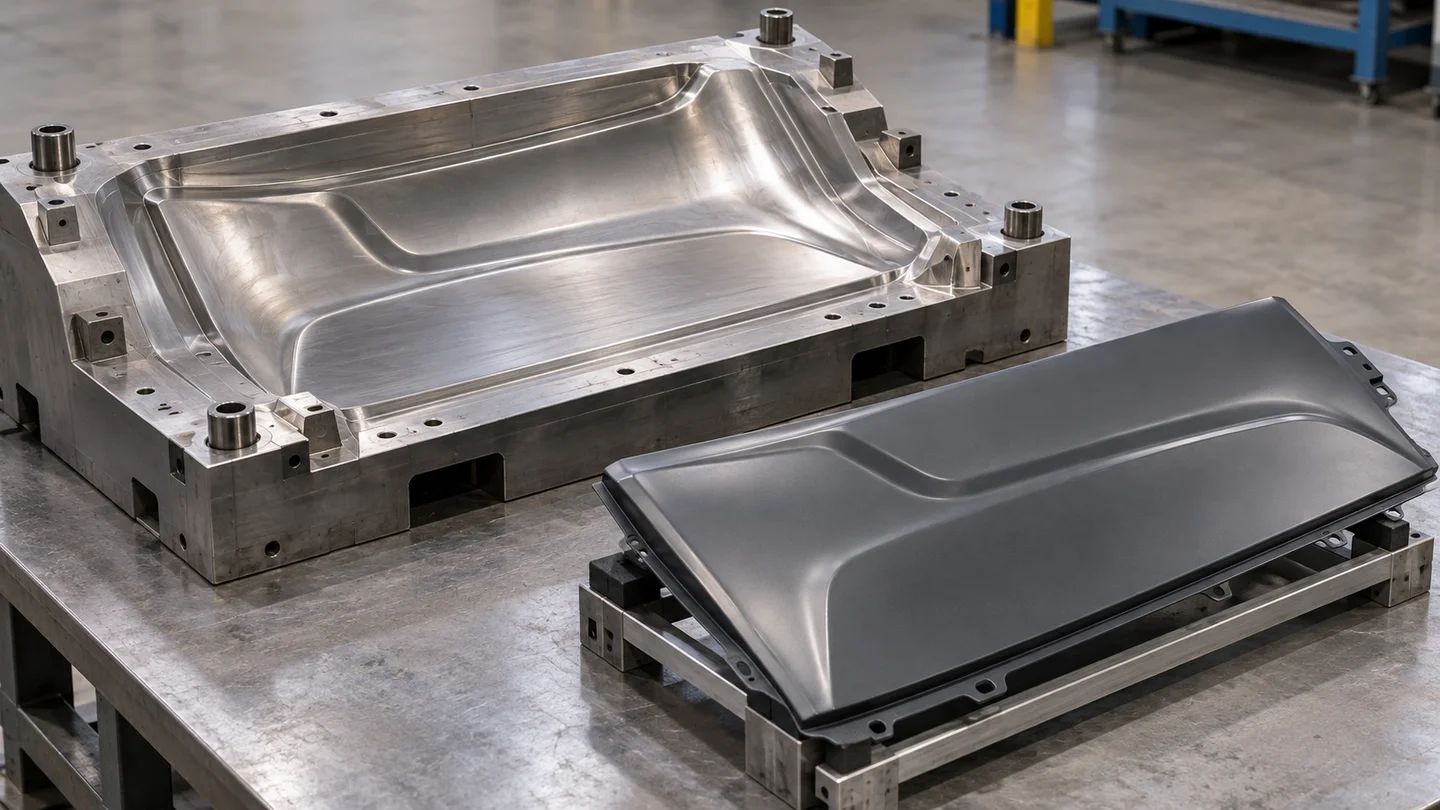
Consider two revisions to the same panel face. In the first, the contour changes while the finish requirement remains the same. In the second, the contour stays unchanged but the required finish becomes more demanding. These revisions call for different decisions: the first establishes a new geometry target; the second requires a clearer surface target before a geometry modification can be justified.
SUASE’s scope includes large-size SMC molds and exterior automotive panels, with surface finish and thermal consistency among its engineering priorities. For the revised face, the discussion with SUASE should connect the forming surface, the specified SMC grade and the intended shaping and cure conditions. This gives the tool review a defined purpose beyond reproducing the latest outline.
The comparison should then answer a practical question. If inspection shows that the revised face meets its dimensional target but the surface remains unacceptable, dimensional correction has answered only part of the brief. The next decision concerns the surface requirement and its material-and-process basis. A smoother-looking face, likewise, does not establish that the revised dimensions have been achieved. Related information is available on SUASE’s geometry inspection page.
A structural requirement changes the discussion again. Because SMC properties depend on the grade’s reinforcement and formulation, matching the panel drawing cannot establish structural compliance. SUASE’s structural composite focus is relevant here: the tool brief should remain connected to the chosen material and the evidence required for the component’s intended function. Surface appearance and dimensional agreement do not replace that evidence.
There is a useful trade-off when considering a material change alongside a contour revision. Keeping the specified grade provides a common material basis for comparing the two geometries. Selecting a different grade may be relevant to the revised property requirement, but differences between samples can then no longer be attributed to geometry alone. Decide which question the comparison must answer before combining changes.
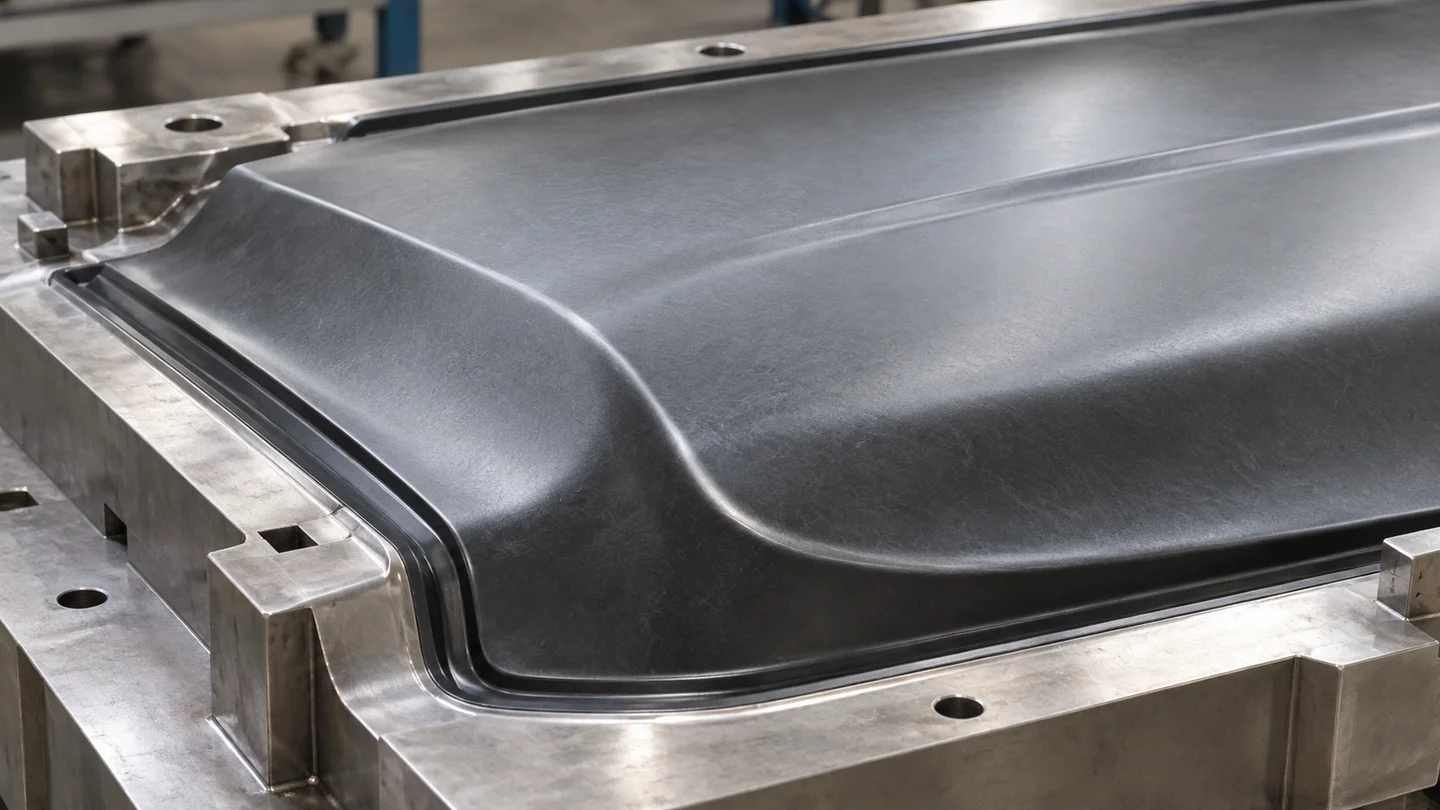
For a mould trial, define the observation that would support the next decision: agreement with the revised contour, acceptance of the visible face, or evidence against the structural requirement. Each answers a different part of the tooling brief.
To start a discussion with SUASE, mark the changed requirement beside the affected face on an existing drawing. That single input helps focus the conversation on which tooling decisions should change and what observation would show that the revision addressed the actual requirement.