
As the demand for lightweight, durable, and low-maintenance building materials continues to grow, SMC door mould technology has become an important solution for manufacturing high-performance composite doors. Compared with traditional wooden or steel doors, SMC composite doors offer excellent weather resistance, dimensional stability, corrosion resistance, and design flexibility.
Behind every high-quality composite door is a precisely engineered Composite Door Panel Mold. Mold design directly affects product appearance, fiber distribution, curing consistency, dimensional accuracy, and production efficiency throughout the compression molding process.
Why SMC Is Widely Used for Composite Door Panels
Sheet Molding Compound (SMC) is a glass fiber reinforced thermoset composite material that combines excellent mechanical properties with outstanding molding efficiency. During compression molding, SMC materials flow into the mold cavity under heat and pressure before curing into a rigid composite structure.
Compared with traditional door materials, SMC composite door panels provide several advantages:
- Excellent moisture resistance
- High dimensional stability
- Corrosion and chemical resistance
- Good thermal insulation performance
- High impact strength
- Long service life with minimal maintenance
- Flexible decorative surface designs
The Role of the SMC Door Mould
An SMC door mould does much more than define the external shape of the product. It controls every critical stage of the molding process, including material flow, fiber orientation, curing behavior, venting efficiency, and surface finish.
A properly designed mold helps ensure that every molded door panel maintains consistent quality from the first production cycle to large-volume manufacturing.
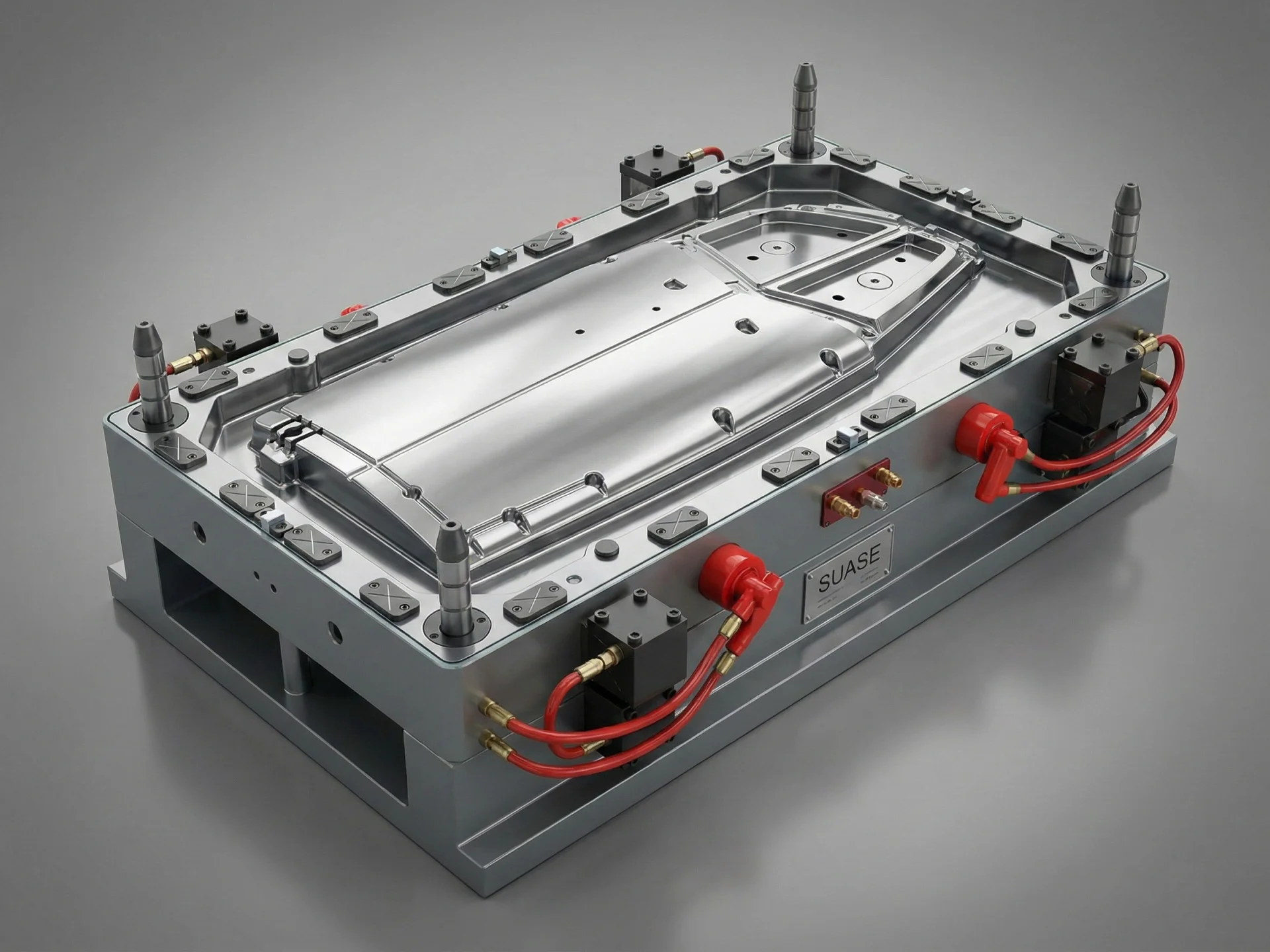
Key Engineering Considerations in Composite Door Panel Mold Design
1. Uniform Material Flow
Door panels usually feature decorative patterns, recessed areas, ribs, and reinforcement structures. These complex geometries require balanced material flow throughout the cavity.
Optimized gate locations, cavity transitions, and compression paths reduce the risk of fiber accumulation, resin-rich zones, and incomplete filling.
2. Temperature Uniformity
Stable mold temperature is essential for achieving consistent resin curing across the entire door panel.
Heating channels should be carefully designed to distribute heat evenly, minimizing temperature differences between the center and edge areas of the mold. Uniform curing improves both surface quality and structural performance.
3. Venting System Design
During compression molding, trapped air and volatile gases must escape efficiently. A properly engineered venting system reduces the likelihood of:
- Surface pinholes
- Voids
- Incomplete filling
- Burn marks
- Surface defects
Effective venting contributes directly to improved cosmetic appearance and reduced scrap rates.
4. Mold Surface Finish
Composite doors are often used in residential and commercial buildings where appearance is an important consideration.
High-quality polishing and precision machining allow the mold to reproduce detailed wood grain textures, decorative patterns, and smooth surfaces without requiring extensive secondary finishing.
Choosing the Right Mold Steel
The service life of an SMC door mould depends heavily on the selection of mold steel and heat treatment processes.
High-quality tool steels provide:
- Excellent wear resistance
- Stable dimensional accuracy
- Good thermal conductivity
- Long-term polishing performance
- Resistance to repeated thermal cycling
Selecting suitable mold materials helps extend production life while maintaining consistent product quality.
Precision CNC Machining for Door Panel Molds
Modern composite door panel molds require high-precision CNC machining to achieve accurate cavity dimensions and fine decorative details.
Five-axis machining, high-speed milling, EDM processing, and precision grinding are commonly combined to produce complex mold geometries with tight tolerances.
Accurate machining minimizes mold fitting adjustments and improves overall production efficiency during mold assembly and trial runs.
Compression Molding Process for Composite Door Panels
A typical manufacturing process includes:
- Preparing the SMC material charge
- Loading material into the mold cavity
- Compression under controlled pressure
- Uniform heating and resin curing
- Cooling and demolding
- Edge trimming and quality inspection
Stable mold performance throughout each stage is essential for producing composite doors with consistent dimensions and excellent surface appearance.
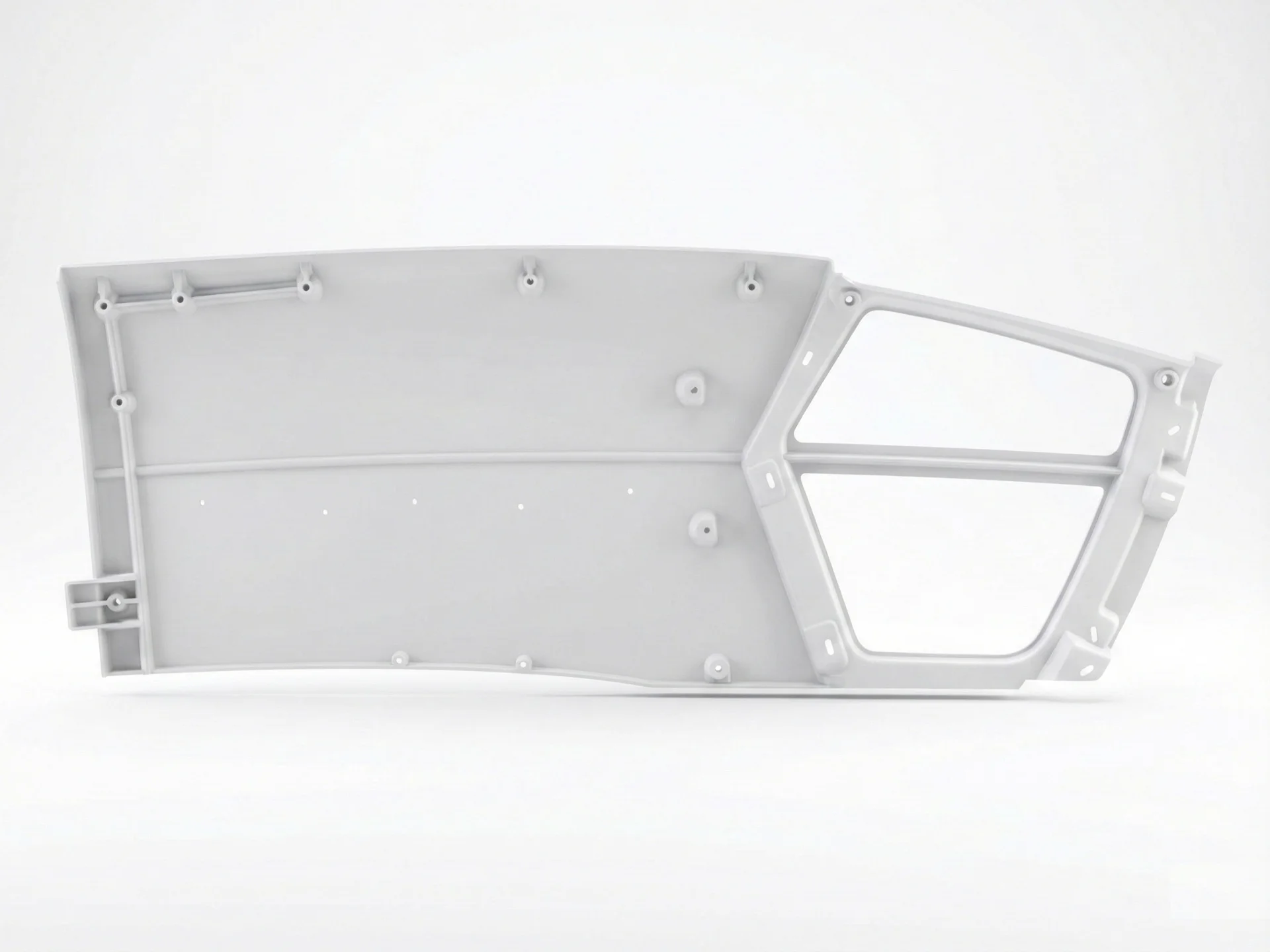
Applications of Composite Door Panels
Composite door panels manufactured using SMC door molds are widely used in:
- Residential entrance doors
- Villa exterior doors
- Apartment entrance systems
- Commercial building doors
- Industrial access doors
- Bathroom and moisture-resistant doors
- Decorative architectural panels
Future Trends in Composite Door Panel Manufacturing
The market continues to move toward larger door sizes, more complex decorative textures, improved insulation performance, and higher production efficiency.
Advanced mold technologies—including optimized heating systems, CAE flow simulation, precision temperature control, and automated machining—are enabling manufacturers to produce higher-quality composite door panels while reducing cycle time and manufacturing costs.
Suase Mould's Expertise in SMC Door Mold Manufacturing
Suase Mould specializes in the design and manufacturing of high-quality SMC Door Mould and Composite Door Panel Mold solutions for global customers.
From product development and mold engineering to precision machining, mold testing, and production support, our engineering team focuses on delivering reliable molds with excellent temperature control, dimensional accuracy, and long service life.
By combining advanced compression mold technology with extensive composite manufacturing experience, Suase Mould helps customers achieve efficient production and consistent product quality for modern composite door systems.
Conclusion
An SMC door mould is far more than a production tool—it is the foundation of high-quality composite door manufacturing. Well-engineered mold design ensures balanced material flow, uniform curing, excellent surface finish, and reliable long-term production performance.
As demand for lightweight and durable composite building materials continues to increase, precision-engineered composite door panel molds will remain a key driver of innovation in the construction and building products industry.