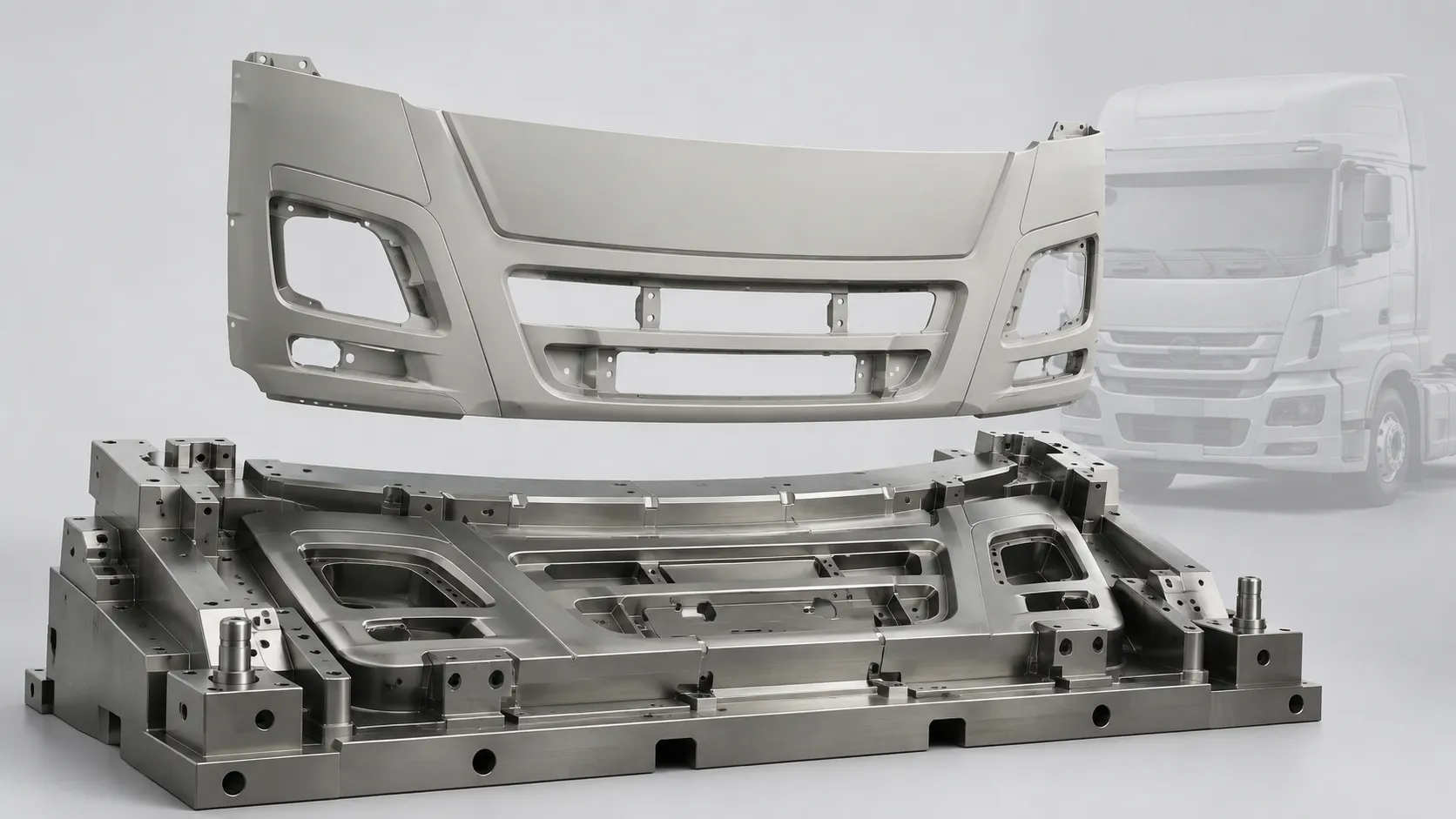
A truck front panel needs to look right on the vehicle, meet its attachment points and suit the way the factory will produce it. An SMC compression mold brings these requirements into one physical tool. Decisions about an edge, a rib or a handling route can affect both the finished panel and the work needed to make it.
SUASE MOULD develops SMC tooling for applications including truck front panels and bumpers . For a new panel project, the useful starting point is the connection between product geometry, material and production conditions. Understanding that connection helps a project team discuss the mold in terms of the part it needs to deliver.
Begin with the Panel in the Vehicle
The visible face is one part of the design. A panel also has edges that meet adjacent components, attachment areas and surfaces that may need access during assembly. These features deserve attention together because a change that helps one area can create a new tooling question elsewhere.
Consider a return edge that follows the styling of the vehicle. Its shape also needs a practical release direction in the mold. Discussing that detail while the part design is still open gives the team room to explore a workable arrangement while preserving the intended appearance and fit.
SUASE's mold design process includes design for manufacturing, or DFM, and design according to the material being molded. For a truck panel, this is an opportunity to connect visible surfaces, ribs, edges and part removal before machining begins.
The value for the customer is a clearer tooling concept, with the difficult features considered while there is still scope to develop the design.
Treat Heating as Part of the Tooling Concept
SMC combines reinforcement with a thermosetting resin and is formed using heat and pressure. The chosen material therefore belongs in the design discussion alongside the panel shape. A mold concept needs to account for how that material will be processed, as well as the geometry it must reproduce.
SUASE's SMC mold offering includes steam, thermal oil and electric cartridge heating options. The suitable arrangement depends on the material, the tool and the plant equipment. Heating connections, control arrangements and access for servicing all help determine how the mold will work in its intended setting.
For example, a heating connection close to a loading area needs to be considered with the material-handling route. Bringing those details together early helps the customer understand what the tooling installation will involve. The final temperatures and operating conditions remain specific to the selected material and project.
Give the Panel a Practical Route Through the Press
A production sequence includes loading the material, closing the mold, removing the panel and preparing for the next cycle. A large panel needs enough room to move through that sequence, including any gripper or handling equipment the factory intends to use.
That makes the press layout relevant to mold design. Mounting space, available opening and the removal path help the team judge whether the proposed arrangement suits the production cell. A press tonnage alone cannot describe those physical interfaces.
Thinking through these movements is particularly useful when a panel has deep returns or features that constrain how it can be lifted out. It connects the product design with day-to-day production: how the part will be supported, where equipment needs access and which movements the mold must accommodate.
Let the Trial Answer a Product Question
SUASE includes mold trial and validation in its tooling process. For a truck panel, the trial can bring the design discussion back to a physical part: how the visible surface and edges have formed, whether the panel can be removed as intended and how the relevant features compare with the product requirements.
This makes the sample useful to both engineering and purchasing teams. It provides something concrete to discuss against the intended application. Where trial equipment differs from the receiving factory, the remaining installation and process checks should be agreed around those differences.
An SMC compression mold project benefits from keeping that connection intact—from the panel's role on the vehicle, through the mold concept, to the conditions explored in the trial.
Discuss Your Truck Panel Project with SUASE MOULD
If you are developing a truck panel, talk with SUASE MOULD about the part and the production challenge you want to resolve . A drawing or a brief description of the application is enough to open the conversation.
From there, the discussion can focus on the material, design features and tooling questions that matter to your project, including mold design, heating arrangements, press interfaces, part removal and trial validation.