
In the manufacturing of automotive exterior and functional parts, fender molds are a key technology. This article systematically analyzes definition, classification, design essentials, manufacturing processes, CAE optimization, material selection, market applications, and future trends, helping engineers and procurement decision-makers grasp the full process from mold to finished product.
1. Overview of Fender Molds
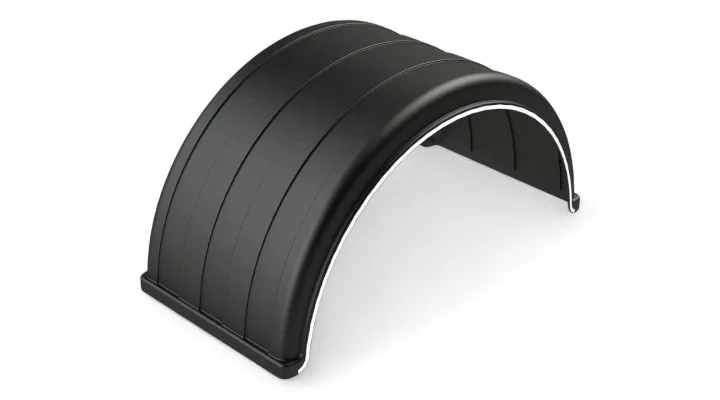
Fender molds are specialized tools used for the mass production of automotive fenders (also known as guards or mudguards). As exterior body parts, fenders not only serve to prevent dirt and stone chipping but also play a role in vehicle aerodynamics and aesthetics. This places high demands on the mold’s geometric accuracy, surface quality, and material performance.
Keywords: fender mold, automotive exterior mold, molding precision
2. Common Classifications and Forming Processes
Depending on material and process, fender molds can be divided into the following categories:
- Injection Molds: Suitable for thermoplastic fenders (e.g., PP, TPO), offering fast cycles, low unit costs, and high-volume production capability.
- Compression Molds: Often used for thermoset composites or thicker structures, suitable for SMC/BMC materials to produce high-strength, heat-resistant fenders.
- Composite Molds: Designed for carbon fiber or fiberglass-reinforced materials, supporting lightweight and high-performance needs, commonly used in EVs and premium vehicles.
- Stamping Molds and Joining Processes: Some metal decorative or support parts are still produced by stamping or sheet-metal processes, with subsequent assembly and bonding completing the structure.
3. Key Design Considerations
3.1 Geometry and Dimensional Control
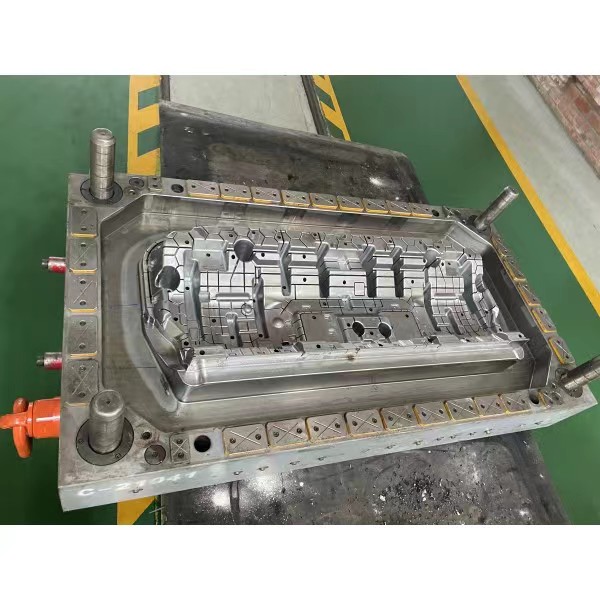
The mold cavity must precisely meet fender assembly and functional requirements. Factors such as deformation, shrinkage, and warpage should be considered, with proper draft angles, fillets, and positioning features included.
3.2 Gating System and Venting
For injection molds, gate type and location are critical; for compression molds, material feed and vent design must be optimized to avoid voids, weld lines, and burns.
3.3 Cooling and Temperature Control
Cooling system design directly affects cycle times and warpage. Uniform channels and rapid heat exchange should be prioritized.
3.4 Mold Strength and Service Life
Using suitable mold steels, heat treatment, and surface finishes (e.g., nitriding, chrome plating) improves wear resistance, corrosion resistance, and lifespan.
4. Mold and Part Material Selection
Material selection depends on cost, performance, and production volume:
| Target | Common Materials | Main Advantages |
|---|---|---|
| Mold Steel | P20, 718H, S136, H13 (depending on application) | Good polishability, toughness, and wear resistance |
| Part – Thermoplastic | PP, TPO, ABS (glass-fiber filled) | Low cost, recyclability, impact resistance |
| Part – Composites | SMC, BMC, fiberglass or carbon-fiber reinforced resins | Lightweight, high strength, thermal stability |
5. Mold Processing and Manufacturing
- CNC Machining: High-precision roughing and finishing for cavity and guiding structures.
- EDM: Used for complex surfaces, deep cavities, and fine details.
- Surface Polishing and Treatment: Ensures smooth part surfaces and reduces secondary operations.
- Assembly and Trial Molding: Assembly and trials verify design feasibility. Trial data should be recorded for mass production transfer.
6. Application of CAE Simulation in Mold Optimization
Modern mold design heavily relies on simulation tools such as Moldflow, structural analysis, and thermal simulation. These help identify and resolve warpage, short shots, flashing, and uneven cooling in advance, reducing trial costs and iterations.
7. Quality Control and Trial Molding
Key aspects monitored during trials include: appearance defects (flow lines, voids), dimensional tolerances, assembly fit, mechanical properties (impact, bending tests), and weathering performance. SPC, first article inspections, and periodic maintenance ensure stable mass production.
8. Application Scenarios and Market Analysis
Fender molds have significant demand in both conventional and new energy vehicles:
- Conventional Vehicles: Cost efficiency is prioritized, with injection molds dominating.
- New Energy Vehicles: Lightweighting demands increase the share of composite and carbon/fiberglass parts.
- Commercial and Special Vehicles: Higher requirements for weather resistance, impact strength, and durability, often involving thicker or special materials.
As automakers move toward modularization and integration, fender molds must meet higher precision and multifunctional design needs, such as reserved sensor slots or harness fixing points.
9. Technical Trends: Lightweighting, Intelligent, and Green Manufacturing
Future development of fender molds will focus on:
- Lightweighting: Use of SMC, GMT, and carbon fiber composites to balance strength and weight, reducing vehicle energy consumption.
- Intelligent Manufacturing: Integration of sensors, online data collection, and digital twins for predictive maintenance and parameter optimization.
- Green Manufacturing: Adoption of recyclable materials and eco-friendly processes to lower lifecycle carbon footprint.
- Flexibility and Customization: Rapid adjustment or interchangeable cores to serve diverse vehicle models and shorten lead times.
10. Conclusion and Recommendations
High-quality fender molds are the foundation for reliable assembly, excellent appearance, and structural performance. Mold development teams are advised to apply CAE simulations and material evaluations early, select suitable processes (injection, compression, or composite), and establish rigorous quality management during trials to minimize risks and shorten time-to-market.
FAQ
Q1: Why is fiberglass reinforcement added to injection-molded fenders?
A: Fiberglass reinforcement significantly enhances stiffness and impact resistance, allowing thin-walled parts to meet strength requirements while remaining lightweight.
Q2: What advantages do SMC fenders have over injection-molded parts?
A: SMC fenders generally offer better dimensional stability, heat resistance, and corrosion resistance, making them suitable for larger or high-load applications.
Q3: How is mold life evaluated?
A: Mold life is assessed based on steel selection, heat treatment, surface treatment, and production rates, combined with trial data to predict maintenance cycles.