
If a trial flange measures thick, hold off on grinding the mould. With the tool closing to the same position, grinding back the face that forms the flange opens the gap there. If the gap is already too large, that cut takes you further from the target. Mark the high reading on the part and find the same section on the drawing.
Does the same spot come out thick on each part?
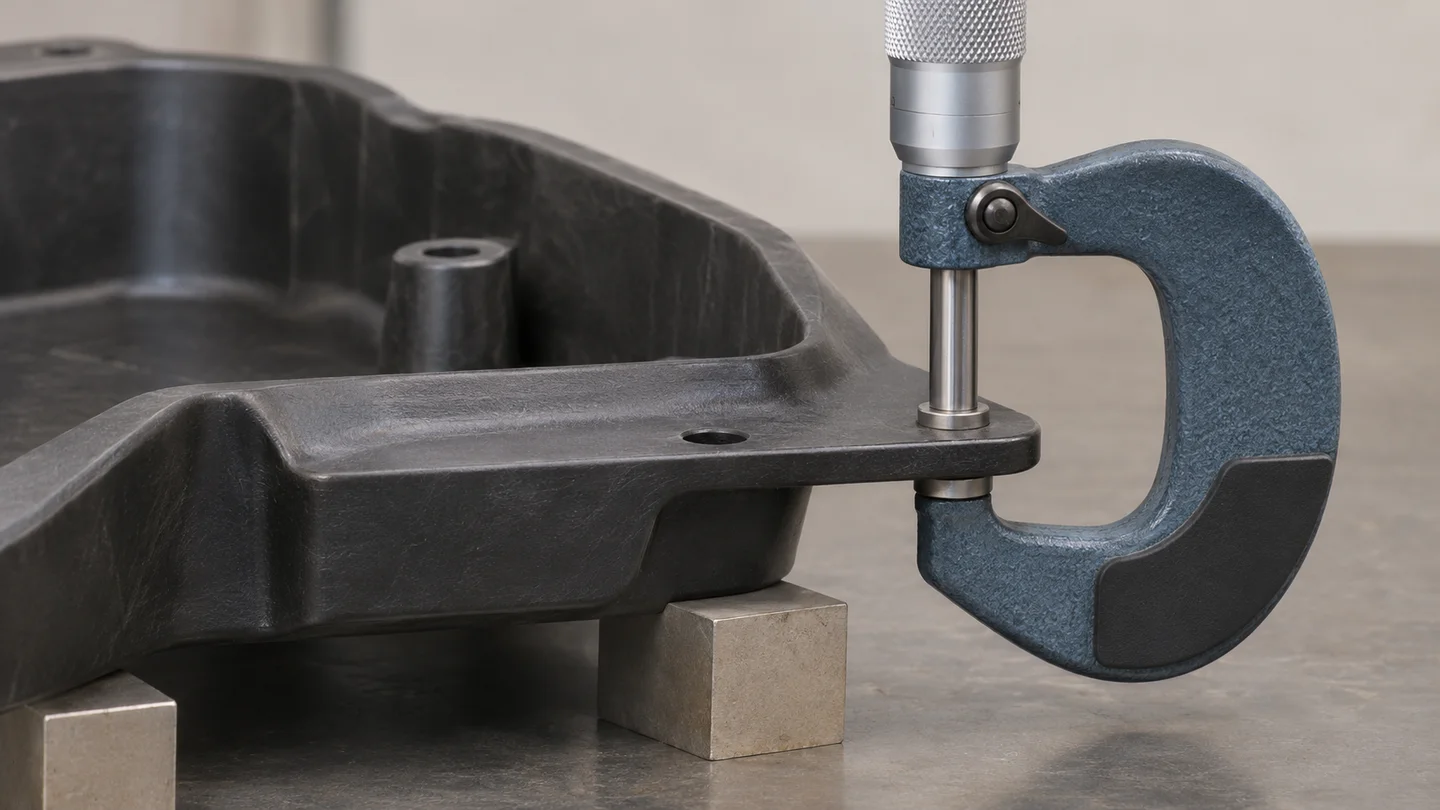
Mark a point on the flat of the flange, clear of the edge radius. On each trial part, measure across the two faces at that mark, in the direction shown on the drawing and under the same inspection conditions. If one reading is on the flat and another is on the curve, repeat them before comparing parts.
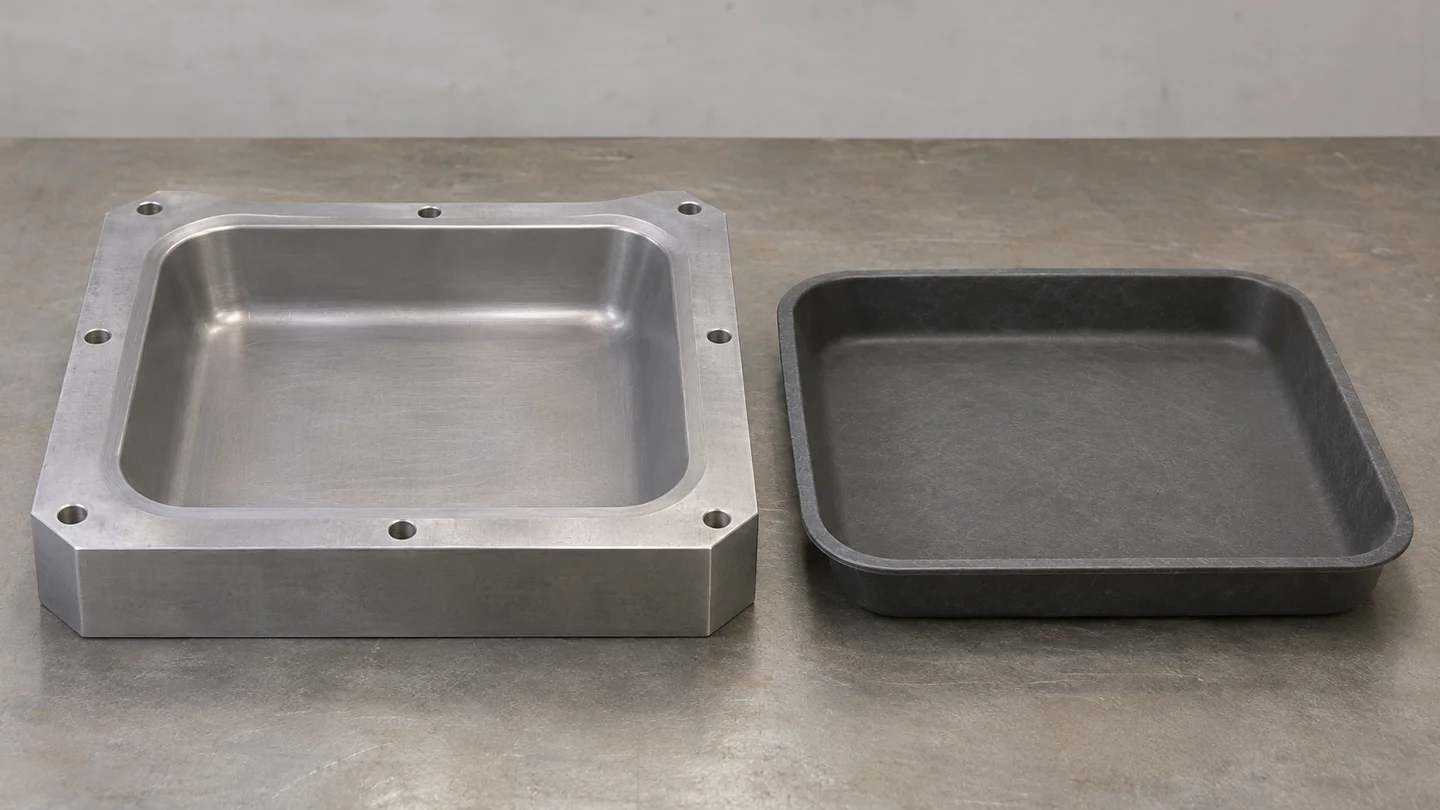
If the marked spot is consistently thick while the adjacent flat is within tolerance, pull up the tool section through that spot. Compare the two forming surfaces with the released tool design at its intended closed position. Measuring from the rim to the floor of the open cavity tells you its depth. It leaves out the opposing face, which is just as important to the gap. If the tool matches its design, review the allowance used to translate finished-part thickness into the tool gap before specifying any rework.
If the same spot is thick on one part and within tolerance on the next, start with those two moulding cycles. Did the tool reach the same closing position? Was the charge placed the same way? A permanent cut would change the tool for both parts, including the one that already fits.
Has the drawing changed instead?
A trial part may match the revision used to build the tool and still be too thick for a revised assembly. Put both drawing revisions on the same section and mark the face that must stay in position. If the flange seats against a mating component, moving that seating face can change the assembled position even if the new thickness is right. Follow the proposed change into the adjoining wall or rib before releasing the revision.
For a BMC compression mould, SUASE designs, builds and trials the tool in-house. Send the drawing section with the high reading marked beside the flange. If the seating face has to stay where it is, flag that too. The designer can check that section against the tool drawing, and the trial team can return to the same spot on the next part. Mould trials at SUASE