
As industries such as automotive, new energy, aerospace, and industrial equipment continue to pursue lightweight, high-strength, and scalable manufacturing solutions, HP-RTM molding has emerged as a key composite processing technology. At the core of this process is the HP-RTM mold (also referred to as HP-RTM mould), which directly determines part quality, production efficiency, and long-term manufacturing stability.
As a professional composite mold manufacturer, SUASE Mould focuses on the development of high-precision HP-RTM molds to support industrial-scale composite production worldwide.
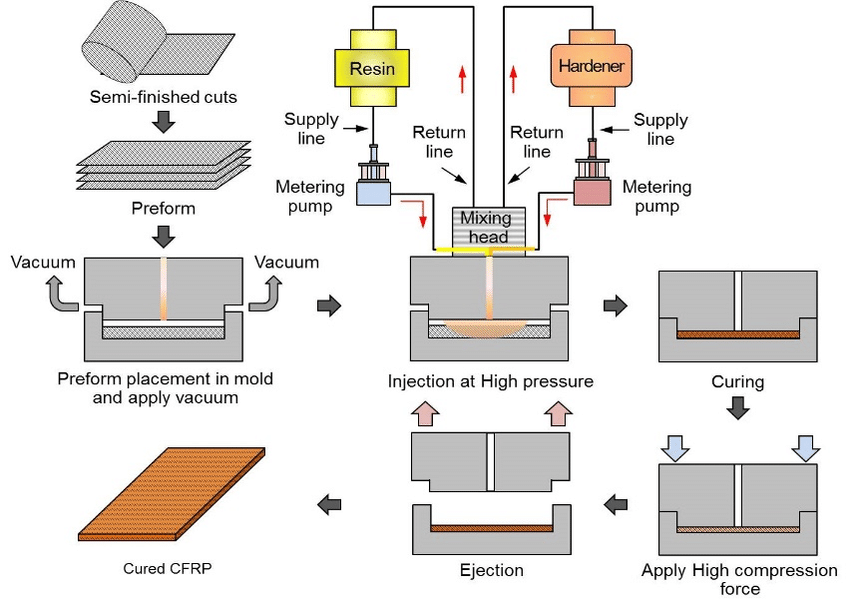
What Is HP-RTM Molding?
HP-RTM (High Pressure Resin Transfer Molding) is an advanced closed-mold composite manufacturing process designed for high-volume production of fiber-reinforced components. Compared with conventional RTM, HP-RTM molding uses high-pressure resin injection, significantly reducing cycle time while improving resin impregnation quality.
Key advantages of HP-RTM molding include:
- Fast resin injection and short cycle times
- High fiber volume fraction and excellent mechanical properties
- Superior surface finish on both sides of the part
- Stable quality suitable for mass production
The Critical Role of the HP-RTM Mold
The success of HP-RTM molding depends largely on the quality and design of the HP-RTM mold. During production, the mold must withstand high injection pressure, repeated thermal cycles, and continuous mechanical loading while maintaining precise dimensional control.
A high-quality HP-RTM mould typically features:
- High structural rigidity to resist deformation
- Optimized resin flow channels and venting systems
- Precision-machined cavity surfaces for Class-A finishes
- Integrated heating and temperature control systems
- Long service life for serial production
HP-RTM Mould Design and Engineering Principles
HP-RTM mould design requires a deep understanding of composite materials, resin flow behavior, and structural mechanics. Compared with traditional compression or low-pressure RTM molds, HP-RTM molds demand higher engineering accuracy and tighter process control.
Core design considerations include:
- Uniform resin distribution to prevent voids and dry spots
- Controlled fiber wet-out under high injection pressure
- Thermal balance across large mold surfaces
- Reliable sealing performance to maintain pressure integrity
- Repeatable molding results over long production cycles
Materials and Manufacturing of HP-RTM Molds
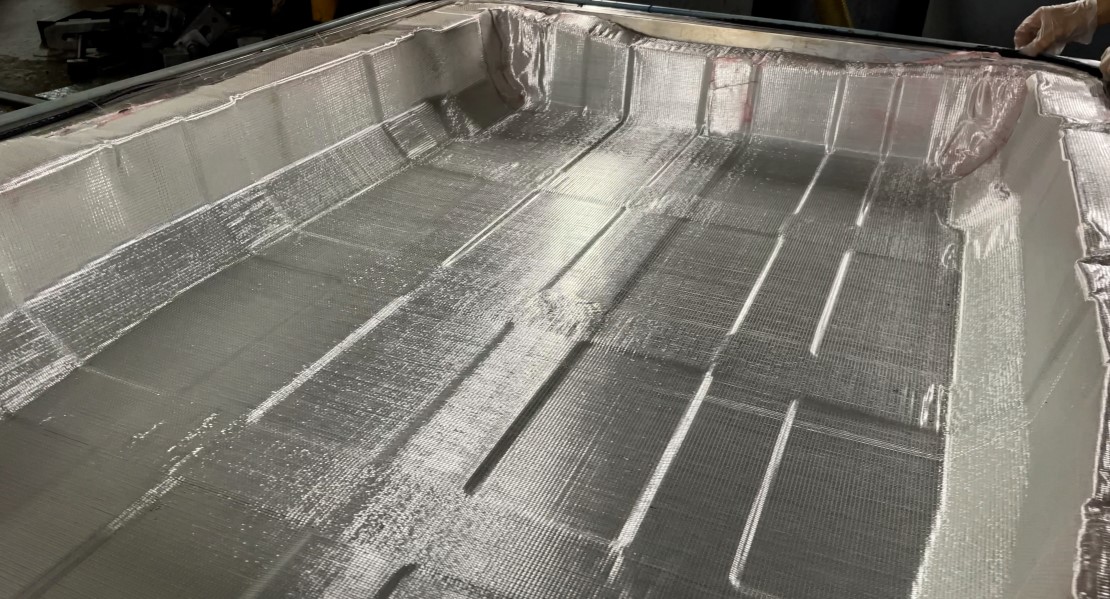
HP-RTM molds are commonly manufactured from high-strength steel or aluminum alloys, depending on production volume and application requirements. For automotive and structural applications, steel HP-RTM molds are often preferred due to their superior durability and dimensional stability.
SUASE Mould applies advanced manufacturing techniques including:
- High-precision CNC machining
- Optimized surface treatments and coatings
- Integrated heating systems for fast cycle times
- Robust mold frame and clamping structures
Applications of HP-RTM Molding
Thanks to its efficiency and mechanical performance, HP-RTM molding is widely used across multiple industries:
- Automotive structural components and reinforcements
- Electric vehicle battery enclosures and load-bearing parts
- Lightweight chassis and crash-relevant structures
- Industrial equipment housings
- High-strength composite panels and frames
Why Choose SUASE Mould for HP-RTM Mold Solutions
SUASE Mould provides comprehensive HP-RTM mold and HP-RTM mould solutions, covering design, manufacturing, and technical support throughout the entire production lifecycle.
Our advantages include:
- Extensive experience in HP-RTM molding tooling
- Process-oriented mold design for stable mass production
- Customization for complex composite structures
- Strict quality control and long mold service life
- Professional support from prototyping to serial production
The Future of HP-RTM Molding Technology
As composite materials continue to expand into high-volume and safety-critical applications, HP-RTM molding will play an increasingly important role in industrial manufacturing. Future developments will focus on higher automation, shorter cycle times, and improved sustainability.
At the center of these advancements, the HP-RTM mold remains the foundation of reliable, efficient, and scalable composite production.
Conclusion
HP-RTM mold technology is a cornerstone of modern composite manufacturing. Through precise engineering, robust materials, and process-driven design, HP-RTM moulds enable the full potential of HP-RTM molding for high-performance applications.
SUASE Mould remains committed to delivering advanced HP-RTM mold solutions that support lightweight design, structural performance, and industrial-scale production.