
Mark the dry area at the radiused corner on a drawing section, and compare the trial part with that section using a common datum—the reference used to align the measurements. Check the radius, surrounding contour and local thickness. If these meet the drawing, investigate preform fit and resin impregnation before changing the HP-RTM mold.
High-pressure resin transfer molding (HP-RTM) injects resin into a closed mold containing a dry fiber preform: the reinforcement positioned before injection. Wet-out means resin impregnating those fibers. A part can match the required contour while still having a dry area, so geometry and wet-out need separate checks at the affected corner.
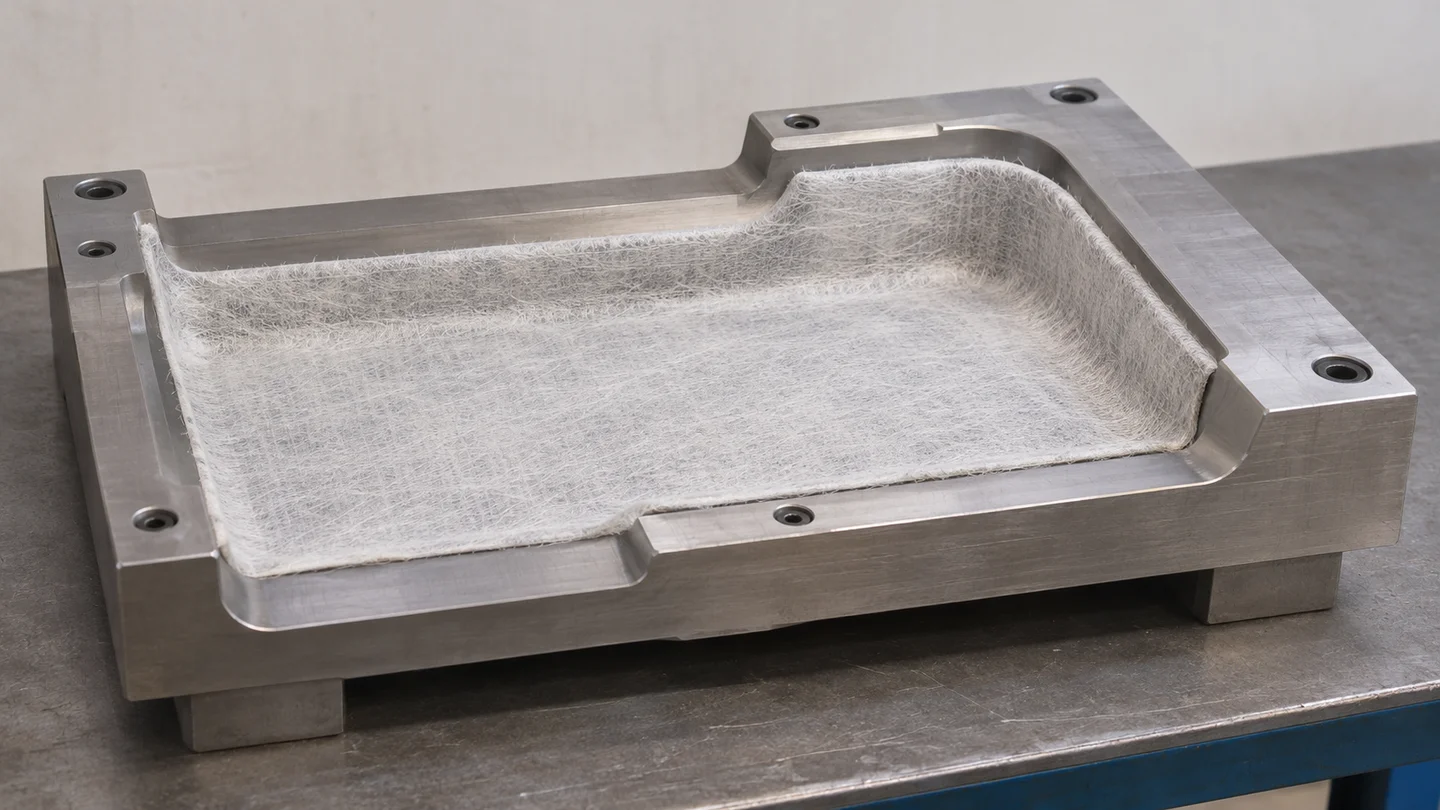
Establish whether the required contour has changed
Compare the current and proposed drawing sections at the same datum. If the specified radius or surrounding contour has changed, mark the difference for discussion with SUASE about the corresponding cavity revision. Review how the preform follows that revised corner and whether the local part thickness remains consistent with the drawing.
In the next trial, measure the revised section and use the agreed impregnation inspection at that same location. Meeting the new contour answers the dimensional question; it does not demonstrate that the impregnation issue has improved.
If the drawing is unchanged but the sample is out of tolerance, mark the measured deviation for dimensional review before deciding on a cavity correction. If the inspected features meet the drawing tolerances, that comparison can rule out a measured contour mismatch at that section as the reason for revising the cavity.
Inspect the dry preform at the same corner
Before injection, look for bridging—a preform spanning the radius with a gap beneath it—along with wrinkles or differences in how the layers sit against the cavity. Record the observation at the marked section so it can be matched to the resulting trial part.
For a comparison focused on preform seating, keep the drawing geometry, preform revision, resin system and injection conditions consistent, and identify the seating change being assessed. Record the venting and vacuum arrangement where applicable. Where pressure is recorded, distinguish injection or mixing pressure from local cavity pressure; record press clamping force separately.
Use the observations to choose the next step:
- The gap is corrected and the dry area decreases: if the section also remains within drawing tolerances, repeat the same seating method in comparable trials and record whether both results hold. The paired observations support that direction, but do not by themselves establish a single root cause.
- The preform sits as intended but the dry area repeats: use the actual injection record linked to that trial part as the next input. SUASE and your process team can discuss the mold-side provisions alongside those conditions before deciding whether machining is justified.
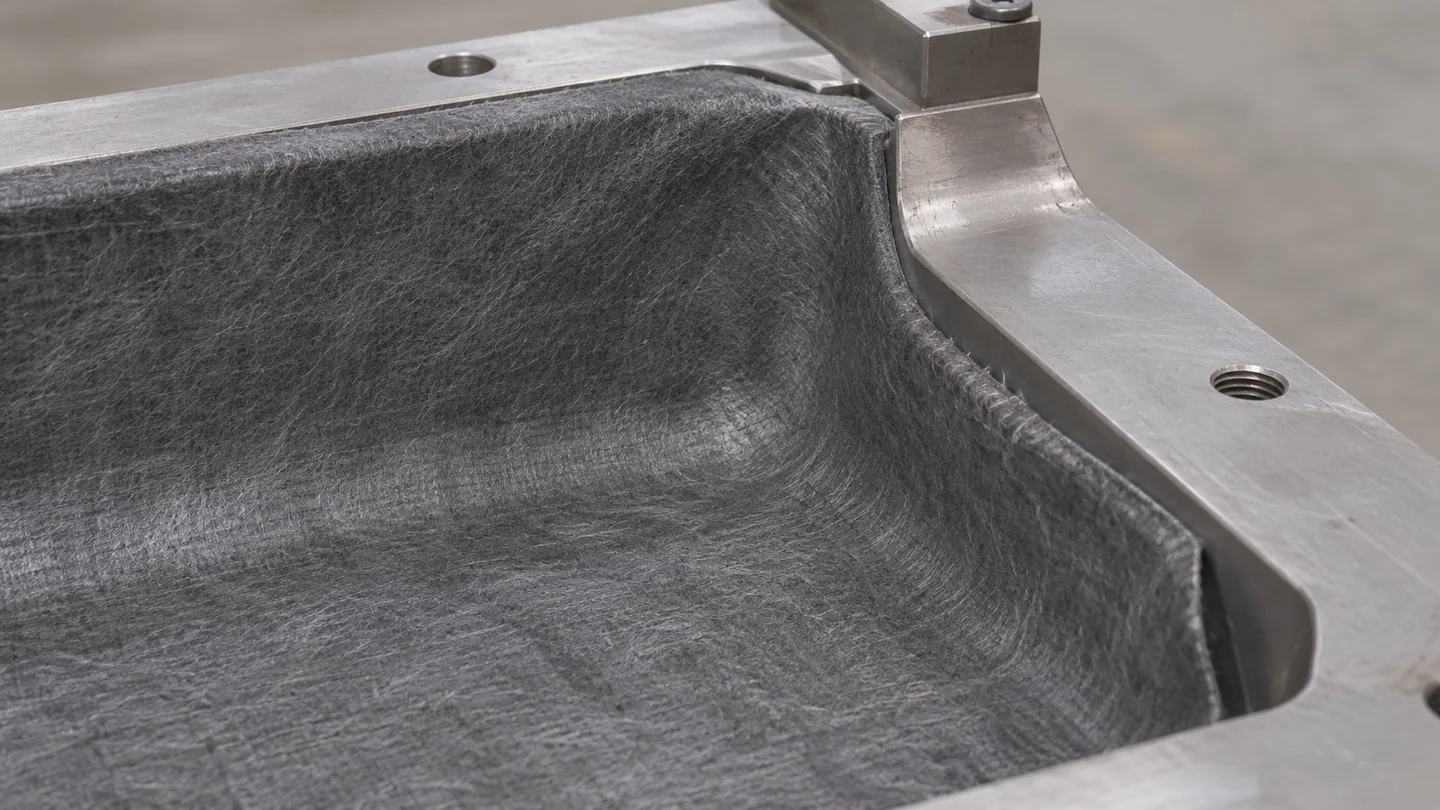
Start with one marked drawing section
Send SUASE the drawing section with the affected corner and datum marked. Note whether the contour requirement has changed or the trial section meets the existing drawing. This gives the discussion a defined starting point for the cavity contour and mold-side provisions.
SUASE supplies HP-RTM molds only. The customer supplies the other production equipment, including the press and resin mixing and metering systems.