
In the automotive industry, the fender—also known as the wing panel—is a critical exterior component that protects the vehicle body from road debris, water splash, and minor impacts while contributing to overall styling and aerodynamics. The quality of a finished fender panel is directly determined by the design and manufacturing accuracy of the Fender Mould.
With the increasing adoption of lightweight materials and high-precision body panels, automotive fender moulds must meet strict requirements in dimensional accuracy, surface quality, structural stability, and repeatability. This article provides a professional overview of automotive fender mould technology from an engineering and manufacturing perspective.
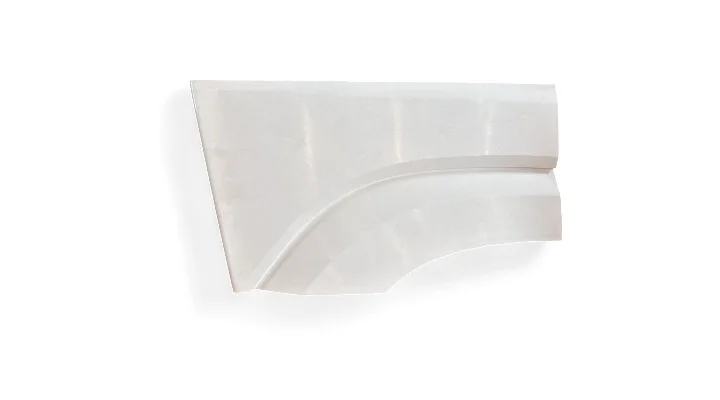
Role of Fender Moulds in Automotive Body Panel Manufacturing
An automotive Fender Mould is a precision forming tool used to manufacture vehicle fender panels from materials such as steel, aluminum, or composite materials. Depending on the material and process, the mould defines:
- Outer surface geometry and styling contours
- Panel thickness distribution and stiffness zones
- Edge profiles and mounting interfaces
- Surface finish quality suitable for painting or coating
In composite and SMC applications, the mould also controls fiber distribution, resin flow, and curing conditions, which directly affect mechanical performance.
Common Materials Used for Automotive Fender Panels
- Sheet metal (steel or aluminum) for traditional stamped fenders
- SMC (Sheet Molding Compound) for lightweight composite fenders
- Carbon fiber or glass fiber composites for performance or specialty vehicles
Each material requires a different mould structure and forming process, making material selection a key factor in fender mould design.
Fender Mould Types and Forming Processes
Compression Moulds for SMC Fender Panels
SMC compression moulding is widely used for automotive fenders due to its ability to produce lightweight, high-strength panels with excellent surface finish. An SMC fender mould typically features:
- Highly polished cavity surfaces for Class A finish
- Precise parting lines to minimize post-processing
- Optimized venting and resin flow control
- Integrated heating channels for controlled curing
Thermoforming Moulds for Thermoplastic Fender Panels
For thermoplastic composite fenders, thermoforming moulds are used to shape heated sheets into complex automotive geometries. These moulds emphasize accurate temperature control, fast cycle times, and stable demoulding performance.
Metal Stamping Dies for Fender Production
Traditional metal fenders are produced using stamping dies rather than moulds. However, hybrid tooling concepts are increasingly adopted for composite-metal structures.
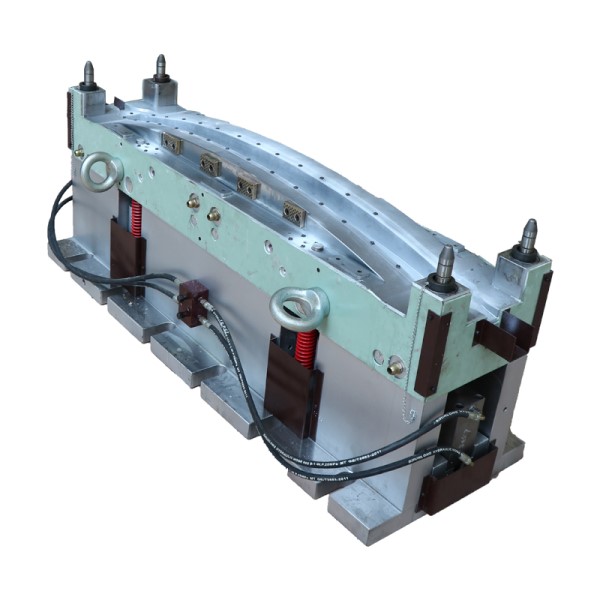
Key Engineering Considerations in Fender Mould Design
Dimensional Accuracy and Surface Quality
Automotive fender panels require tight tolerances and smooth surfaces to ensure proper assembly and high-quality paint appearance. Fender moulds must achieve consistent geometry across high-volume production cycles.
Thermal Control and Cycle Stability
For composite fender moulds, uniform temperature distribution is essential to prevent warpage, surface defects, and internal stress accumulation.
Demoulding and Tool Life
Proper draft angles, surface treatments, and release systems are required to ensure stable demoulding and long mould service life under repetitive automotive production conditions.
Manufacturing Process of Automotive Fender Moulds
Design and Simulation
Advanced CAD and simulation tools are used to optimize fender geometry, material flow, and structural behavior before machining begins.
Precision CNC Machining
High-speed CNC machining ensures accurate reproduction of complex styling surfaces and sharp feature transitions required by modern automotive design.
Assembly, Testing, and Trial Production
Before mass production, fender moulds undergo trial runs to verify dimensional accuracy, surface quality, and cycle stability under real press conditions.
Quality Control Standards for Fender Mould Manufacturing
- Dimensional inspection using CMM systems
- Surface roughness and gloss testing
- Thermal performance validation
- Repeatability and durability testing
These quality controls ensure that automotive fender moulds meet OEM and Tier-1 supplier requirements.
Conclusion
In automotive manufacturing, a high-quality Fender Mould is fundamental to producing durable, lightweight, and visually precise fender panels. From material selection and process design to precision machining and quality control, every aspect of the mould directly influences vehicle appearance, performance, and production efficiency.
For manufacturers targeting modern vehicle platforms and composite body panels, professional automotive fender mould solutions are a key enabler of competitive advantage.