
As the global automotive industry rapidly accelerates toward electrification, the demand for safer, lighter, and more efficient electric vehicles continues to reshape modern automotive engineering. Among the most critical components in this transformation is the EV battery enclosure — a structural system that protects the battery pack while directly influencing vehicle safety, driving range, thermal stability, and manufacturing efficiency.
Today’s electric vehicles are no longer designed around traditional chassis concepts. Instead, battery systems increasingly function as structural elements integrated into the vehicle platform itself. This evolution has pushed the development of advanced battery enclosure molds, lightweight composite materials, and high-performance manufacturing technologies to the forefront of EV production.
At SUASE Mould, we specialize in advanced automotive composite tooling and precision mold manufacturing solutions for next-generation electric vehicle applications, including high-performance EV battery enclosure molds, compression molding systems, and lightweight structural composite technologies.
An EV battery enclosure is a protective structural housing designed to secure and protect electric vehicle battery packs. Modern battery enclosures must provide:
- Crash protection
- Thermal management
- Electrical insulation
- Waterproof sealing
- Lightweight structural performance
- Fire resistance
What Is an EV Battery Enclosure?
An EV battery enclosure (also known as a battery housing, battery tray, or battery pack enclosure) is the structural assembly surrounding the battery modules inside an electric vehicle.
Its primary functions include:
- Mechanical protection
- Structural reinforcement
- Thermal insulation
- Fire resistance
- Water and dust sealing
- Electrical isolation
- Crash energy absorption
In modern EV architecture, the battery enclosure is often integrated directly into the vehicle structure, making it one of the most important engineered components in electric vehicle manufacturing.
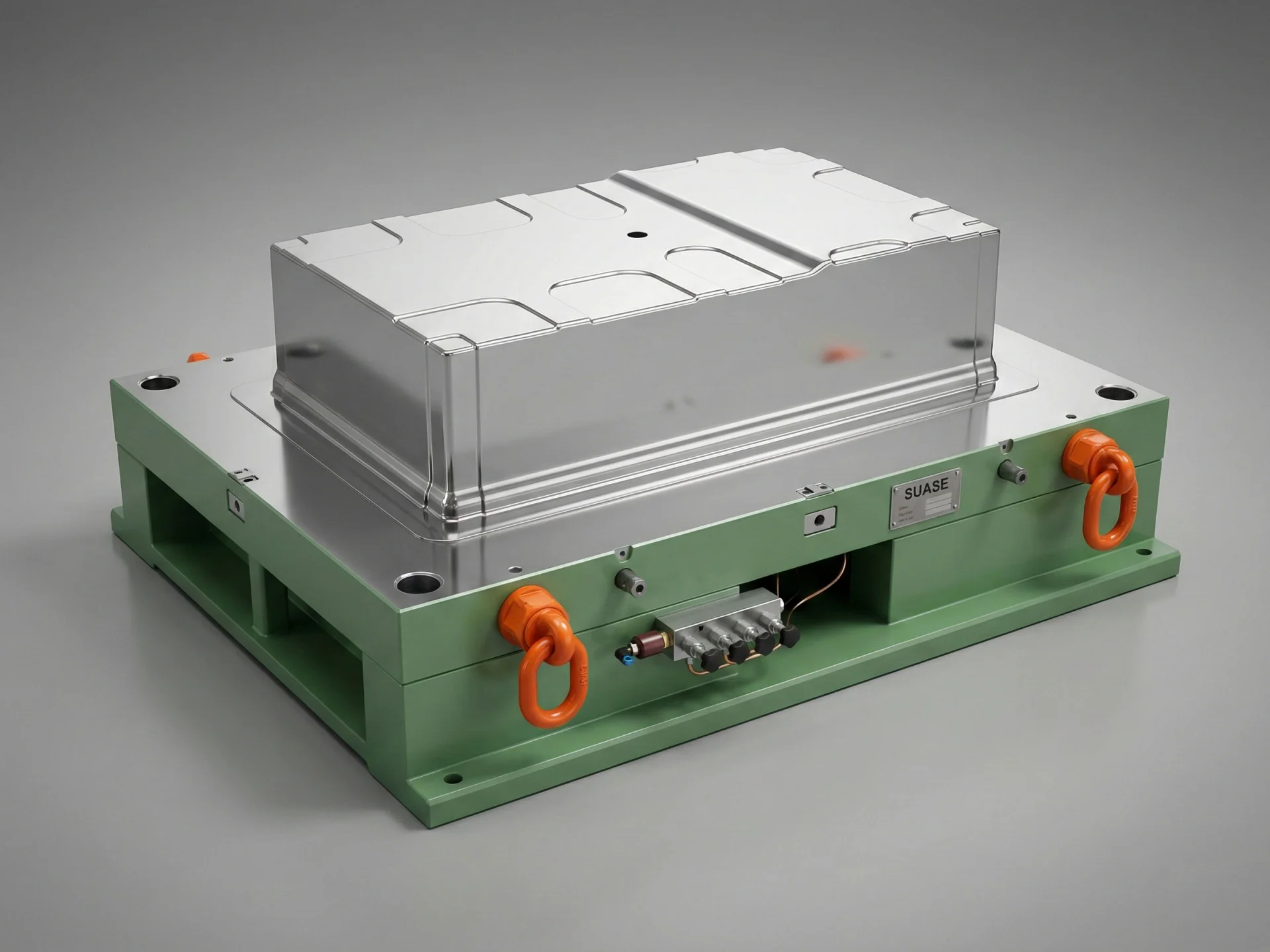
Why EV Battery Enclosures Are Critical in Electric Vehicles
The battery pack is typically the heaviest and most expensive component in an electric vehicle. As global automakers continue improving:
- Vehicle range
- Charging efficiency
- Passenger safety
- Lightweight performance
- Manufacturing scalability
As global automakers optimize range, safety, and weight, the design of the electric vehicle battery enclosure has become a key engineering priority.
A poorly designed battery enclosure may negatively affect:
- Crash performance
- Thermal runaway protection
- Vehicle rigidity
- Corrosion resistance
- Production efficiency
- Battery lifespan
The Shift From Metal to Composite EV Battery Enclosures
Traditional EV battery housings were primarily manufactured using:
- Steel
- Aluminum alloys
- Extruded metal structures
Although metals provide high structural strength, they also introduce several engineering limitations.
| Traditional Metal Challenges | Impact on EV Performance |
|---|---|
| High weight | Reduced driving range |
| Corrosion risk | Higher maintenance requirements |
| Complex welding operations | Higher production cost |
| Limited design flexibility | Reduced integration efficiency |
| Thermal conductivity challenges | More difficult thermal management |
As a result, many manufacturers are now transitioning toward:
- SMC battery enclosures
- Carbon fiber battery housings
- Glass fiber reinforced thermoset composites
- Hybrid composite-metal battery structures
Advantages of Composite EV Battery Enclosures
1. Lightweight Performance
Lightweight engineering remains one of the most important goals in electric vehicle development.
Composite battery enclosures help improve:
- Driving range
- Energy efficiency
- Acceleration performance
- Battery utilization efficiency
Compared with steel structures, composite battery housings can significantly reduce overall vehicle mass.
2. Excellent Electrical Insulation
Unlike metals, thermoset composite materials naturally provide strong electrical insulation properties.
This improves:
- High-voltage safety
- Passenger protection
- System reliability
- Electrical isolation performance
3. Corrosion Resistance
Composite materials offer excellent resistance against:
- Road salt
- Moisture
- Chemical exposure
- Environmental degradation
This makes them highly suitable for long-term automotive applications in harsh environments.
4. Thermal Management Integration
Modern EV battery systems generate substantial heat during charging and operation.
Advanced composite battery enclosures can integrate:
- Cooling channels
- Thermal barriers
- Fire-resistant layers
- Heat dissipation systems
This integrated approach improves thermal stability while reducing overall component complexity.
Compression Molding Technology for EV Battery Enclosures
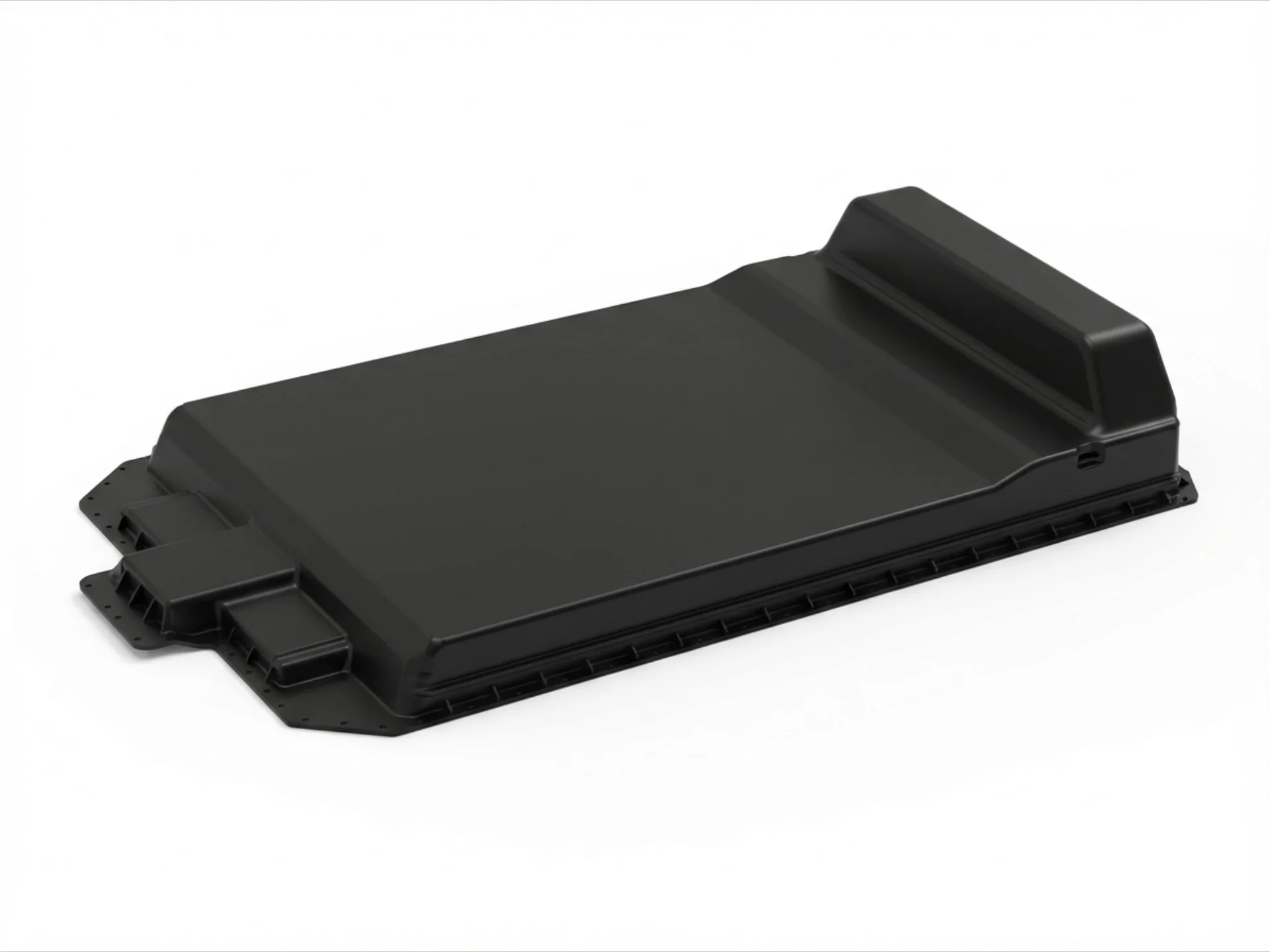
One of the most important manufacturing technologies for modern EV battery enclosure production is compression molding.
Compression molding is widely used because it provides:
- Excellent structural performance
- Fast production cycles
- High dimensional stability
- Strong mechanical properties
- Suitability for large structural parts
- Excellent surface quality
Common materials used include:
- SMC (Sheet Molding Compound)
- Carbon fiber prepreg
- Glass fiber reinforced thermoset composites
Compression molding is particularly suitable for producing:
- Battery covers
- Structural battery trays
- Underbody protection systems
- Integrated floor structures
Resin Transfer Molding (RTM) for High-Performance Battery Housings
Resin Transfer Molding (RTM) technology is increasingly adopted for premium electric vehicle applications requiring:
- Higher strength-to-weight ratios
- Carbon fiber reinforcement
- Precision fiber orientation
- Improved structural performance
RTM allows resin to flow through dry fiber preforms inside a closed mold cavity, producing lightweight and highly engineered composite structures.
Hybrid Composite-Metal Battery Structures
Many next-generation EV platforms now combine:
- Composite upper covers
- Aluminum battery trays
- Structural adhesive bonding
- Integrated crash structures
Hybrid structures optimize both lightweight performance and crash safety.
This multi-material approach is becoming increasingly common in premium electric vehicle manufacturing.
Key Engineering Challenges in EV Battery Enclosure Design
Crash Safety
Battery enclosures must protect battery cells during:
- Side impacts
- Bottom impacts
- Frontal collisions
- Pole crashes
Engineers use advanced CAE simulation and structural optimization to ensure crash energy is absorbed without damaging battery modules.
Thermal Runaway Protection
Thermal runaway remains one of the biggest safety concerns in electric vehicle systems.
Modern EV battery enclosures increasingly incorporate:
- Fire-resistant composite materials
- Heat barriers
- Pressure venting systems
- Thermal insulation layers
Waterproof and Dustproof Sealing
Battery systems require high sealing standards to prevent:
- Water ingress
- Dust contamination
- Chemical exposure
Most EV battery enclosures must meet IP67 or higher protection standards.
Future Trends in EV Battery Enclosure Technology
Structural Battery Integration
The industry is moving toward:
- Cell-to-pack (CTP)
- Cell-to-chassis (CTC)
- Structural battery systems
In these architectures, the battery enclosure itself becomes part of the vehicle chassis structure.
Smart Battery Enclosures
Future battery housings may integrate:
- Embedded sensors
- Structural health monitoring
- Real-time diagnostics
- Intelligent thermal systems
Sustainable Composite Materials
Sustainability is becoming increasingly important in EV manufacturing.
Future trends include:
- Recyclable thermoset composites
- Bio-based resin systems
- Low-carbon manufacturing
- Closed-loop material recycling
The Importance of Precision Mold Manufacturing
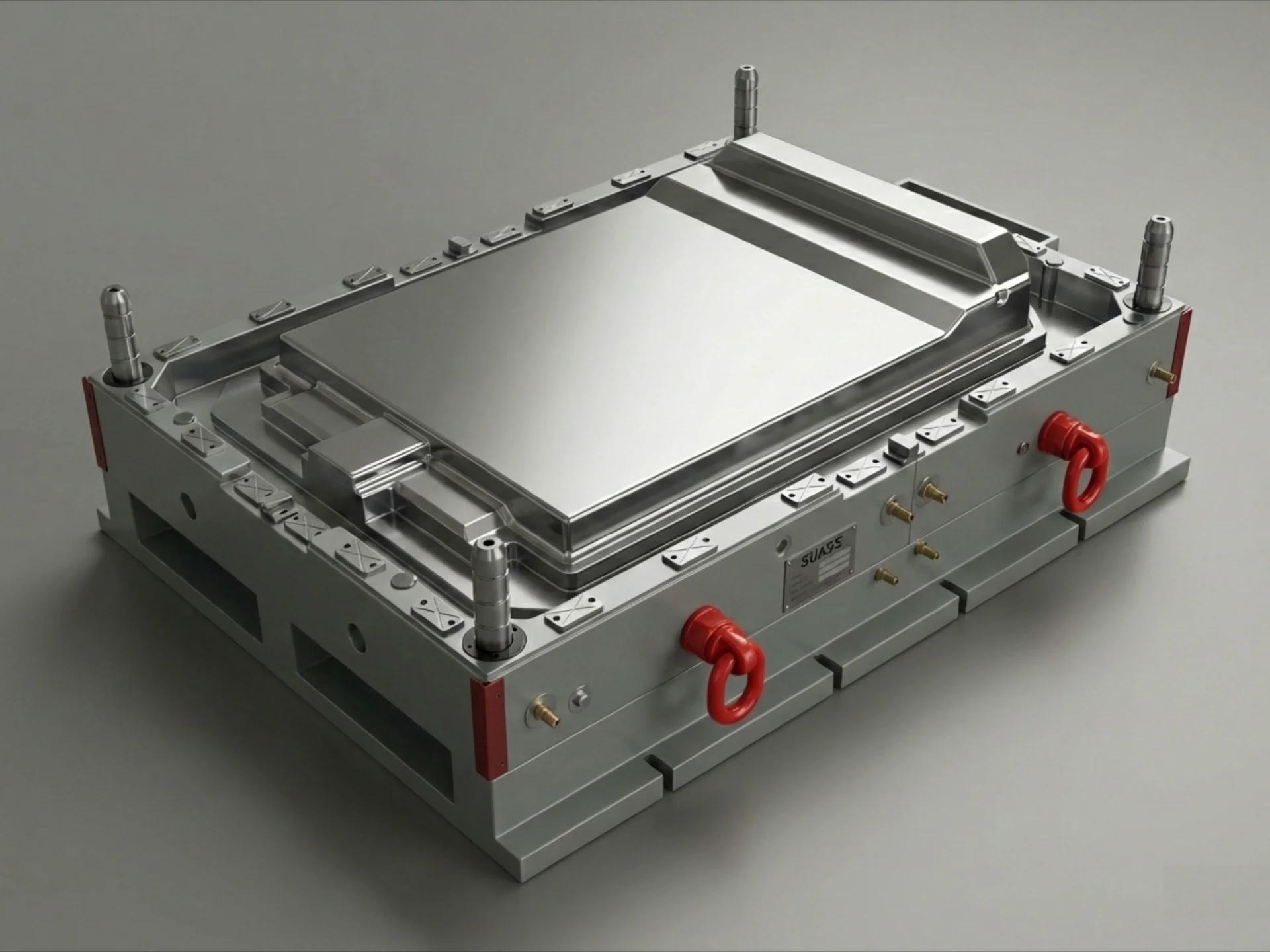
High-performance EV battery enclosures require extremely accurate mold manufacturing technologies.
Advanced battery enclosure molds must achieve:
- Excellent dimensional precision
- Stable thermal balance
- High-pressure resistance
- Optimized composite material flow
- Large-scale structural consistency
At SUASE Mould, advanced CNC machining, CAE simulation, and precision tooling systems are used to manufacture high-quality molds for complex automotive composite applications.
SUASE Mould's EV Battery Enclosure Mold Solutions
As electric vehicle technologies continue evolving, precision mold manufacturing becomes increasingly important for achieving:
- Lightweight optimization
- Structural performance
- Production efficiency
- Composite material quality
- Dimensional consistency
SUASE Mould specializes in:
- EV battery enclosure molds
- Compression molds
- Composite automotive molds
- Carbon fiber tooling
- SMC battery housing molds
- Thermoset composite tooling
- Lightweight automotive applications
Conclusion
The EV battery enclosure is rapidly evolving from a simple protective housing into a highly engineered structural system that directly influences electric vehicle safety, efficiency, and performance.
As the automotive industry continues transitioning toward:
- Lightweight engineering
- Structural battery integration
- High-volume EV production
- Sustainable manufacturing
Driven by these demanding performance requirements, the market demand for advanced composite EV battery enclosure technologies will continue growing.
Through innovations in:
- Compression molding
- Composite materials
- Structural integration
- Thermal management
- Precision mold manufacturing
EV battery enclosure technology is becoming one of the most important foundations of the future electric mobility industry.