
The rapid development of new energy vehicles (NEVs) is transforming the global automotive industry. As battery technology continues to evolve, manufacturers are seeking lighter, stronger, and safer battery systems to improve vehicle efficiency and driving range. One critical component in this evolution is the battery cover, which protects the battery pack while contributing to structural integrity, electrical insulation, and overall vehicle safety.
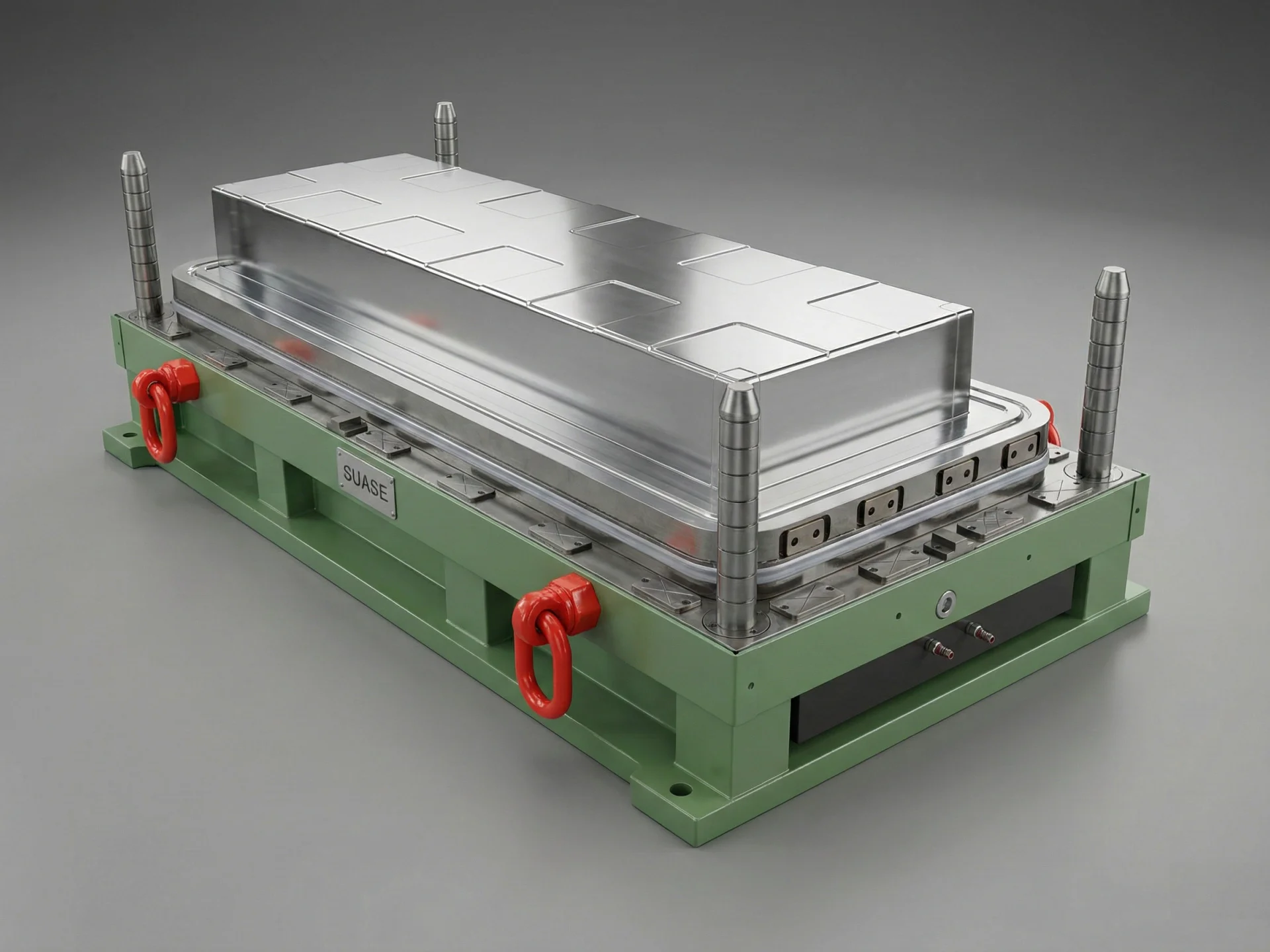
Producing these large composite components requires a highly engineered New Energy Vehicle Battery Cover Mold. Precision mold design directly influences product quality, dimensional accuracy, production efficiency, and the long-term reliability of the battery enclosure. For manufacturers using Sheet Molding Compound (SMC) and other fiber-reinforced composites, advanced compression molds have become the preferred tooling solution for high-volume production.
The Growing Demand for Composite Battery Cover Molds
Modern electric vehicles place unprecedented demands on battery pack performance. Besides protecting battery cells from dust, moisture, vibration, and external impact, battery covers must also support lightweight vehicle design without sacrificing mechanical strength.
Traditional stamped steel covers are gradually being replaced by composite materials because they offer significant advantages in both performance and manufacturing flexibility. As a result, demand for high-quality composite battery cover molds continues to increase across the global automotive supply chain.
Composite battery covers are widely used in:
- Battery electric vehicles (BEVs)
- Plug-in hybrid electric vehicles (PHEVs)
- Commercial electric vehicles
- Electric buses
- Energy storage systems
As battery packs become larger and more integrated, mold manufacturers must produce tooling capable of maintaining excellent dimensional stability across large molding surfaces while supporting efficient mass production.
Why Composite Battery Covers Are Replacing Metal Designs
Composite materials such as SMC have become increasingly popular for battery covers because they combine excellent mechanical performance with reduced weight. Compared with conventional metal structures, composite battery covers provide greater design flexibility while simplifying component integration.
Key advantages include:
- Lightweight construction for improved vehicle efficiency
- Excellent electrical insulation properties
- Outstanding corrosion resistance
- High dimensional stability
- Good flame-retardant performance
- Reduced maintenance requirements
- Freedom to integrate ribs, mounting points, and reinforcement features into a single molded component
For electric vehicle manufacturers, every kilogram saved contributes to increased driving range and improved battery efficiency. Composite battery covers therefore play an important role in lightweight vehicle development.
Key Design Requirements for Battery Cover Molds
Unlike conventional automotive plastic parts, battery covers are large structural components that require extremely high molding precision. The mold must ensure consistent resin flow, balanced fiber distribution, and uniform curing throughout the entire cavity.
A well-designed battery cover mold should achieve several engineering objectives:
- Accurate cavity dimensions for large components
- Uniform heating across the entire molding surface
- Optimized compression pressure distribution
- Efficient venting to remove trapped air
- Reliable demolding without damaging the composite surface
- Long tool life under continuous production conditions
During the design phase, engineers also consider product shrinkage, fiber orientation, wall thickness variation, draft angles, and parting line configuration to ensure stable production and minimize post-processing requirements.
Compression Molding Process for SMC Battery Covers
Compression molding is one of the most widely adopted manufacturing processes for composite battery covers because it provides high production efficiency, excellent dimensional consistency, and outstanding mechanical performance.
The process begins with accurately prepared SMC charge materials, which are placed inside the heated mold cavity. Under controlled pressure and temperature, the material flows to fill the cavity, allowing the resin to cure while reinforcing fibers are evenly distributed throughout the component.
A typical production process includes:
- SMC material preparation
- Charge placement inside the mold
- Mold closing under controlled pressure
- Material flow and cavity filling
- Thermal curing
- Cooling and pressure holding
- Demolding
- Edge trimming and inspection
Proper control of molding temperature, curing time, and compression force helps reduce common defects such as air entrapment, resin-rich areas, fiber exposure, and dimensional distortion.
Engineering Challenges in Battery Cover Mold Manufacturing
Manufacturing molds for large battery covers involves far more than machining a cavity. Engineers must balance structural rigidity, thermal efficiency, machining precision, and production durability throughout the entire mold development process.
Some of the most common engineering challenges include:
- Maintaining dimensional accuracy on large mold surfaces
- Achieving uniform cavity temperature during long production runs
- Optimizing composite material flow to avoid weld lines and dry spots
- Designing effective venting systems for complete cavity filling
- Reducing cycle time while maintaining product quality
- Preventing deformation caused by thermal expansion
To address these challenges, modern mold manufacturers increasingly utilize CAD/CAM engineering, CNC high-speed machining, mold flow analysis, and precision inspection technologies throughout the development process.
Mold Material Selection for Long-Term Performance
The service life and production stability of a battery cover mold largely depend on the selection of appropriate mold steel. Since SMC compression molding operates under high pressure and elevated temperatures, the mold must provide excellent strength, wear resistance, thermal conductivity, and dimensional stability throughout long production cycles.
Depending on project requirements, commonly used mold steels include:
- P20 Steel – Suitable for medium-volume production with good machinability and cost efficiency.
- 718H Steel – Pre-hardened steel offering improved hardness, excellent polishing performance, and longer service life.
- H13 Steel – Ideal for demanding production environments requiring superior wear resistance and thermal fatigue performance.
For high-volume automotive programs, proper heat treatment and precision machining further improve mold durability, helping reduce maintenance frequency and ensure consistent part quality throughout the tool's lifecycle.
Optimized Heating and Cooling System Design
Temperature control is one of the most critical factors in compression molding composite battery covers. Uneven mold temperatures may lead to incomplete curing, dimensional variation, internal stress, or surface defects.
An optimized heating system ensures that heat is distributed uniformly across the cavity surface, allowing the composite material to cure consistently during every production cycle.
At the same time, well-designed cooling channels help shorten cycle times while maintaining stable mold temperatures between production cycles, improving both productivity and product consistency.
Effective temperature management offers several advantages:
- Uniform resin curing throughout the part
- Reduced internal stress and deformation
- Improved dimensional accuracy
- More consistent mechanical properties
- Higher production efficiency
Precision Machining for Complex Battery Cover Molds
Battery covers often feature large dimensions, reinforcing ribs, mounting bosses, sealing grooves, and other complex geometries. Producing these features requires high-precision machining throughout the mold manufacturing process.
Modern CNC machining centers enable accurate cavity machining while maintaining tight tolerances across large mold surfaces. Precision finishing and polishing further improve surface quality, allowing composite materials to flow smoothly during molding and reducing the need for post-processing.
To ensure manufacturing accuracy, mold components are inspected at multiple stages using advanced measuring equipment before final assembly.
Quality Control and Mold Testing
Before delivery, every battery cover mold should undergo comprehensive inspection and trial production to verify its performance under actual molding conditions.
Typical quality control procedures include:
- Dimensional inspection of critical mold components
- Cavity and core alignment verification
- Heating system performance testing
- Assembly accuracy inspection
- Trial molding with composite materials
- Evaluation of finished part dimensions and surface quality
These verification procedures help identify potential issues before mass production, reducing production risks and ensuring that the mold performs reliably from the first production run.
Supporting Efficient Mass Production
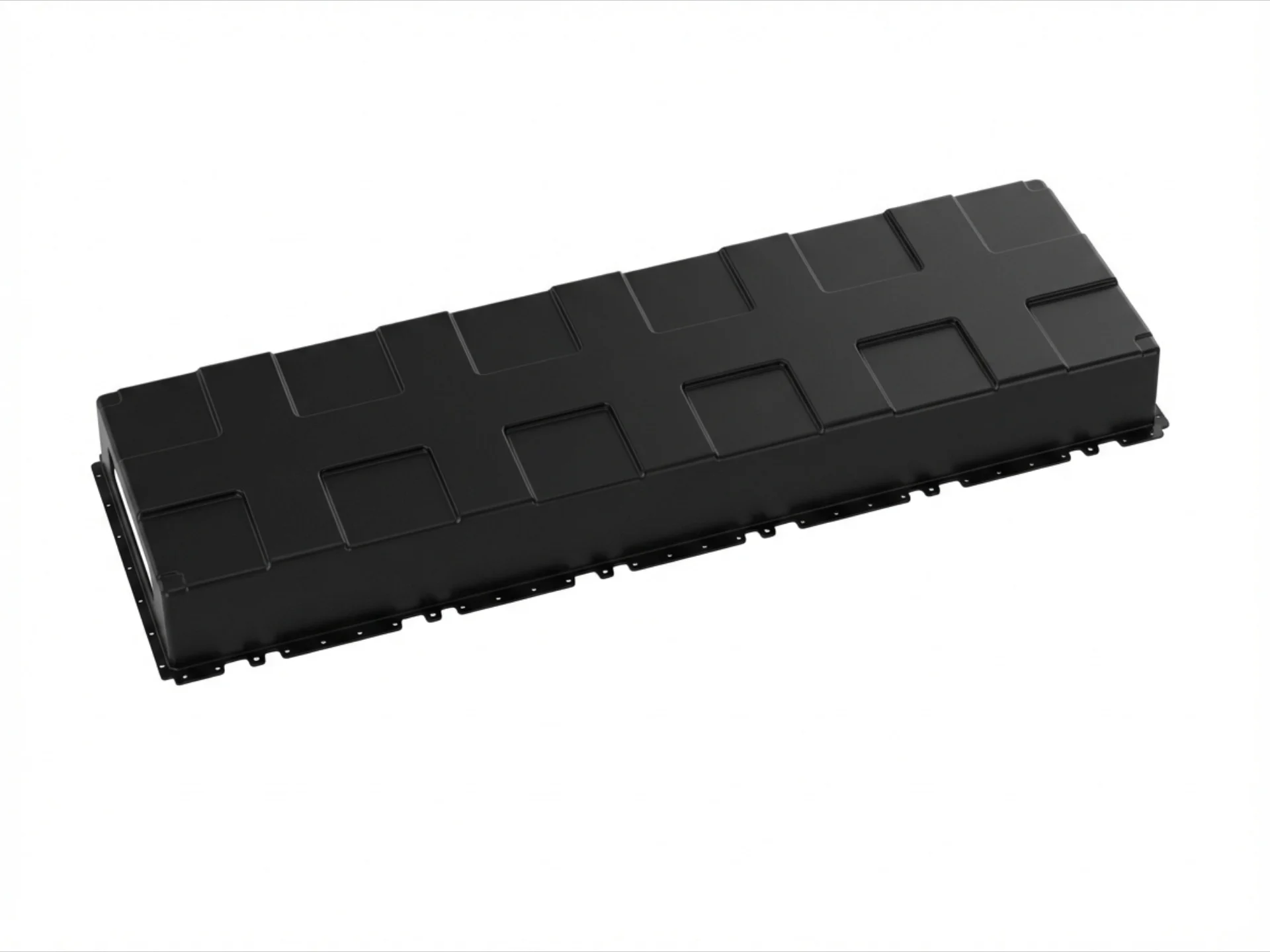
Automotive manufacturers require tooling that delivers not only precision but also long-term production efficiency. A well-designed battery cover mold helps reduce cycle times, improve process repeatability, and minimize maintenance, resulting in lower manufacturing costs over the life of the project.
By integrating precision engineering with optimized compression molding technology, manufacturers can consistently produce lightweight composite battery covers that meet the demanding standards of the new energy vehicle industry.
Why Choose SUASE for Composite Battery Cover Molds
SUASE specializes in the design and manufacture of high-quality composite compression molds for automotive and industrial applications. With years of experience in SMC mold development, our engineering team provides customized tooling solutions tailored to customer requirements.
From initial design and precision machining to mold assembly, testing, and technical support, we focus on delivering reliable molds that help customers achieve stable production, excellent product quality, and long service life.
Whether developing a prototype or supporting high-volume manufacturing, SUASE is committed to providing professional composite mold solutions that meet the evolving needs of the global electric vehicle industry.
Future Trends in New Energy Vehicle Battery Cover Molds
As battery technologies continue to evolve, the design and manufacturing of battery cover molds are also advancing rapidly. The growing adoption of Cell-to-Pack (CTP) and Cell-to-Body (CTB) battery architectures requires larger, stronger, and more integrated composite components, placing higher demands on mold precision and manufacturing capability.
At the same time, automotive manufacturers are seeking tooling solutions that improve production efficiency while supporting sustainability goals. Future battery cover molds will increasingly incorporate intelligent manufacturing technologies, optimized thermal management, and automated quality inspection to meet the requirements of next-generation electric vehicles.
Several industry trends are expected to shape future composite battery cover tooling:
- Large integrated battery enclosure molds for next-generation EV platforms
- Higher automation in mold manufacturing and production
- Digital simulation and mold flow analysis during product development
- Improved temperature control for faster compression molding cycles
- Application of recyclable composite materials and sustainable manufacturing processes
- Higher dimensional accuracy for complex battery system designs
These innovations will help automotive manufacturers improve production efficiency while supporting safer, lighter, and more reliable battery systems.
Frequently Asked Questions
What materials are commonly used for EV battery covers?
SMC (Sheet Molding Compound), fiberglass-reinforced composites, and other fiber-reinforced materials are widely used because they provide excellent strength, electrical insulation, corrosion resistance, and lightweight performance.
Why is compression molding suitable for battery covers?
Compression molding enables manufacturers to produce large composite components with consistent quality, excellent dimensional accuracy, and high production efficiency, making it ideal for automotive battery cover applications.
How does mold quality affect battery cover performance?
A precision mold helps ensure uniform material flow, accurate dimensions, smooth surface quality, and stable mechanical properties, reducing production defects and improving long-term product reliability.
Which factors determine the service life of a battery cover mold?
Tool steel quality, heat treatment, machining accuracy, temperature control, regular maintenance, and proper operating conditions all influence mold durability and production consistency.
Can composite battery covers replace traditional metal covers?
Yes. Composite battery covers offer significant advantages in lightweight design, electrical insulation, corrosion resistance, and structural integration, making them an increasingly popular choice for modern electric vehicles.
Does SUASE provide customized battery cover mold solutions?
Yes. SUASE designs and manufactures customized composite compression molds according to customer drawings, material requirements, production capacity, and project specifications for various automotive applications.
Conclusion
The transition toward electric mobility continues to accelerate the demand for lightweight, durable, and high-performance battery systems. As an essential production tool, the New Energy Vehicle Battery Cover Mold plays a vital role in ensuring the quality, safety, and manufacturing efficiency of composite battery covers.
From mold design and precision machining to compression molding optimization and quality control, every stage of mold manufacturing directly influences the final component's performance. By combining advanced engineering with reliable manufacturing processes, high-quality molds enable automotive suppliers to achieve stable mass production while meeting increasingly demanding industry standards.
With extensive experience in composite compression mold manufacturing, SUASE remains committed to providing professional tooling solutions for the global automotive industry. Through continuous innovation, precision manufacturing, and customer-focused engineering support, we help our partners develop efficient, reliable, and lightweight composite components for the next generation of new energy vehicles.