
Compression molding and injection molding are two of the most widely used manufacturing processes in modern industry. Although both rely on precision molds to shape materials into finished products, their working principles, tooling design, compatible materials, and production characteristics are significantly different.
Choosing the right mold is essential for achieving the desired product quality, production efficiency, and manufacturing cost. Whether producing lightweight composite components for the automotive industry or high-volume plastic parts for consumer products, understanding the differences between a compression mold and an injection mold helps engineers and buyers select the most suitable manufacturing solution.
What Is a Compression Mold?
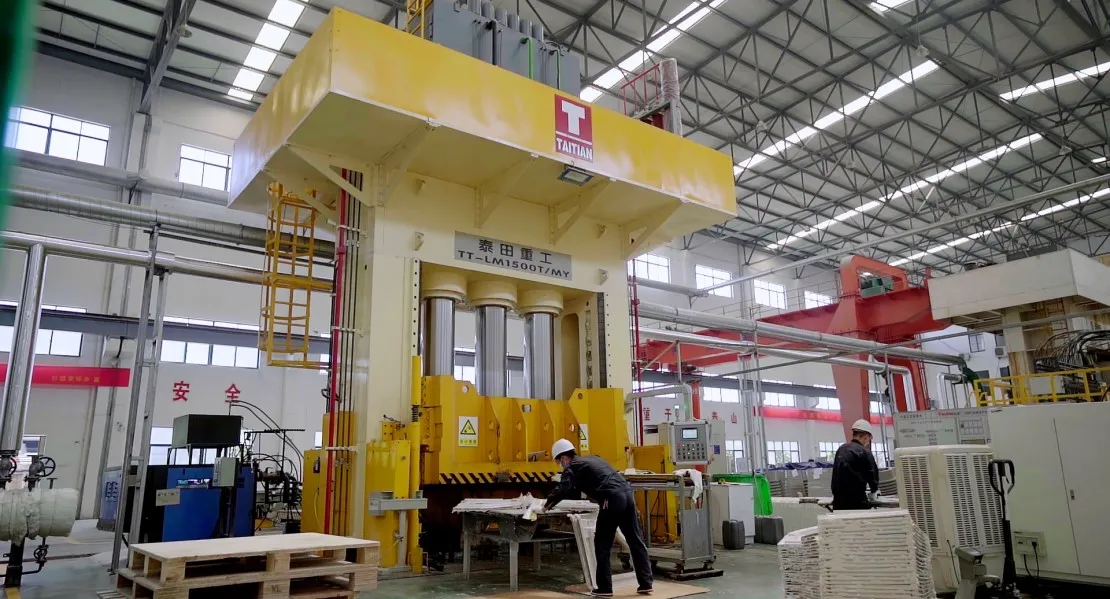
A compression mold is a tool used in the compression molding process, where a pre-measured amount of material is placed directly into an open mold cavity. The mold is then closed under controlled pressure and temperature, allowing the material to flow, fill the cavity, and cure into the desired shape.
Compression molding is commonly used for thermoset composites and fiber-reinforced materials, including:
- Sheet Molding Compound (SMC)
- Bulk Molding Compound (BMC)
- Glass Fiber Reinforced Plastic (GFRP)
- Carbon Fiber Composites
- GMT and other composite materials
Because reinforcing fibers remain within the material during molding, compression molds are widely used to manufacture lightweight structural components with excellent mechanical properties.
What Is an Injection Mold?
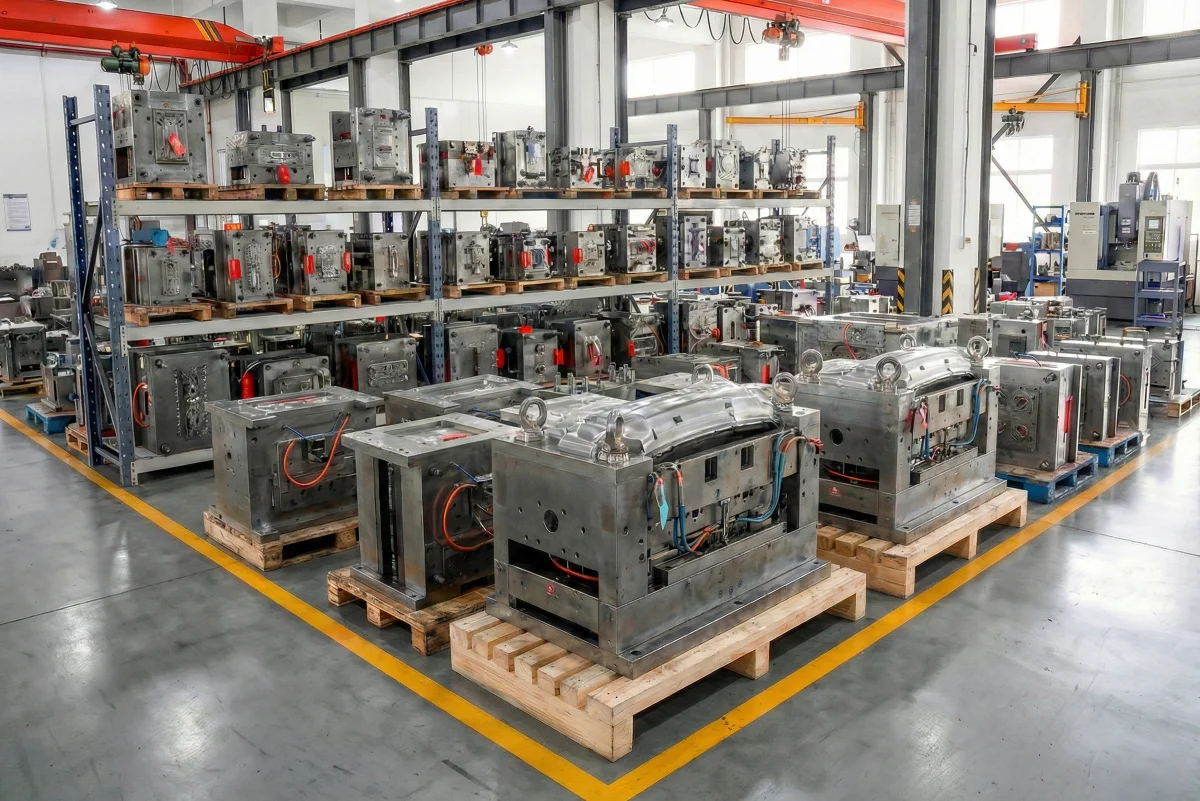
An injection mold is designed for the injection molding process, where molten plastic is injected into a closed mold cavity under high pressure. After cooling and solidification, the mold opens and the finished part is automatically ejected.
Injection molding is primarily used with thermoplastic materials such as:
- PP (Polypropylene)
- ABS
- PA (Nylon)
- PC (Polycarbonate)
- PE
- POM
The process is highly automated and ideal for producing large quantities of precision plastic components with short cycle times and excellent dimensional consistency.
Compression Mold vs Injection Mold: Key Differences
Although both technologies use precision tooling, their manufacturing principles and applications differ considerably. The following comparison highlights the major differences between compression molds and injection molds.
| Comparison Item | Compression Mold | Injection Mold |
|---|---|---|
| Primary Materials | SMC, BMC, FRP, Carbon Fiber, Thermoset Composites | PP, ABS, PA, PC, PE and other thermoplastics |
| Molding Process | Material compressed under heat and pressure | Molten plastic injected under high pressure |
| Typical Products | Large composite structural parts | Plastic components with complex details |
| Fiber Reinforcement | Excellent | Limited |
| Part Size | Medium to very large | Small to medium |
| Tool Structure | Relatively simple | More complex with runners, gates and ejector systems |
| Production Volume | Medium to high | Very high |
Material Compatibility
One of the most important differences lies in the materials each process can handle.
Compression molding is particularly suitable for fiber-reinforced composite materials that require high structural strength. Because the reinforcing fibers remain largely intact during molding, the finished parts achieve excellent stiffness, impact resistance, and dimensional stability.
Injection molding, on the other hand, is designed primarily for thermoplastic resins. The process allows manufacturers to produce highly detailed components with excellent surface finishes and repeatability, making it ideal for consumer products, electronics, medical devices, and numerous industrial applications.
Tooling Design Differences
Compression molds generally feature a relatively straightforward cavity structure. However, successful mold design still requires careful consideration of material flow, venting, heating balance, draft angles, and parting lines to ensure complete filling and consistent curing.
Injection molds are mechanically more complex. Besides the cavity and core, they usually incorporate runner systems, gates, cooling channels, ejector mechanisms, sliders, lifters, and hot runner systems depending on product geometry and production requirements.
As product complexity increases, injection mold design and manufacturing also become more sophisticated, requiring tighter machining tolerances and higher assembly precision.
Production Efficiency Comparison
Production efficiency is one of the primary considerations when selecting between compression molding and injection molding. While both processes support mass production, they are optimized for different manufacturing objectives.
Injection molding is well known for its short cycle times and high level of automation. Once the mold is installed and the machine parameters are optimized, thousands or even millions of identical plastic parts can be produced with minimal manual intervention.
Compression molding generally has a longer molding cycle because composite materials require heating and curing inside the mold. However, it offers significant advantages when manufacturing large structural components that would be difficult or uneconomical to produce using injection molding.
| Production Factor | Compression Mold | Injection Mold |
|---|---|---|
| Cycle Time | Medium | Fast |
| Automation Level | Medium to High | Very High |
| Large Structural Parts | Excellent | Limited |
| High-Volume Small Parts | Good | Excellent |
Cost Comparison
Tooling investment and production costs vary depending on the manufacturing process and product requirements.
Compression molds usually have a simpler structural design than injection molds because they do not require complex runner systems, gates, ejector assemblies, or hot runner technologies. This often results in lower tooling costs for large composite parts.
Injection molds generally require a higher initial investment due to their more sophisticated mechanical structure. However, for large production volumes, the shorter cycle times and higher productivity can significantly reduce the cost per part.
When evaluating manufacturing costs, companies should consider not only mold price but also material utilization, maintenance requirements, production efficiency, and expected product lifespan.
Surface Quality and Dimensional Accuracy
Both molding technologies are capable of producing high-quality components when supported by precision tooling and well-controlled manufacturing processes.
Injection molding is particularly suitable for products requiring complex geometries, fine surface textures, and tight dimensional tolerances. Consumer electronics, medical devices, and household products are typical examples.
Compression molding excels in producing large composite components with excellent structural strength and dimensional stability. Modern compression molds equipped with precision machining and optimized temperature control can also achieve high-quality surface finishes suitable for automotive exterior and interior applications.
Advantages of Compression Molds
Compression molds offer several unique benefits that make them the preferred choice for composite material applications.
- Suitable for fiber-reinforced composite materials.
- Excellent mechanical strength and stiffness.
- Ideal for manufacturing large structural components.
- Lower tooling complexity for many applications.
- Good material utilization with minimal waste.
- Excellent corrosion resistance when using composite materials.
- Supports lightweight product design.
These advantages explain why compression molding is widely used in automotive, construction, electrical, transportation, and renewable energy industries.
Advantages of Injection Molds
Injection molding remains the preferred solution for producing precision plastic parts in very high volumes.
- Fast production cycles.
- Excellent repeatability.
- Highly automated manufacturing.
- Complex product geometries.
- Outstanding surface appearance.
- High dimensional consistency.
- Low unit cost for large production runs.
For applications requiring millions of identical plastic components, injection molding provides unmatched manufacturing efficiency.
Typical Applications
The choice between compression molds and injection molds depends largely on the product's material requirements, structural performance, and production volume.
| Industry | Compression Mold Applications | Injection Mold Applications |
|---|---|---|
| Automotive | SMC body panels, battery covers, roof panels, truck components | Interior trims, clips, dashboards, connectors |
| Electrical | Insulation panels, electrical enclosures | Switch housings, plastic connectors |
| Construction | Composite doors, sanitary ware, water tanks | Pipe fittings, plastic accessories |
| Consumer Products | Composite furniture components | Household appliances, storage products |
How to Choose the Right Mold
Selecting the appropriate mold depends on several engineering and commercial factors rather than simply comparing one process against another.
Compression molding is generally recommended when products require high strength, lightweight construction, fiber reinforcement, or large structural dimensions. It is particularly suitable for SMC, BMC, and other composite materials.
Injection molding is often the better option when manufacturing high-volume thermoplastic parts that demand intricate details, excellent surface finish, and extremely short production cycles.
Working closely with an experienced mold manufacturer during the product development stage helps optimize material selection, tooling design, production efficiency, and overall manufacturing costs.
Why Choose SUASE for Compression Mold Solutions
Selecting the right mold manufacturer is just as important as selecting the right molding process. A well-designed mold improves product quality, shortens production cycles, and reduces maintenance costs throughout the entire manufacturing lifecycle.
SUASE specializes in the design and manufacture of composite compression molds for a wide range of industrial applications. With extensive experience in SMC, BMC, and other composite molding technologies, we provide customized tooling solutions that meet the demanding requirements of automotive, construction, sanitary ware, electrical, and infrastructure industries.
Our capabilities include product design support, mold engineering, CNC precision machining, mold assembly, trial production, and after-sales technical service. Every mold is manufactured with a strong focus on dimensional accuracy, durability, and long-term production stability.
- Customized compression mold design
- Professional engineering support
- High-precision CNC machining
- Strict quality inspection procedures
- Trial molding before delivery
- Reliable technical support throughout the project lifecycle
Frequently Asked Questions
1. What is the main difference between a compression mold and an injection mold?
A compression mold shapes material by applying heat and pressure to a pre-measured charge placed inside the mold cavity, while an injection mold forms parts by injecting molten plastic into a closed mold under high pressure.
2. Which materials are suitable for compression molding?
Compression molding is commonly used for SMC, BMC, fiberglass-reinforced composites, carbon fiber composites, GMT, and other thermoset or fiber-reinforced materials.
3. Is compression molding better than injection molding?
Neither process is universally better. Compression molding is ideal for large, lightweight composite structural parts, while injection molding is better suited for high-volume thermoplastic components with complex geometries.
4. Which process offers lower tooling costs?
For many large composite components, compression molds are generally less complex than injection molds, resulting in lower tooling investment. However, the most economical solution depends on product design, material selection, and production volume.
5. What industries commonly use compression molds?
Compression molds are widely used in automotive manufacturing, electrical equipment, sanitary ware, building materials, transportation, renewable energy, and other industries requiring high-strength composite components.
6. Does SUASE provide customized compression molds?
Yes. SUASE designs and manufactures customized compression molds according to customer drawings, material requirements, production capacity, and application needs, supporting projects from concept development to mass production.
Conclusion
Although compression molds and injection molds are both essential manufacturing tools, they are designed to serve different production requirements. Understanding their differences in materials, tooling structure, manufacturing processes, production efficiency, and application areas helps manufacturers make more informed decisions during product development.
Compression molding continues to play a vital role in the production of lightweight composite components, especially in industries such as automotive, electrical, construction, and renewable energy. Injection molding remains the preferred choice for precision thermoplastic parts requiring high production volumes and exceptional repeatability.
By working with an experienced mold manufacturer, companies can optimize tooling performance, improve production efficiency, and reduce long-term manufacturing costs. At SUASE, we are committed to delivering reliable compression mold solutions that combine precision engineering, stable production performance, and customized technical support for customers worldwide.