
As lightweight composite materials continue to replace conventional metals across automotive, railway, electrical, construction, and industrial sectors, the demand for high-performance compression molds continues to grow. Compression molding has become one of the most efficient manufacturing technologies for producing large, structurally complex composite components with excellent dimensional accuracy and repeatable quality.
A compression mold is far more than a simple forming tool. It is a precision-engineered system that controls material flow, temperature distribution, curing behavior, venting, and final part geometry. The quality of the mold directly influences production efficiency, product consistency, surface finish, and tooling life.
This guide explores every stage of compression mold engineering—from design and development to manufacturing, quality control, and maintenance—helping manufacturers and purchasing professionals understand how high-quality tooling contributes to successful composite production.
What Is a Compression Mold?
A compression mold is a matched metal tool used to shape composite materials under controlled temperature and pressure. During the molding process, a measured amount of molding compound is placed into the mold cavity. The mold then closes, applying pressure while heating the material until it flows, fills the cavity, cures, and forms the final product.
Compression molding is widely used for thermoset materials such as Sheet Molding Compound (SMC) and Bulk Molding Compound (BMC), as well as selected thermoplastic composites including GMT and long-fiber reinforced thermoplastics.
Compared with many other molding processes, compression molding offers excellent dimensional stability, high productivity, and the ability to manufacture large structural components with complex geometries.
How Does Compression Molding Work?
The compression molding process follows a carefully controlled sequence to ensure consistent product quality.
- Composite material preparation
- Material placement inside the mold cavity
- Mold closing under controlled pressure
- Material flow and cavity filling
- Heat curing or thermoplastic forming
- Mold opening
- Part ejection
- Trimming and inspection
Every stage depends on accurate mold engineering. Parameters such as mold temperature, cavity geometry, venting design, and surface finish significantly affect fiber distribution, curing quality, and final dimensional accuracy.
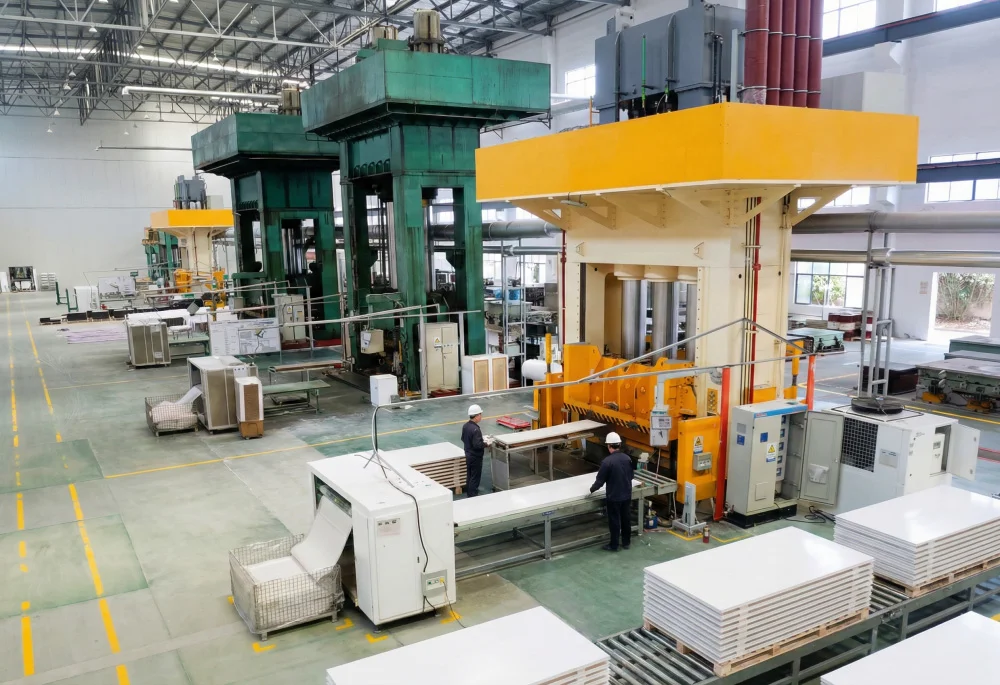
Why Compression Molds Are Critical in Composite Manufacturing
The mold determines not only the external shape of a composite component but also its structural integrity and manufacturing efficiency. Poorly designed tooling may lead to incomplete filling, air entrapment, excessive flash, surface defects, or premature mold wear.
A professionally engineered compression mold helps manufacturers achieve:
- Stable production cycles
- Excellent dimensional consistency
- High-quality surface finishes
- Reduced material waste
- Improved fiber distribution
- Lower maintenance costs
- Extended tooling life
- Higher overall production efficiency
Types of Compression Molds
Different composite materials and applications require different mold structures. Compression molds are therefore designed according to material characteristics, production volume, and component complexity.
SMC Compression Mold
SMC compression molds are widely used for automotive body panels, battery enclosures, electrical cabinets, sanitary ware, and infrastructure products. They require excellent surface accuracy, optimized venting systems, and precise temperature control to achieve Class-A surface finishes and dimensional stability.
BMC Compression Mold
BMC molds are typically designed for electrical insulation components, lighting products, appliance housings, and precision industrial parts. These molds often feature smaller cavities and require careful control of resin flow and venting due to the high flowability of BMC materials.
GMT Compression Mold
Glass Mat Thermoplastic (GMT) compression molds are developed for impact-resistant structural components used in automotive interiors, underbody shields, seat structures, and transportation equipment. Their design emphasizes rapid cooling and efficient production cycles.
Carbon Fiber Compression Mold
High-performance carbon fiber compression molds are increasingly used in aerospace, motorsports, premium automotive applications, and advanced industrial equipment where lightweight performance and structural stiffness are critical.
Main Applications of Compression Molds
Compression molding supports numerous industries requiring high-strength composite components with repeatable quality.
- Automotive lightweight parts
- Electric vehicle battery systems
- Railway interior panels
- Electrical insulation products
- Bathroom sanitary ware
- Building facade panels
- Industrial equipment housings
- Renewable energy components
- Transportation structures
- Composite furniture components
The flexibility of compression molding enables manufacturers to produce both cosmetic exterior panels and highly engineered structural components using the same core manufacturing principles.
Advantages of Compression Molding Technology
Compression molding remains one of the preferred production methods for composite manufacturing because it balances productivity, quality, and cost efficiency.
Key advantages include:
- High material utilization
- Excellent repeatability
- Low production scrap rates
- Suitable for large structural parts
- Excellent surface appearance
- Reduced secondary machining
- Stable dimensional accuracy
- Efficient mass production capability
When combined with precision tooling, compression molding provides manufacturers with an effective solution for producing lightweight composite components at industrial production volumes.
The Foundation of High-Quality Compression Mold Development
Successful mold projects begin long before machining starts. Professional compression mold development integrates product engineering, material analysis, simulation, tooling design, manufacturing, inspection, and production validation into a systematic workflow.
Early collaboration between customers and mold engineers helps identify potential manufacturing challenges before production, reducing project risks and improving overall product quality.
In the following sections, we will explore the engineering principles behind compression mold design, including mold structure, heating systems, cooling channels, venting strategies, steel selection, tolerance control, and advanced manufacturing technologies.
Compression Mold Design Principles
The performance of a compression mold is largely determined during the design stage. A well-designed mold ensures balanced material flow, stable curing conditions, efficient demolding, and long-term production reliability. Rather than focusing only on the final part geometry, mold engineers must consider the interaction between composite materials, molding equipment, thermal behavior, and production requirements.
Professional compression mold design combines product engineering, material characteristics, machining capability, and manufacturing experience into an integrated tooling solution.
Understanding Material Flow Behavior
Unlike molten thermoplastics used in injection molding, SMC and BMC materials flow differently under compression. Fiber orientation, resin viscosity, charge placement, mold temperature, and closing speed all influence how the material fills the cavity.
Improper material flow may result in:
- Short shots
- Fiber exposure
- Air entrapment
- Resin-rich areas
- Uneven wall thickness
- Surface defects
During mold development, engineers evaluate flow paths to ensure the material reaches every section of the cavity with minimum internal stress and uniform fiber distribution.
Mold Steel Selection
Steel selection directly affects tooling durability, machining quality, polishing performance, and maintenance costs. Choosing the appropriate mold steel depends on production volume, material abrasiveness, operating temperature, and required surface quality.
Common considerations include:
- Hardness after heat treatment
- Wear resistance
- Thermal conductivity
- Machinability
- Polishing capability
- Dimensional stability
- Corrosion resistance
For high-volume SMC compression molds, pre-hardened or hardened tool steels are commonly selected to maintain dimensional accuracy over extended production cycles.
Heating System Design
Temperature control is one of the most critical aspects of compression mold performance. Composite materials require precise curing temperatures to achieve consistent mechanical properties and stable production cycles.
A properly designed heating system distributes heat evenly throughout the mold while minimizing temperature differences between cavity regions.
Design Objectives
- Uniform mold surface temperature
- Rapid heating response
- Stable curing conditions
- Reduced thermal deformation
- Improved cycle consistency
Depending on production requirements, compression molds may use cartridge heaters, oil heating systems, steam heating, or other thermal control methods. Uniform temperature distribution is generally more important than simply achieving a high mold temperature.
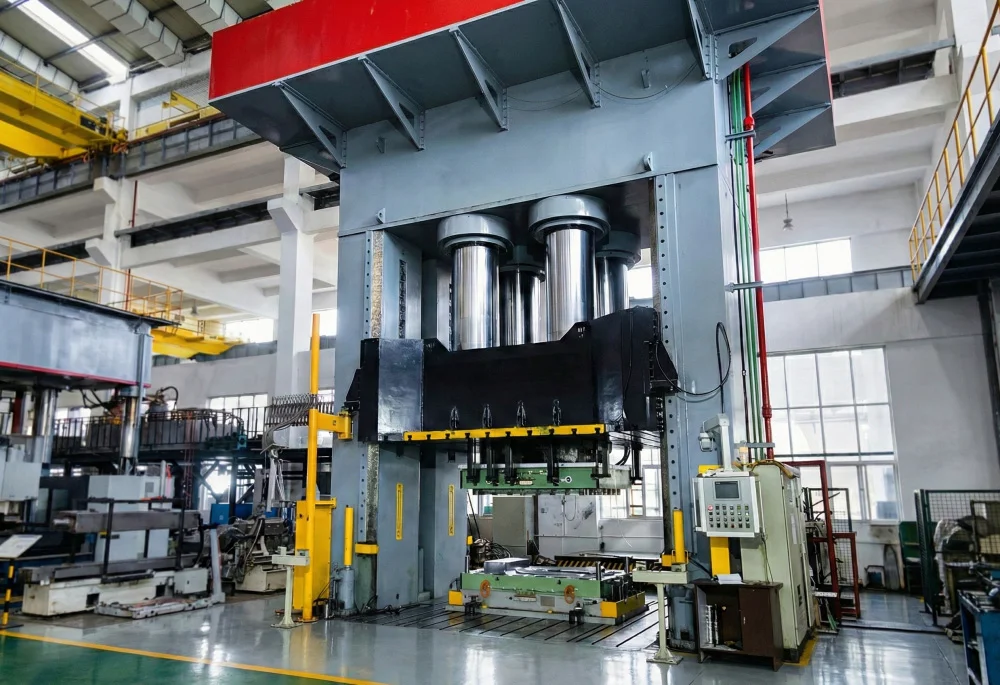
Cooling Channel Design
Although curing requires heat, efficient cooling remains equally important. Proper cooling channel design shortens production cycles and minimizes thermal distortion between molding cycles.
Cooling systems should be arranged to maintain balanced temperature distribution while avoiding localized hot spots.
Well-designed cooling channels help achieve:
- Stable production cycles
- Reduced thermal stress
- Improved dimensional consistency
- Shorter cooling time
- Extended mold life
Modern mold manufacturers often use thermal simulation software to optimize cooling layouts before machining begins.
Compression Mold Venting Design
Air trapped inside the mold cavity is one of the primary causes of cosmetic defects and incomplete filling. Venting systems allow air and volatile gases generated during curing to escape while preventing excessive material loss.
An effective venting strategy improves both appearance and structural quality.
Benefits of Proper Venting
- Reduced air pockets
- Improved surface finish
- Complete cavity filling
- Lower defect rates
- Better fiber distribution
Venting locations, dimensions, and discharge paths should be determined according to product geometry, material characteristics, and expected flow patterns.
Overflow and Flash Control
Overflow systems help manage excess material during compression molding while maintaining stable cavity pressure. Proper overflow design also assists in removing trapped air and controlling fiber orientation near the part edges.
However, excessive overflow increases material waste and trimming operations. Engineers therefore seek a balance between adequate venting and efficient material utilization.
Parting Line Design
The parting line separates the upper and lower mold halves. Its design affects machining complexity, flash formation, sealing performance, and product appearance.
A carefully positioned parting line should:
- Facilitate material flow
- Reduce flash generation
- Simplify machining
- Support accurate alignment
- Improve demolding performance
For visible exterior components, engineers typically place parting lines in locations that minimize their impact on the finished appearance.
Compression Mold Tolerance Control
Modern composite components often require tight dimensional tolerances, particularly in automotive, railway, and electrical applications. Maintaining these tolerances depends on every stage of mold engineering, from machining accuracy to thermal management.
Factors affecting mold tolerance include:
- CNC machining precision
- Steel stability
- Heat treatment quality
- Temperature distribution
- Assembly accuracy
- Machine alignment
Dimensional verification using coordinate measuring machines (CMM) and precision inspection equipment helps confirm that mold geometry meets engineering specifications before production trials.
Surface Finish and Polishing Requirements
The surface quality of the mold cavity directly determines the appearance of molded composite parts. High-quality polishing improves resin flow, facilitates demolding, and reduces the likelihood of cosmetic defects.
Depending on the application, different polishing standards may be required, ranging from functional industrial finishes to high-gloss Class-A automotive surfaces.
Professional polishing also contributes to longer mold service life by reducing localized wear and minimizing material adhesion during repeated production cycles.
Design for Mold Maintenance
Maintenance requirements should be considered during the initial design phase rather than after production begins. Components that experience frequent wear should be easily accessible for inspection and replacement.
Typical maintenance-oriented design features include:
- Replaceable wear inserts
- Accessible heating elements
- Modular guide components
- Service-friendly cooling circuits
- Standardized fasteners
Designing for maintainability reduces downtime, lowers operating costs, and extends the overall service life of the compression mold.
Using CAE Simulation in Compression Mold Development
Computer-aided engineering (CAE) has become an essential tool in modern compression mold development. Simulation software enables engineers to evaluate material flow, temperature distribution, curing behavior, and potential manufacturing issues before machining begins.
By identifying risks early, CAE supports better engineering decisions, reduces tooling modifications, and shortens development lead times. When combined with practical molding experience, simulation contributes to more reliable production and higher first-pass success rates.
Compression Mold Manufacturing: From Engineering Design to Precision Tooling
After the compression mold design has been validated, the project enters the manufacturing stage. At this point, engineering concepts are transformed into precision tooling capable of supporting stable, long-term production. Every manufacturing process directly influences mold accuracy, durability, cycle time, and the quality of molded composite parts.
Professional compression mold manufacturing combines advanced machining equipment, experienced technicians, rigorous inspection procedures, and standardized quality management. Rather than relying on a single machining process, high-quality molds are produced through multiple precision operations that work together to achieve the required dimensional accuracy and surface finish.
Design for Manufacturing (DFM) Review
Before machining begins, engineers perform a comprehensive Design for Manufacturing (DFM) review. The objective is to verify that the mold structure can be manufactured efficiently while maintaining the required performance and dimensional accuracy.
Typical review items include:
- Product draft angles
- Parting line feasibility
- Undercut analysis
- Machining accessibility
- Cooling channel layout
- Heating system integration
- Insert configuration
- Maintenance accessibility
A thorough DFM review minimizes later design changes, shortens manufacturing lead times, and improves first-time tooling success.
High-Speed CNC Machining
CNC machining forms the foundation of modern compression mold manufacturing. High-speed machining centers are used to produce cavity surfaces, core structures, guide systems, and mounting features with excellent repeatability and precision.
Compared with conventional machining, high-speed milling provides:
- Higher machining efficiency
- Improved surface quality
- Reduced thermal deformation
- Better dimensional consistency
- Lower manual finishing requirements
Accurate CNC machining reduces fitting adjustments during mold assembly and contributes to longer tooling life.
High-Speed Milling for Complex Mold Cavities
Many composite components feature deep ribs, complex contours, and large free-form surfaces. High-speed milling enables manufacturers to machine these geometries with excellent precision while maintaining stable cutting conditions.
Optimized machining strategies reduce tool vibration and improve surface consistency, helping minimize polishing time during subsequent finishing operations.
Electrical Discharge Machining (EDM)
Certain mold features cannot be produced efficiently using conventional cutting tools. Electrical Discharge Machining (EDM) is therefore employed to create sharp internal corners, narrow slots, deep cavities, and precision details.
EDM complements CNC machining by enabling highly accurate machining of complex areas without introducing excessive cutting forces.
Typical EDM applications include:
- Deep pocket machining
- Sharp corner formation
- Precision insert features
- Texturing preparation
- Complex cavity details
Heat Treatment and Stress Relief
Following rough machining, mold components may undergo heat treatment to improve hardness, wear resistance, and long-term dimensional stability.
Stress relief processes are also important because they reduce internal residual stresses generated during machining. Proper heat treatment helps maintain mold accuracy throughout extended production cycles.
Precision Grinding and Manual Fitting
After machining and heat treatment, precision grinding is used to finish reference surfaces, guide components, and sealing areas.
Experienced mold technicians then perform careful manual fitting to ensure smooth mold opening and closing, accurate alignment, and reliable sealing between cavity surfaces.
Proper fitting reduces flash generation and improves repeatability during production.
Compression Mold Assembly
Assembly integrates all mold components into a complete tooling system. Every component must be installed, adjusted, and verified according to engineering specifications.
Assembly typically includes:
- Mold base installation
- Guide pillar alignment
- Heating system installation
- Cooling circuit connection
- Ejection mechanism assembly
- Sensor installation (if required)
- Safety mechanism verification
Comprehensive assembly inspections help ensure reliable mold operation before production trials begin.
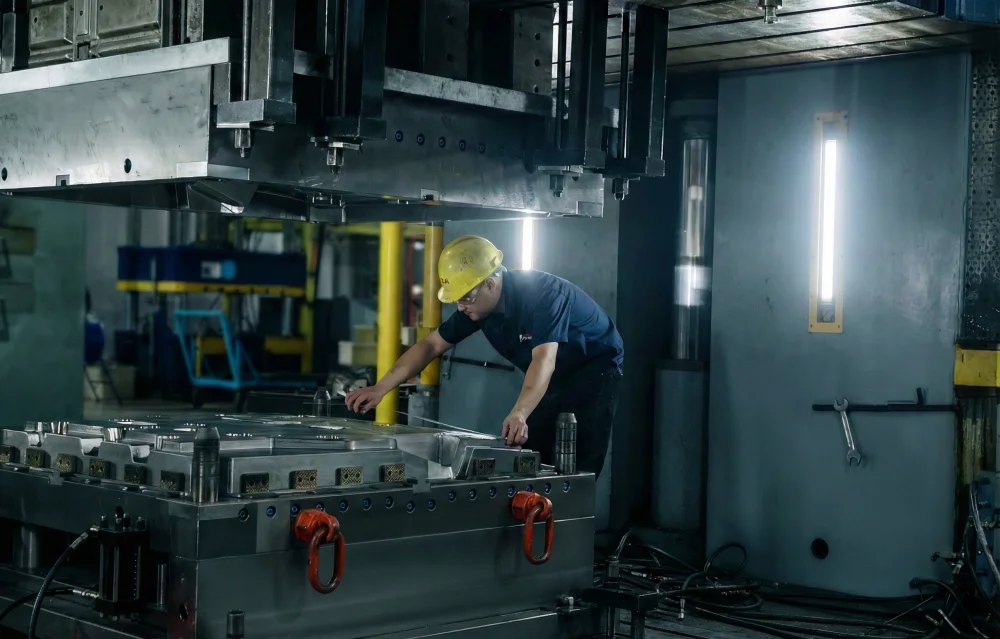
Trial Molding and Process Validation
Before delivery, compression molds undergo trial molding to verify tooling performance under actual production conditions. Trial production allows engineers to evaluate part quality, material flow, curing behavior, demolding performance, and production cycle stability.
Typical validation activities include:
- Dimensional verification
- Surface quality inspection
- Flash evaluation
- Fiber distribution assessment
- Cycle time optimization
- Demolding verification
Any necessary tooling adjustments are completed before final customer approval.
Quality Inspection Throughout Manufacturing
Quality control is integrated into every stage of compression mold manufacturing rather than being performed only after machining is complete.
Inspection activities may include:
- Incoming steel inspection
- Machining accuracy verification
- CMM dimensional inspection
- Surface roughness measurement
- Assembly accuracy inspection
- Heating and cooling system testing
- Final mold acceptance inspection
A systematic inspection process helps identify potential issues early, reducing costly modifications later in the project.
Factory Acceptance Testing (FAT)
Factory Acceptance Testing provides customers with confidence that the compression mold meets agreed technical specifications before shipment.
Depending on project requirements, FAT may include:
- Trial production reports
- Dimensional inspection records
- Material certificates
- Heating system verification
- Cooling performance testing
- Operational safety checks
Compression Mold Maintenance and Preventive Service
Routine maintenance is essential for preserving mold accuracy and extending service life. Preventive maintenance reduces unexpected downtime while maintaining consistent product quality.
Recommended maintenance practices include:
- Routine cavity cleaning
- Lubrication of moving components
- Inspection of guide systems
- Heating element verification
- Cooling channel cleaning
- Fastener inspection
- Surface polishing when required
Mold Repair and Refurbishment
Even well-maintained molds eventually experience wear after extended production. Professional refurbishment restores tooling performance while avoiding the cost of manufacturing a completely new mold.
Typical refurbishment services include cavity repair, welding restoration, polishing, component replacement, dimensional correction, and heating or cooling system upgrades.
Well-planned refurbishment can significantly extend tooling life and improve production efficiency.
Production Support After Mold Delivery
The responsibility of a professional compression mold manufacturer does not end with mold delivery. Ongoing production support helps customers optimize molding parameters, improve cycle times, troubleshoot manufacturing issues, and maintain consistent product quality.
Close technical collaboration between mold manufacturers and production teams contributes to faster process optimization and more reliable long-term manufacturing performance.
How to Choose the Right Compression Mold Manufacturer
Selecting a reliable compression mold manufacturer is one of the most important decisions during a composite product development project. While tooling cost is often considered first, engineering capability, manufacturing quality, technical support, and long-term reliability have a much greater impact on total production cost over the life of the mold.
An experienced mold supplier should be able to participate from the earliest design stage, helping customers optimize product structures, recommend suitable materials, improve manufacturability, and reduce project risks before production begins.
Evaluation Checklist
- Experience with SMC, BMC, GMT, and composite tooling
- Professional mold design and engineering team
- Advanced CNC machining and EDM capabilities
- Comprehensive quality inspection system
- Mold trial and process validation experience
- Project management and technical communication
- After-sales support and maintenance services
- Experience serving automotive, railway, electrical, and industrial industries
A qualified compression mold factory not only manufactures tooling but also supports customers throughout product development, pilot production, and mass manufacturing.
Custom Compression Mold Development Process
Most compression molds are custom engineered according to the customer's product design, material selection, production volume, and performance requirements. Close collaboration between the customer and the tooling supplier helps ensure that the final mold supports efficient manufacturing and consistent product quality.
A typical custom development process includes:
- Project consultation and technical discussion
- Review of 2D drawings or 3D CAD models
- DFM (Design for Manufacturing) analysis
- Mold concept design
- Detailed engineering design
- CNC machining and EDM manufacturing
- Assembly and precision fitting
- Trial molding and optimization
- Final inspection and customer approval
- Delivery and production support
Information to Prepare Before Requesting a Compression Mold Quotation
Providing complete project information enables mold manufacturers to evaluate technical feasibility, recommend appropriate tooling solutions, and prepare accurate quotations more efficiently.
Useful information typically includes:
- 2D drawings or 3D CAD files
- Product dimensions and tolerances
- Composite material type (SMC, BMC, GMT, etc.)
- Annual production volume
- Required surface finish
- Press specifications and tonnage
- Heating method preferences
- Expected project schedule
- Special testing or certification requirements
When complete engineering data is not yet available, preliminary product information can still help tooling engineers propose suitable manufacturing solutions and estimate project costs.
Frequently Asked Questions About Compression Molds
What is a compression mold?
A compression mold is a precision tool used to manufacture composite parts by applying heat and pressure to molding materials such as SMC, BMC, GMT, or other reinforced composites.
What materials can be processed in compression molds?
Compression molds are commonly used for Sheet Molding Compound (SMC), Bulk Molding Compound (BMC), Glass Mat Thermoplastics (GMT), carbon fiber prepregs, and other thermoset or thermoplastic composite materials.
What industries use compression molds?
Compression molds are widely used in automotive, railway, electrical equipment, sanitary ware, construction, renewable energy, industrial machinery, and infrastructure applications.
How long does it take to manufacture a compression mold?
Lead time depends on part size, mold complexity, machining requirements, and project scope. Prototype tooling generally requires less time than large, multi-cavity production molds.
How is mold quality verified?
Quality verification typically includes dimensional inspection, CMM measurement, assembly verification, heating and cooling system testing, and trial molding before shipment.
Can compression molds be customized?
Yes. Nearly all industrial compression molds are custom designed according to product geometry, material characteristics, production volume, and customer specifications.
How can mold service life be extended?
Routine cleaning, preventive maintenance, proper temperature control, timely replacement of wear components, and scheduled inspections all contribute to longer tooling life.
What affects the cost of a compression mold?
Tool size, cavity complexity, steel selection, machining precision, heating systems, production volume, and technical requirements all influence the overall tooling cost.
Why is temperature control important in compression molding?
Uniform mold temperature ensures consistent resin curing, balanced material flow, reduced internal stress, improved dimensional accuracy, and shorter production cycles.
What information should be provided when requesting a quotation?
Customers are encouraged to provide drawings, material information, production volume, press specifications, surface finish requirements, and project schedules to support accurate engineering evaluation and quotation.
Conclusion
Compression molding remains one of the most effective manufacturing technologies for producing high-performance composite components with excellent dimensional accuracy, repeatable quality, and cost-efficient production. However, the success of any compression molding project depends heavily on the engineering quality of the mold itself.
From mold design and material flow analysis to precision machining, temperature control, trial molding, and preventive maintenance, every stage contributes to tooling performance and long-term production reliability. Investing in a professionally engineered compression mold helps manufacturers reduce production risks, improve process consistency, and achieve lower lifecycle costs.
As composite materials continue to expand into automotive lightweight structures, railway transportation, electrical systems, renewable energy, and industrial equipment, demand for precision compression molds will continue to grow. Working with an experienced compression mold manufacturer provides the technical expertise needed to transform product concepts into reliable, high-quality composite solutions.