
As composite materials become increasingly important in automotive, aerospace, railway, electrical, and industrial applications, the demand for high-precision tooling continues to grow. Composite Mold Tolerance Control has become a critical factor in achieving consistent part quality, reliable production performance, and long-term tooling stability.
Unlike traditional metal stamping tools, composite molds must manage complex factors including material shrinkage, thermal expansion, resin flow behavior, fiber orientation, and curing characteristics. Even small variations in mold dimensions can influence the final composite component's assembly accuracy, surface quality, and structural performance.
Professional composite mold manufacturers therefore apply systematic tolerance management throughout design, machining, inspection, and production validation.
Why Composite Mold Tolerance Control Is Important
The accuracy of a composite mold directly determines the dimensional consistency of the molded component. In industries such as automotive and transportation, composite parts often need to fit precisely with surrounding structures, electronic systems, or mechanical assemblies.
Poor tolerance control may result in:
- Part dimensional variation
- Assembly difficulties
- Uneven gaps between components
- Surface mismatch
- Increased rework requirements
- Higher production scrap rates
- Reduced product reliability
Maintaining accurate mold dimensions throughout the entire manufacturing process helps manufacturers achieve stable production and reduce total manufacturing costs.
Challenges Affecting Composite Mold Accuracy
Achieving tight tolerances in composite tooling is more challenging than conventional machining because composite materials interact with the mold during heating, compression, and curing processes.
Material Shrinkage Control
Thermoset materials such as SMC and BMC experience chemical shrinkage during curing. Thermoplastic composites may also experience dimensional changes caused by cooling and crystallization.
Engineers must consider material shrinkage rates during mold design to ensure that the final molded part meets the required specifications.
Thermal Expansion During Production
Compression molds operate under elevated temperatures. Repeated heating and cooling cycles cause mold components to expand and contract, which may influence cavity dimensions.
Effective thermal management and appropriate steel selection help maintain dimensional stability during production.
Fiber Orientation Effects
Reinforced composite materials contain glass fibers, carbon fibers, or other reinforcement structures. Fiber orientation affects mechanical properties and can also influence dimensional behavior after molding.
Optimized material flow and proper mold design reduce unpredictable deformation and improve part accuracy.
Design Considerations for Composite Mold Tolerance Control
Successful tolerance management begins during the initial engineering stage. Mold designers must consider both tooling requirements and final product performance.
Design for Manufacturing (DFM)
DFM analysis helps identify potential tolerance risks before mold production begins.
Engineers evaluate:
- Parting line position
- Draft angles
- Wall thickness distribution
- Rib structures
- Insert locations
- Demolding direction
- Expected shrinkage behavior
Early optimization reduces future modifications and improves first-trial success rates.
Mold Compensation Design
Because composite materials experience dimensional changes during molding, engineers often apply compensation factors during cavity design.
The mold geometry may be adjusted according to:
- Material shrinkage rate
- Part size
- Fiber reinforcement type
- Curing temperature
- Production conditions
Accurate compensation improves the relationship between the mold cavity and the final molded component.
Precision Machining in Composite Mold Manufacturing
High-quality Composite Mold Manufacturing requires advanced machining capabilities and strict process control.
Typical manufacturing processes include:
- High-speed CNC milling
- Five-axis machining
- Electrical discharge machining (EDM)
- Precision grinding
- Surface polishing
- Coordinate measurement inspection
Each machining operation contributes to achieving the required mold tolerance and surface quality.
CNC Machining Accuracy and Process Stability
Modern composite molds often contain complex three-dimensional surfaces, deep cavities, and precision functional structures. Maintaining machining accuracy requires careful control of:
- Machine calibration
- Cutting parameters
- Tool wear monitoring
- Temperature conditions
- Workpiece positioning
Stable machining processes reduce dimensional variation and improve consistency between different mold components.
Inspection Methods for Composite Mold Precision
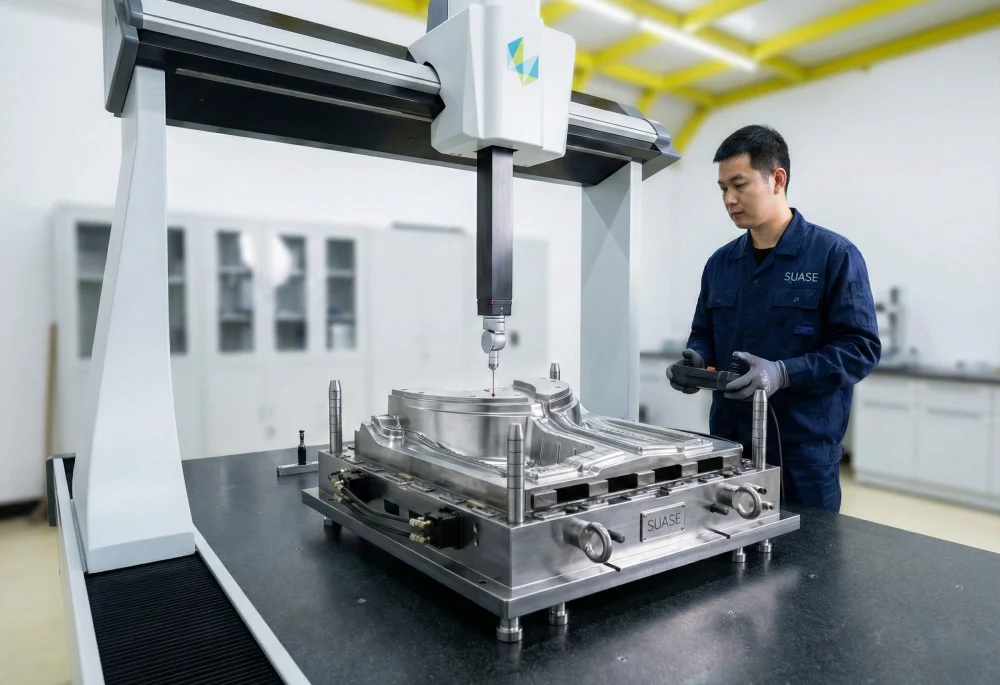
Inspection is an essential part of Composite Mold Tolerance Control. Professional manufacturers use advanced measurement equipment to verify mold accuracy before delivery.
Common Inspection Equipment
- Coordinate Measuring Machine (CMM)
- 3D scanning systems
- Laser measurement equipment
- Precision gauges
- Surface measurement instruments
Inspection data is compared with CAD models and engineering drawings to confirm that the mold meets customer requirements.
Compression Mold Tolerance Control for SMC and BMC Applications
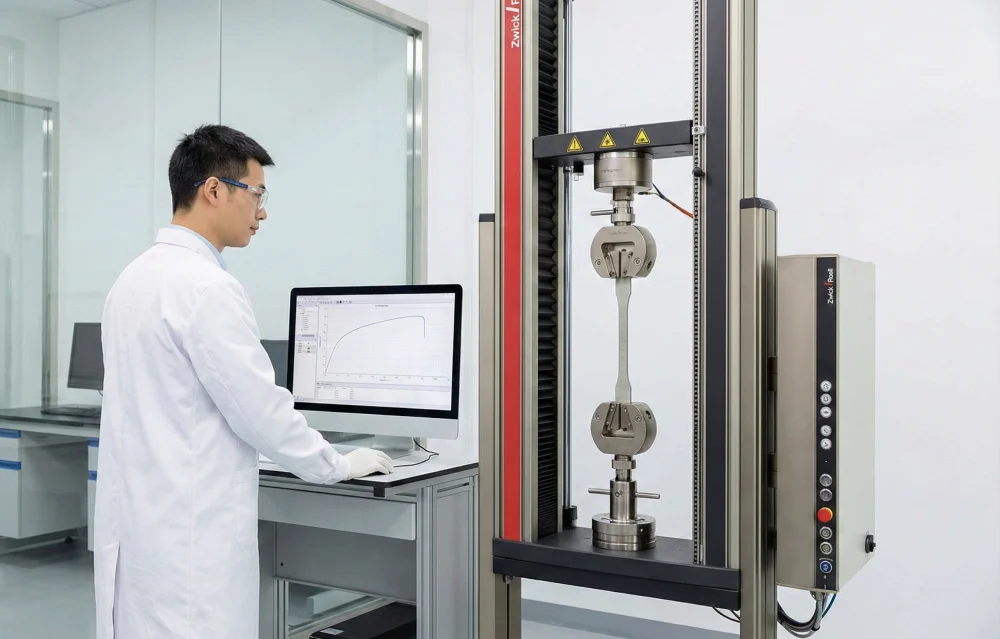
SMC and BMC compression molds require particularly careful tolerance management because these materials involve heat, pressure, and chemical curing reactions during molding.
Important control areas include:
- Cavity dimensions
- Parting surface accuracy
- Runner and overflow design
- Venting structure
- Heating channel layout
- Ejector system positioning
Accurate tooling ensures stable filling, consistent curing, and repeatable composite part dimensions.
CAE Simulation for Improving Mold Accuracy
Advanced composite mold manufacturers increasingly use CAE simulation to predict potential tolerance problems before machining.
Simulation helps analyze:
- Material flow behavior
- Fiber orientation
- Temperature distribution
- Curing deformation
- Residual stress
- Warpage prediction
By identifying potential issues early, engineers can optimize mold design and reduce costly modifications during production.
Quality Management Throughout the Mold Development Process
Effective tolerance control requires cooperation between design, machining, inspection, and production teams.
A professional development process typically includes:
- Technical requirement review
- 3D mold design verification
- DFM analysis
- Precision machining
- Dimensional inspection
- Mold assembly checking
- Trial molding evaluation
- Final acceptance
This systematic approach ensures that composite molds deliver stable performance throughout their service life.
Suase Mould's Approach to Composite Mold Precision
Suase Mould focuses on developing high-quality composite tooling solutions for customers requiring reliable dimensional accuracy and production consistency.
Our engineering team applies advanced design methods, precision machining technology, and strict inspection procedures to manufacture composite molds for SMC, BMC, GMT, and other advanced composite applications.
From initial design analysis to final mold validation, every stage is managed to achieve stable tooling performance and meet demanding industrial requirements.
Conclusion
Composite Mold Tolerance Control is a fundamental element in modern composite manufacturing. Accurate tooling dimensions, thermal stability, precision machining, and effective inspection systems together determine the quality and reliability of composite components.
As industries continue to adopt lightweight composite materials, advanced tolerance management will remain essential for producing high-performance parts with consistent quality, improved efficiency, and reduced manufacturing costs.