In the modern automotive industry, automotive bumper molds and auto parts suppliers play a crucial role. With the global shift toward lightweight, intelligent, and environmentally friendly vehicle manufacturing, optimizing mold production and supply systems has become essential for automakers to enhance competitiveness.
1. The Importance of Automotive Bumper Molds
The automotive bumper is both an exterior and safety component of the vehicle. It enhances aesthetics, contributes to aerodynamics, and provides energy absorption and pedestrian protection. The key equipment behind it is the automotive bumper mold.
1.1 Design Requirements
- High surface precision: As a visible exterior part, the bumper requires molds with excellent surface finish and accuracy.
- Strength and toughness: Molds must withstand mass injection molding, requiring hardness, toughness, and wear resistance of mold steel.
- Dimensional stability: High-precision molds ensure consistent production and eliminate assembly errors.
1.2 Manufacturing Process
- CAD/CAE/CAM integrated design and analysis ensure optimized flow channels and shorter development cycles.
- CNC high-speed machining and 5-axis milling improve surface quality.
- Heat treatment and surface coatings (such as nitriding and PVD) extend mold life.
1.3 Development Trends
- Lightweight materials (aluminum mold steels, composites) reduce mold weight.
- Virtual debugging and digital twin technology enable rapid validation and optimization.
- Automated mold inspection and intelligent maintenance improve production efficiency.
2. The Role of Auto Parts Suppliers
Within the automotive supply chain, auto parts suppliers provide a wide range of products including exterior parts, interior parts, powertrain, chassis systems, and electronics. Their key contributions include:
- Quality Control: Compliance with IATF 16949 quality standards ensures consistency and reliability.
- R&D Capabilities: Top suppliers provide not only parts but also innovations in lightweight materials and intelligent electronics.
- Cost & Delivery: Stable production capacity and logistics management determine automakers’ efficiency and market responsiveness.
3. Classification of Automotive Manufacturer Parts Suppliers
3.1 Tier 1 Suppliers
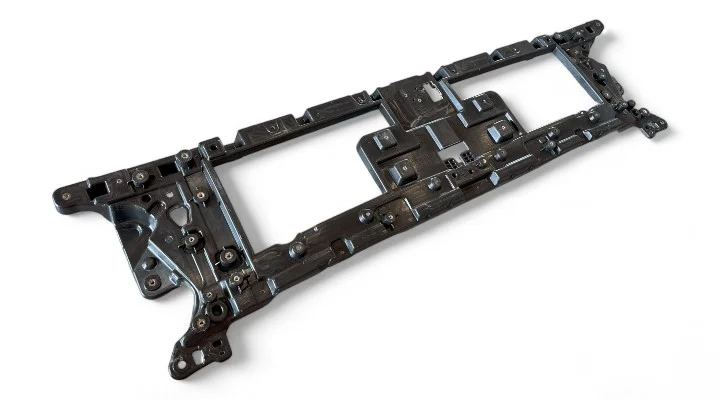
Directly provide systems or assemblies (such as bumper assemblies, seat assemblies) to OEMs. They typically have strong R&D capabilities and global operations. Examples: Bosch, Magna, Faurecia.
3.2 Tier 2 Suppliers
Supply components (such as bumper molds, electronic modules, raw materials) to Tier 1 suppliers, focusing on specific processes or materials.
3.3 Tier 3 and Below
Provide raw materials, basic parts, and machining services, supporting the foundation of the entire supply chain.
4. Relationship Between Bumper Molds and Suppliers
Bumper mold manufacturers are usually Tier 2 suppliers, offering molds and injection molding solutions to Tier 1 suppliers or OEMs. Their value lies in:
- Ensuring exterior part quality and enhancing brand image.
- Shortening product development cycles and improving OEM responsiveness.
- Transitioning toward “mold + component integrated supply” under smart manufacturing trends.
5. Industry Application Cases
- Automotive Exterior Systems: Development of bumper, grille, and side skirt molds. Strict requirements on appearance consistency and paint adhesion.
- New Energy Vehicles (NEVs): Higher lightweight demand drives bumper molds toward composites and carbon fiber. Suppliers also develop battery housings and thermal management systems.
- Intelligent Driving Integration: Next-gen bumpers must embed radars and cameras, requiring mold designs with transparent or low-reflective areas.
6. Future Trends
- Digital Supply Chains: Big data and cloud platforms enable transparent collaboration between OEMs and suppliers.
- Smart Mold Manufacturing: AI-optimized flow design and 3D printing accelerate prototype mold production.
- Green Manufacturing: Recyclable plastics and low-carbon processes become industry standards.
- Globalization & Localization: Multinational and local suppliers collaborate to form multi-tier supply systems.
Conclusion
Automotive bumper molds are not only essential tools for exterior and safety component production but also critical enablers for industry upgrades. The multi-tier structure of auto parts suppliers and automotive manufacturer parts suppliers determines OEMs’ competitiveness in quality, cost, and innovation. Looking ahead, mold manufacturers and parts suppliers will be more deeply integrated into the global automotive supply chain, driving continuous advancements in smart and sustainable manufacturing.