
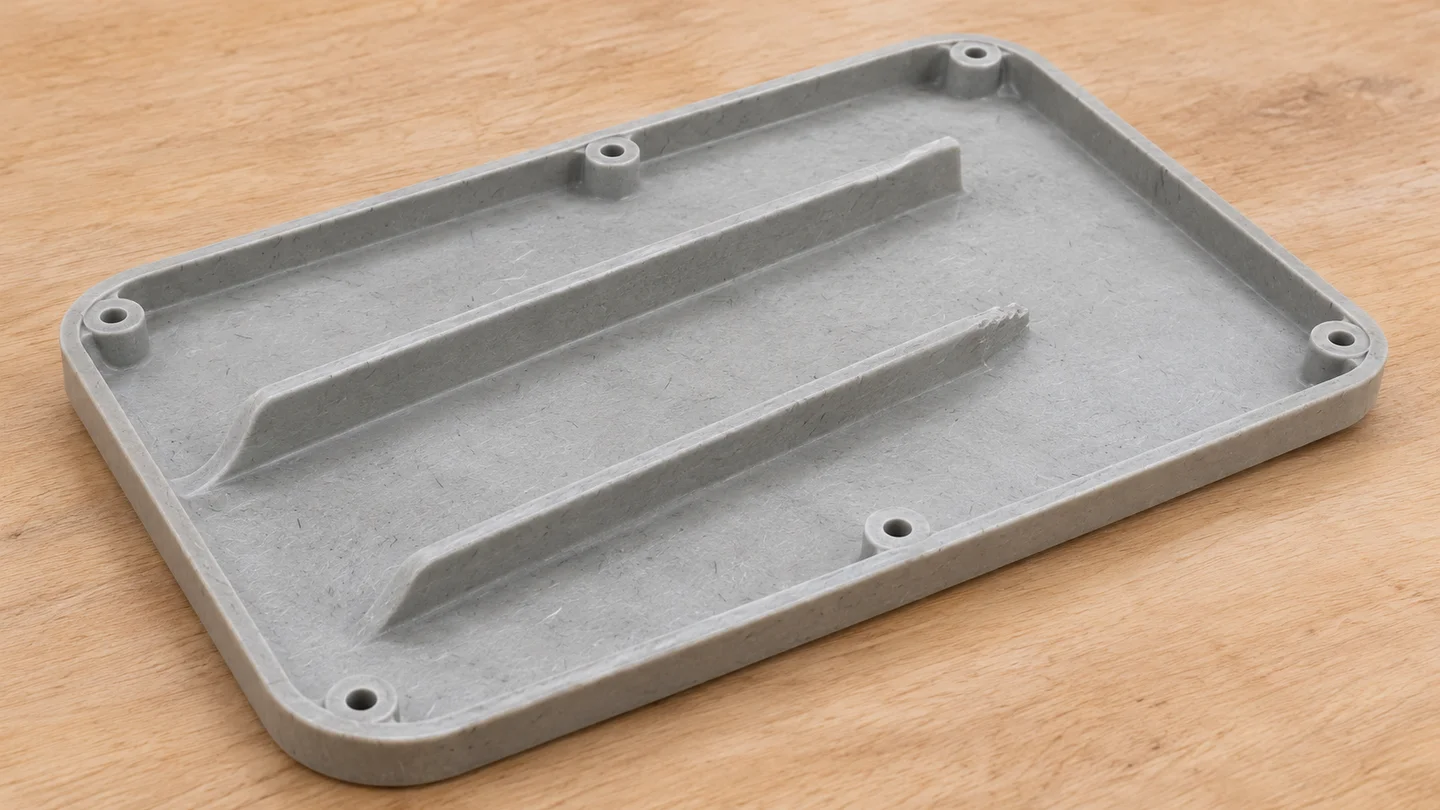
From above, the trial cover looks complete. Turn it over and one reinforcing rib seems to end early. Before anyone cuts the mold, find out whether that tip ever formed. A change in charge placement can help a rib that didn't fill. It does little for a tip that breaks on the way to the inspection bench.
Keep the part as it left the tool
Identify the rib on the drawing first. Two ribs with the same wall thickness can have different end profiles by design. Ask for a photo of the underside at the first safe opportunity after ejection, before trimming or stacking. Keep the cavity number and part orientation with the photo. If a loose fragment fits the shortened end, the tip formed and subsequently broke. A full-height rib in that first photo and a broken one at inspection narrow the search further. Look at how the cover was picked up and where the next part rested on it.
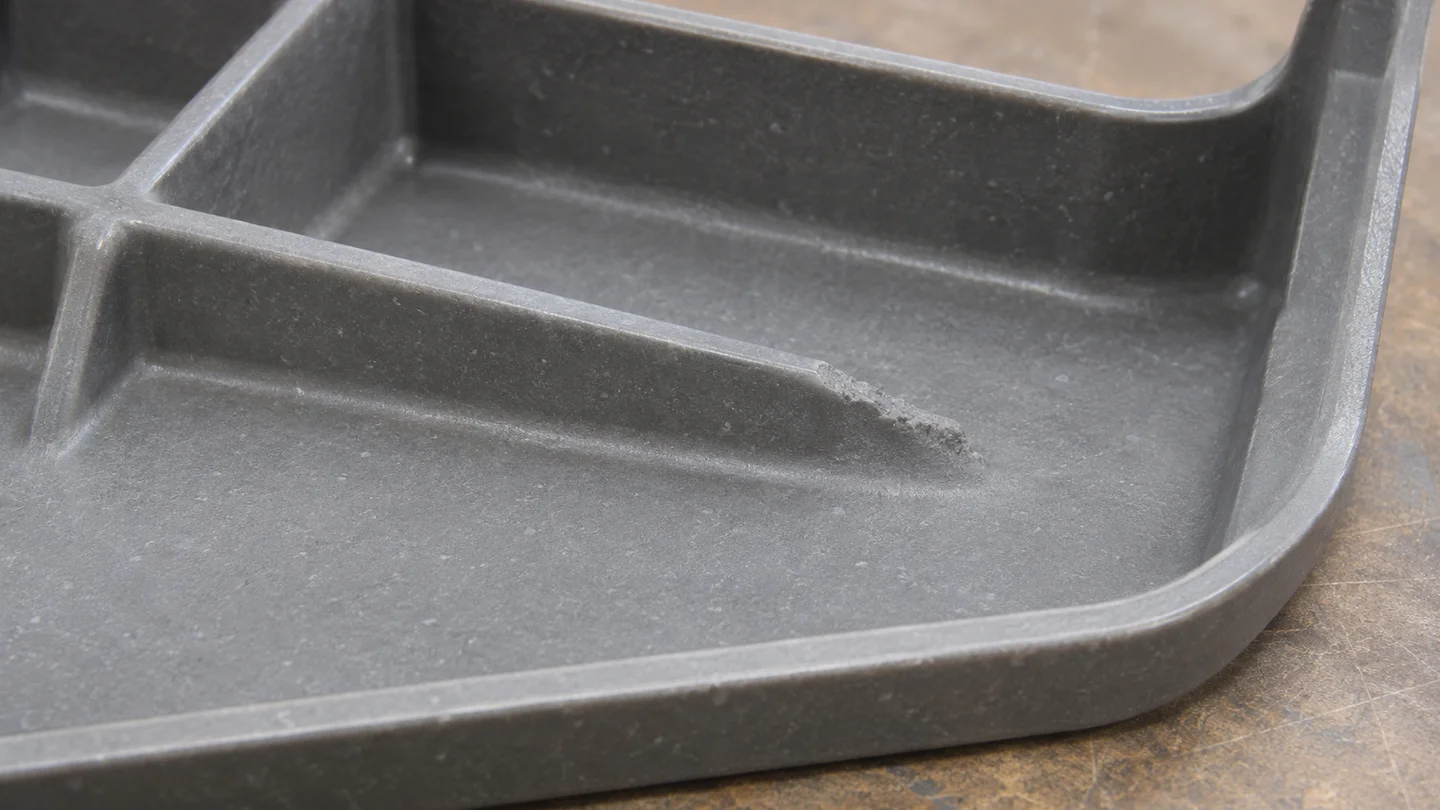
An end that comes out short on several successive parts, with no matching fragment, deserves a fill check. A rough surface alone won't tell you how it formed.
Check the rib across the cover as well
During BMC compression molding, the charge has to flow into the narrow recess that forms each rib. Mark the original charge outline on a cavity sketch. For an agreed trial, keep the compound grade, weighed charge and press settings consistent, then compare with a placement closer to the short rib. Record both rib ends on every part.
If the first rib fills and the other one now falls short, the new layout has moved the problem across the cover. That result gives the trial team a reason to change how the compound is distributed. If the same tip stays short under both layouts, trace its flow path on the tool and inspect any existing vent serving that recess. The location tells the toolmaker where to look. It takes an inspection finding to justify cutting steel there.
For a discussion with SUASE's BMC mold team, send the marked underside photo and the charge outline from the same trial. Those two records let the people who design, build and trial the mold choose a comparison that answers the buyer's question. SUASE BMC compression molds