
As industries worldwide accelerate toward lightweight engineering and high-performance materials, thermoset compression molding has become a cornerstone of modern composite manufacturing. Supported by advanced hot press molds and precision hot press forming molds, this technology enables the production of durable, heat-resistant, and structurally optimized components across multiple industries.
From automotive and aerospace to electrical and industrial applications, manufacturers rely on advanced compression tooling to achieve consistent quality, high efficiency, and long-term reliability.
What is Thermoset Compression Molding?
Thermoset compression molding is a manufacturing process in which thermosetting materials are placed into a heated mold cavity and formed under pressure. During this process, the material undergoes an irreversible chemical curing reaction, resulting in a rigid and durable final component.
Unlike thermoplastic materials, thermosets cannot be remelted after curing. This characteristic gives thermoset components exceptional:
- Thermal stability and heat resistance
- Dimensional stability under stress
- Chemical and corrosion resistance
- High mechanical strength
These properties make thermoset molding ideal for demanding industrial environments.
The Role of Hot Press Molds in Thermoset Processing
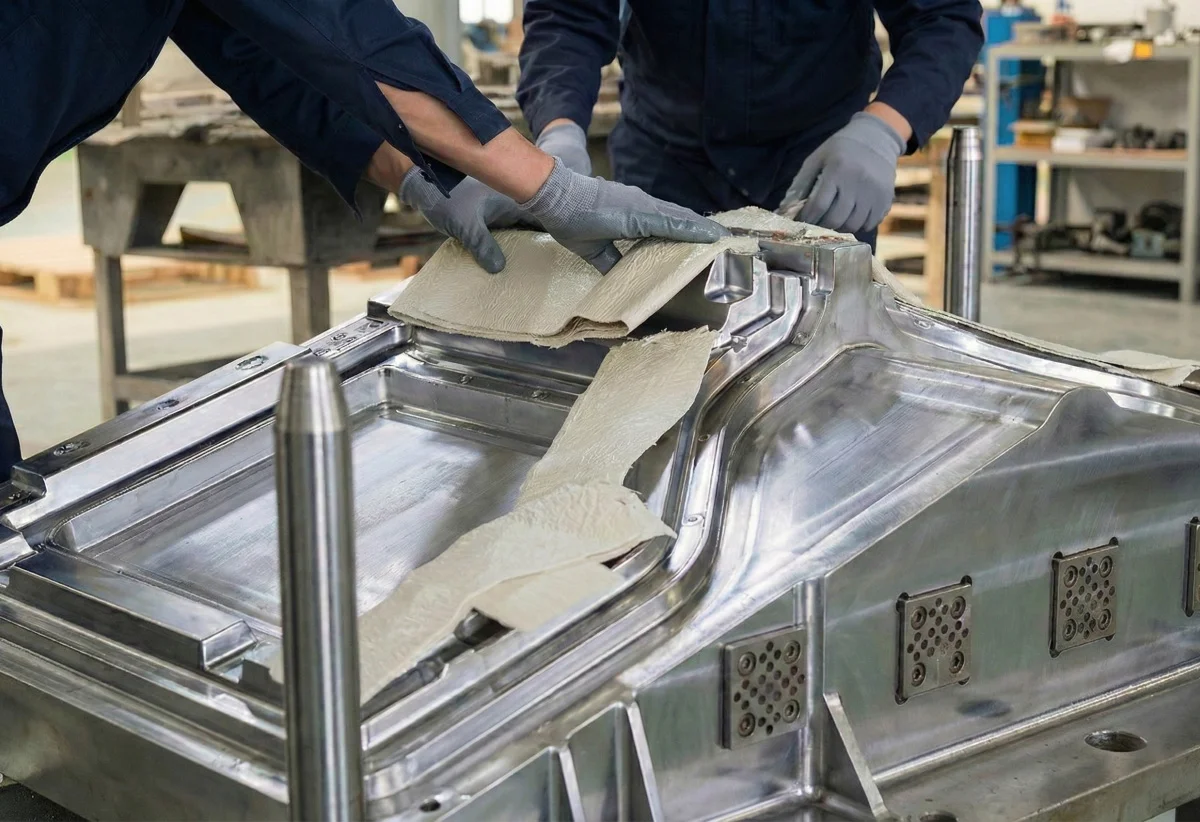
Hot press molds are essential tools in thermoset compression molding, enabling precise control of temperature and pressure during the curing process. High-performance hot press forming molds are engineered to ensure uniform heat distribution, accurate cavity geometry, and stable production cycles.
Modern compression molds are designed to:
- Maintain consistent thermal conditions across the mold cavity
- Optimize resin flow and fiber distribution
- Ensure complete curing without defects
- Support high-volume, repeatable production
Advanced tooling systems significantly improve product quality and manufacturing efficiency.
Materials Used in Thermoset Compression Molding
Thermoset compression molding supports a wide range of composite materials, including:
- SMC (Sheet Molding Compound)
- BMC (Bulk Molding Compound)
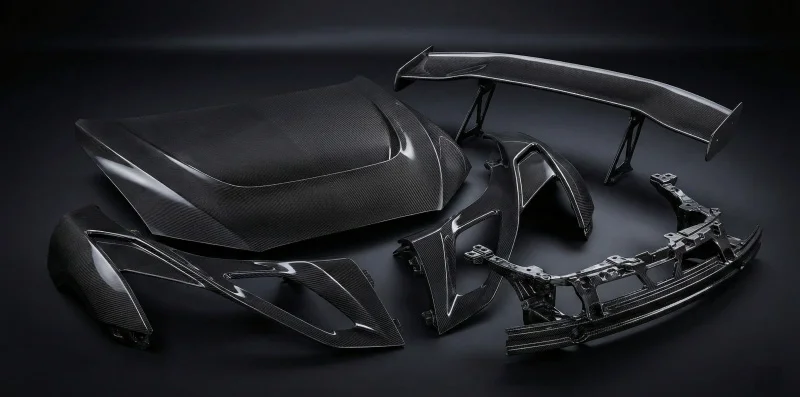
- Carbon fiber reinforced thermosets
- Epoxy and phenolic resin systems
These materials offer excellent strength-to-weight ratios and are widely used as lightweight alternatives to traditional metals in automotive and aerospace applications.
Comparison: Thermoset vs Thermoplastic Compression Molding
While both processes use compression molds, there are key differences:
- Thermoset compression molding: Permanent curing, high heat resistance, excellent structural performance
- Thermoplastic compression molding molds: Recyclable materials, shorter cycle times, higher impact resistance
Thermoplastic systems allow reheating and reshaping, making them suitable for sustainable and high-efficiency production environments.
Carbon Fiber Autoclave Molds and High-End Composite Manufacturing
In addition to compression molding, carbon fiber autoclave molding represents a high-end manufacturing solution for producing ultra-lightweight and high-strength components. This process requires precision-engineered carbon fiber autoclave molds capable of withstanding high temperature and pressure conditions.
Typical applications include:
- Aerospace structural components
- High-performance automotive parts
- Energy and industrial equipment
The combination of autoclave molding and compression tooling enables manufacturers to achieve superior mechanical performance and surface quality.
Engineering Considerations for High-Performance Compression Tooling
Designing advanced hot press molds and composite molds requires careful engineering, including:
- Precision CNC machining and tight tolerances
- Optimized heating and cooling systems
- Effective venting to eliminate trapped gases
- Durable tool materials such as hardened steel or aluminum alloys
High-performance compression tooling ensures consistent part quality, reduced defects, and extended mold lifespan.
Industrial Applications of Thermoset Compression Molding
Thermoset compression molding is widely used across multiple industries:
- Automotive: structural panels, EV battery enclosures, exterior components
- Electrical: insulation parts, switch housings, connectors
- Aerospace: lightweight structural components
- Industrial: equipment housings and high-performance composite parts
These applications require materials and tooling that deliver durability, reliability, and precision.
SUASE: One-Stop Solution for Compression Tooling
SUASE provides comprehensive solutions for advanced composite manufacturing, covering the entire process from design to mass production. The company integrates simulation, precision machining, mold trial, and full-scale production to deliver high-performance compression molds.
Core capabilities include:
- High-precision hot press molds
- Advanced thermoset compression molding molds
- Customized thermoplastic compression molding molds
- Specialized carbon fiber autoclave molds
With decades of experience in composite tooling, SUASE supports global customers in achieving efficient, reliable, and scalable production.
Future Trends in Thermoset and Composite Molding
As industries continue to demand lightweight and sustainable solutions, thermoset and thermoplastic compression molding technologies will continue to evolve. Key trends include:
- Integration of hybrid composite materials
- Automation and digital manufacturing systems
- Advanced carbon fiber applications
- Improved energy efficiency and sustainability
Advanced hot press forming molds will remain central to these developments.
Conclusion
Thermoset compression molding, supported by high-performance hot press molds and advanced compression tooling, is a critical technology in modern manufacturing.
By combining material innovation, precision engineering, and advanced molding processes, manufacturers can produce high-quality composite components that meet the demands of next-generation industries.